Buddha relics of Arahant Sariputra and Maudgalyayana return to India from Mongolia
Synopsis
One lakh Mongolian citizens paid tribute to the relics of Lord Buddha's two chief disciples at Ulaanbaatar's Gandan Monastery over ten days. On 10 June 2026, a Ladakh Lt. Governor-led Indian delegation boarded a special IAF flight home — a quiet but potent act of Buddhist diplomacy that strengthens India's civilisational ties with Mongolia.
Key Takeaways
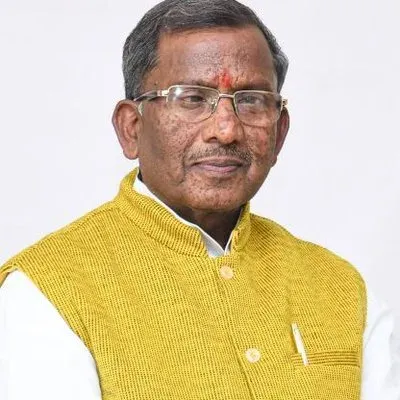
Governor Vinai Kumar Saxena led the Indian delegation that departed Ulaanbaatar on 10 June 2026 on a special IAF flight.
The relics of Arahant Sariputra and Arahant Maudgalyayana were on public display at Gandantegchinlen Monastery from 31 May to 9 June 2026 .
Approximately 1,00,000 Mongolian citizens paid their respects during the ten-day exposition.
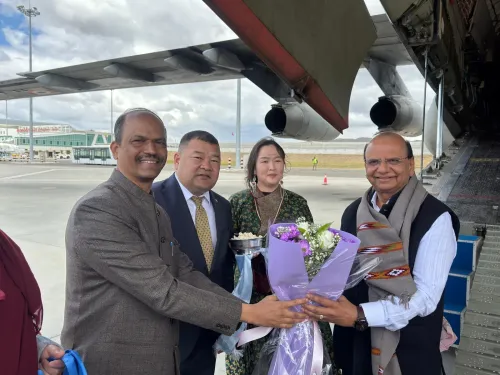
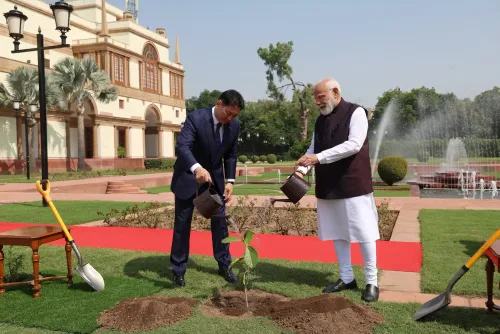
Indian Ambassador Atul Malhari Gotsurve presented a Mongolian plant sapling to the Lt.
Governor at the airport as a gesture of goodwill.
The delegation was received on arrival by Arkhangai Province Governor Tserennadmid Byambadoo and senior monks from the Gandan Monastery.
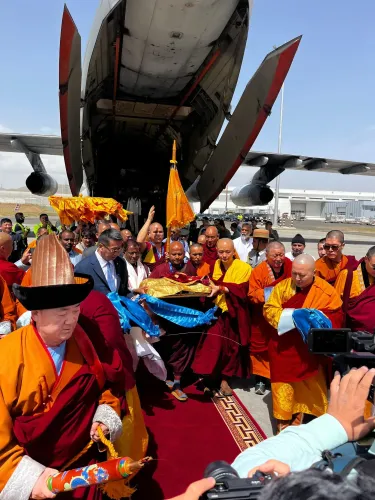
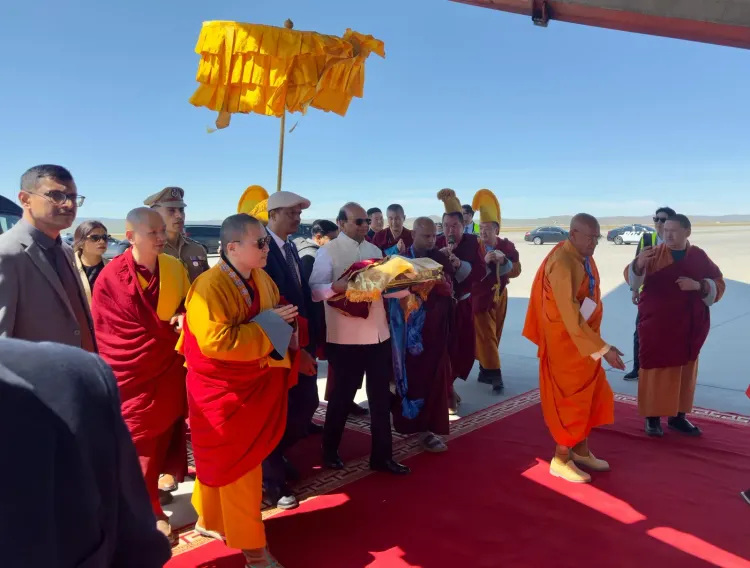
An Indian delegation led by Ladakh Lieutenant Governor Vinai Kumar Saxena departed Ulaanbaatar on 10 June 2026 aboard a special Indian Air Force (IAF) flight, carrying back the sacred relics of Lord Buddha's two principal disciples, Arahant Sariputra and Arahant Maudgalyayana, after a landmark exposition in the Mongolian capital. The return journey marks the conclusion of a deeply symbolic cultural and religious mission that drew an estimated one lakh Mongolian devotees over ten days.
The Exposition at Gandan Monastery
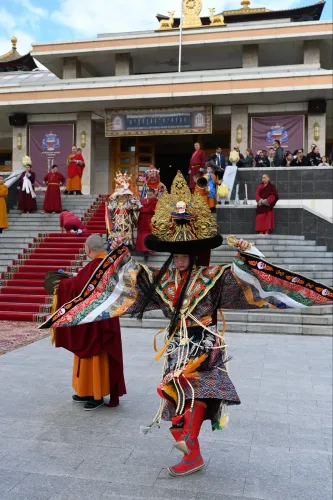
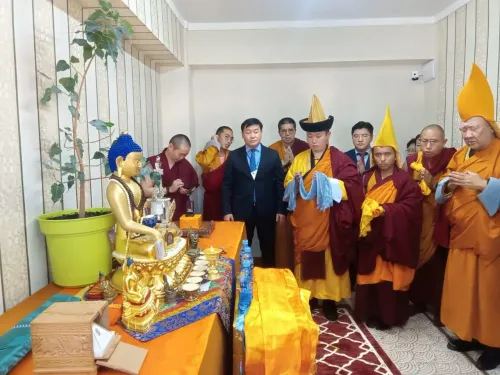
The holy relics were placed on public display at the Gandantegchinlen Monastery in Ulaanbaatar from 31 May to 9 June 2026 — a ten-day window during which approximately 1,00,000 Mongolian citizens paid their tributes. The Gandantegchinlen Monastery, one of Mongolia's most revered Buddhist institutions, served as the spiritual centrepiece of the exposition.
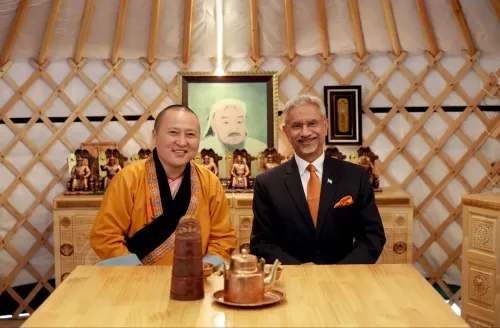
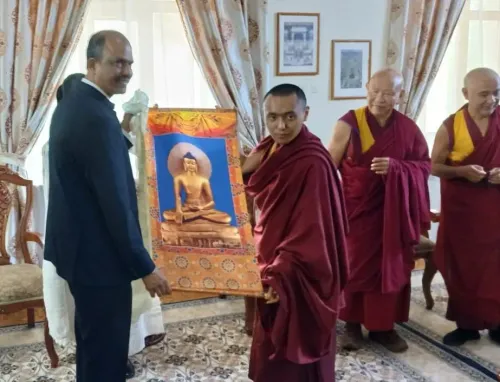
His Eminence Ven. Khamba Nomun Khan Geshe Lharampa D. Javzandorj of the Gandantegchinlen Monastery formally conveyed his gratitude to the delegation and to the Government of India for sending the relics. At the airport, Indian Ambassador Atul Malhari Gotsurve presented a Mongolian plant sapling to Lt. Governor Saxena as a gesture of goodwill.
Delegation's Arrival and Reception
The Indian delegation had arrived in Ulaanbaatar on 8 June 2026 via a special IAF flight. Upon landing, the delegation was received by Tserennadmid Byambadoo, Governor of Arkhangai Province of Mongolia, along with Ambassador Gotsurve and senior monks from the Gandan Monastery. The high-level reception underscored the diplomatic weight attached to the mission by both governments.
India-Mongolia Buddhist Ties
The exposition is part of a broader effort by India to strengthen cultural and civilisational bonds with Mongolia, a nation where Tibetan Buddhism holds deep historical roots. Mongolia shares a centuries-old Buddhist heritage with India, and the loan of such significant relics — belonging to the two chief disciples of the Buddha — carries both religious and diplomatic significance. This comes amid India's sustained engagement with Buddhist-majority and Buddhist-heritage nations as part of its soft-power outreach.
The Indian Embassy in Mongolia posted updates on the mission on X, noting that the delegation thanked the Embassy, the Gandantegchinlen Monastery, and the Government of Mongolia for their support throughout the visit.
What Comes Next
The relics are expected to return to their custodial location in India following the IAF flight's arrival. No official announcement has been made about further international expositions, though the success of the Ulaanbaatar display — with one lakh visitors in ten days — is likely to inform future decisions on relic diplomacy.
Point of View
And one lakh visitors in ten days signals genuine public resonance, not just state ceremony. What mainstream coverage underplays is the strategic context: as China deepens its footprint in Mongolia, India's Buddhist outreach offers an alternative axis of cultural affinity. The question is whether New Delhi will institutionalise this relic diplomacy or treat it as a one-off gesture.
NationPress
26 Oct 2026
Frequently Asked Questions
Which relics were taken to Mongolia and whose are they?
The relics belong to Arahant Sariputra and Arahant Maudgalyayana , the two principal disciples of Lord Buddha. They were brought from India to Mongolia for a ten-day public exposition at the Gandantegchinlen Monastery in Ulaanbaatar from 31 May to 9 June 2026.
Who led the Indian delegation to Mongolia for the relic mission?
The delegation was led by Ladakh Lieutenant Governor Vinai Kumar Saxena . The group travelled to and from Ulaanbaatar on a special Indian Air Force flight.
How many people visited the relic exposition in Ulaanbaatar?
Approximately 1,00,000 Mongolian citizens paid their tributes to the holy relics during the ten-day exposition at the Gandantegchinlen Monastery, according to the Indian Embassy in Mongolia.
What is the significance of this relic exchange for India-Mongolia relations?
The exchange reinforces the shared Buddhist heritage between India and Mongolia and is part of India's broader cultural diplomacy with Buddhist-heritage nations. Mongolia's head monk formally thanked India for sending the relics, reflecting the religious and diplomatic weight of the mission.
Where are the relics now?
The relics departed Ulaanbaatar on 10 June 2026 aboard a special IAF flight and are being returned to India. No official announcement has been made regarding their next public display.