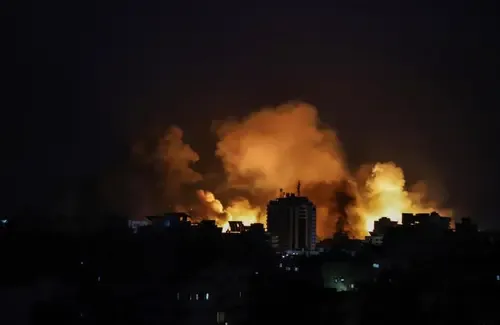
Drone explodes 1 km from Trans-Balkan gas pipeline near Bulgaria-Romania border

Synopsis
A drone detonated just one kilometre from a compressor station on the Trans-Balkan gas pipeline in Bulgaria on 8 August — the latest in a series of unauthorised drone incursions over Romania and Bulgaria that investigators have linked to Russian-origin hardware. With neither country's air defences intercepting the craft, the incident exposes a critical gap in NATO's eastern flank aerial security.
Key Takeaways
An unidentified drone exploded 1 km from a Trans-Balkan gas pipeline compressor station near the Kardam border checkpoint on 8 August .
Bulgarian PM Rumen Radev confirmed the drone entered Bulgarian airspace from Romania before detonating.
Neither Bulgarian nor Romanian authorities detected the drone in transit; enhanced surveillance is now being deployed.
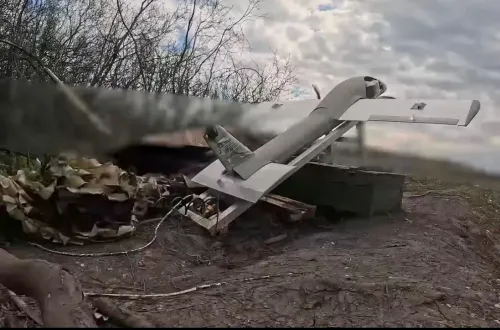
Romania shot down three drones in three separate incidents between 24 and 26 July 2026 , with one confirmed as a Shahed-type drone of Russian origin.
Romania declared a Russian Embassy member persona non grata and summoned Russia's Ambassador following the July incursions.
A formal investigation is under way to identify the drone type involved in the 8 August Bulgaria explosion.
Bulgarian Prime Minister Rumen Radev on Saturday, 8 August confirmed that an unidentified drone exploded just one kilometre from a compressor station of the Trans-Balkan gas pipeline, near the former Kardam border checkpoint on the Bulgarian-Romanian frontier. The drone reportedly entered Bulgarian airspace from Romania before detonating, raising fresh alarm over aerial security in the Black Sea region.
How the Incident Unfolded
According to Prime Minister Radev, Romanian border police first detected the drone by sound, after which Bulgarian 'General Toshevo' border police patrol heard a loud explosion. Radev acknowledged that neither Bulgarian nor Romanian authorities managed to track the drone as it passed through the airspaces of both countries. He stated that enhanced surveillance operations will now be deployed across the region.
'Noise made by the drone was detected by Romanian border police, and a loud explosion was subsequently heard by the General Toshevo border police patrol,' Radev told reporters.
Investigation Under Way
Authorities have launched a formal investigation to determine the type of drone involved and establish its origin. No group or state has claimed responsibility for the incident as of the time of reporting.
Context: A Pattern of Drone Incursions
This incident follows a series of unauthorised drone intrusions over Romanian territory in July 2026. In three separate incidents between 24 and 26 July 2026, the Romanian Armed Forces shot down three drones that had entered national airspace without authorisation. The third drone was downed 12 km northeast of Sulina, within Romania's territorial waters.
Investigations by Romania's General Prosecutor's Office confirmed that at least one of the downed drones was of the Shahed type — the same model used by Russia in its aerial campaign against Ukraine — and that components recovered were of Russian origin.
Romania's Diplomatic Response
Following those July incursions, Romania's Ministry of Foreign Affairs (MFA) declared a member of the Russian Embassy in Bucharest persona non grata and ordered the individual to leave the country. Romanian Foreign Minister Oana-Silvia Toiu also directed the summoning of Russia's Ambassador to the ministry's headquarters.
During the meeting, the Romanian side conveyed what it described as a firm protest against what it called 'illegal and irresponsible' actions. 'The Russian diplomat was presented with fragments of a drone destroyed on Romanian territory, components which official prosecutor investigations have confirmed to be of Russian origin,' the ministry stated in a post on X.
Strategic Significance
The Trans-Balkan gas pipeline is a critical energy artery that historically transported Russian gas westward through Ukraine, Romania, Bulgaria, and into Southern Europe. An explosion in its vicinity — however contained — underscores the vulnerability of European energy infrastructure to drone activity spilling over from the Russia-Ukraine conflict. This is at least the second such proximity incident in the broader Black Sea corridor in recent weeks.
Point of View
Not merely a diplomatic inconvenience. Romania's expulsion of a Russian diplomat after the July incidents signals political resolve, but the 8 August blast suggests deterrence has not held. Europe's energy infrastructure remains exposed, and the gap between political signalling and actual air-defence capability on the eastern periphery is widening.
NationPress
29 Sept 2026
Frequently Asked Questions
What happened near the Trans-Balkan gas pipeline in Bulgaria?
An unidentified drone exploded approximately one kilometre from a compressor station of the Trans-Balkan gas pipeline near the former Kardam border checkpoint on 8 August. Bulgarian Prime Minister Rumen Radev confirmed the incident, stating the drone had entered Bulgarian airspace from Romania before detonating.
Was the gas pipeline damaged in the explosion?
Prime Minister Radev's statement did not confirm any damage to the pipeline itself. An investigation has been launched to determine the drone's type and origin; no further details on infrastructure impact have been officially released.
How does this relate to the drone incidents over Romania in July 2026?
Between 24 and 26 July 2026, Romanian Armed Forces shot down three unauthorised drones. Investigators confirmed at least one was a Shahed-type drone — the model used by Russia against Ukraine — with components of confirmed Russian origin. The 8 August Bulgaria incident follows the same regional pattern.
What action did Romania take after the July drone incursions?
Romania declared a member of the Russian Embassy in Bucharest persona non grata and ordered the individual to leave the country. Foreign Minister Oana-Silvia Toiu also summoned Russia's Ambassador and formally protested what Romania called 'illegal and irresponsible' violations of its airspace.
Why is the Trans-Balkan gas pipeline strategically significant?
The Trans-Balkan pipeline is a key energy corridor that has historically transported gas through Ukraine, Romania, and Bulgaria into Southern Europe. An incident in its vicinity highlights the vulnerability of European energy infrastructure to drone activity linked to the ongoing Russia-Ukraine conflict.