Why Was the 'Bull of Peace' Laid to Rest in South Korea After Drifting from North Korea During a 1996 Flood?
Synopsis
Discover the poignant story behind the 'Bull of Peace' as it is laid to rest in South Korea, symbolizing the enduring hope for inter-Korean harmony. Despite never witnessing unification, this remarkable bull's legacy continues to inspire peace between the two nations.
Key Takeaways
The 'Bull of Peace' symbolizes hope for inter-Korean unity.
It was rescued after drifting from North Korea during a 1996 flood.
The bull underwent treatment for injuries sustained from a landmine.
Its legacy continues through its descendants across South Korea.
A recent memorial ceremony highlighted the ongoing desire for peace.
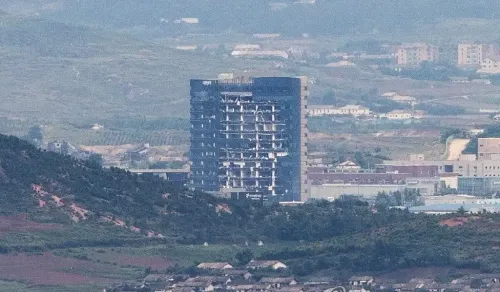
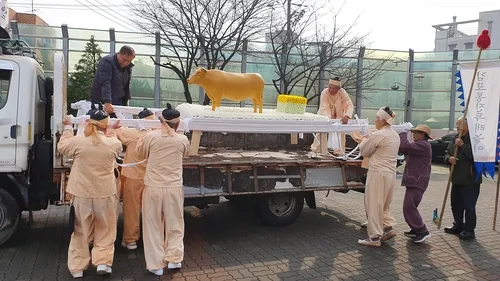
Gimpo, South Korea, Dec 3 (NationPress) A bull that floated south from North Korea amid a devastating flood in 1996, eventually becoming a symbol of inter-Korean peace, has been laid to rest on a hill near the border, almost two decades post its demise. The remains of this iconic animal were transferred to an exhibition hall located in Aegibong Peace Ecopark on Aegibong hill, situated a mere 1.4 kilometers from the North Korean border county of Kaepung, as reported by the Gimpo Cultural Foundation.
Known as the 'Bull of Peace', South Korean officials first encountered this animal on the deserted island of Yudo, off the western city of Gimpo, in July 1996 after its journey from the North during a catastrophic flood that ravaged central areas of the Korean Peninsula.
Given the island's position in neutral waters between the Koreas, South Korean Marines were dispatched to rescue the bull in January of the following year, following authorization from the UN Command, which oversees the armistice of the Korean War (1950-53).
The bull sustained a broken ankle after stepping on a landmine that littered the heavily fortified border, but it later recuperated with treatment. In 1998, it was ceremoniously married to a cow from the southern island of Jeju, and the couple produced seven offspring before the bull passed away from natural causes in 2006, presumed to be around 16 years old.
Post its death, the bull's descendants have been nurtured over eight generations on farms across South Korea, including Jeju and the western city of Incheon.
Prior to the recent relocation of its remains from a cultural center in Gimpo to the border hill, where fierce battles occurred during the Korean War, a memorial ceremony was held near Aegibong on Thursday, invoking wishes for peace on the peninsula, as reported by Yonhap news agency.
'Even though the Bull of Peace, a representation of the agony of division as well as harmony, did not witness the unification of the Koreas, I hope it becomes a radiant star over Aegibong and a messenger of peace,' remarked Kang Kyung-ku, a former mayor of Gimpo.
Point of View
We recognize the 'Bull of Peace' not only as a unique historical symbol but also a reminder of the delicate relationship between North and South Korea. Its poignant story emphasizes the need for ongoing dialogue and understanding, fostering a spirit of reconciliation and peace.
NationPress
27 Sept 2026
Frequently Asked Questions
What is the significance of the 'Bull of Peace'?
The 'Bull of Peace' symbolizes inter-Korean harmony and represents the possibility of reconciliation between North and South Korea.
How did the bull end up in South Korea?
The bull drifted south from North Korea during a flood in 1996 and was discovered on an uninhabited island in South Korea.
What happened to the bull after it was rescued?
After being rescued, the bull was treated for injuries, married a cow, and had seven offspring before passing away in 2006.
Where are the remains of the bull now located?
The bull's remains have been moved to an exhibition hall in Aegibong Peace Ecopark, near the border with North Korea.
What memorial activities were held for the bull?
A memorial ritual wishing for peace on the peninsula was conducted before the relocation of the bull's remains.