How Can South Korea Strengthen Democracy One Year After Martial Law?
Synopsis
As South Korea reflects on the first anniversary of the martial law declaration, former President Moon Jae-in calls for a renewed commitment to democracy, urging citizens to learn from the past. This pivotal moment highlights the importance of resilience and accountability in the nation's political landscape.
Key Takeaways
Moon Jae-in calls for reflection on past lessons.
Democratic resilience showcased by South Koreans.
Martial law declared and lifted within hours.
Impeachment proceedings initiated against Yoon.
Political tensions highlighted by martial law crisis.
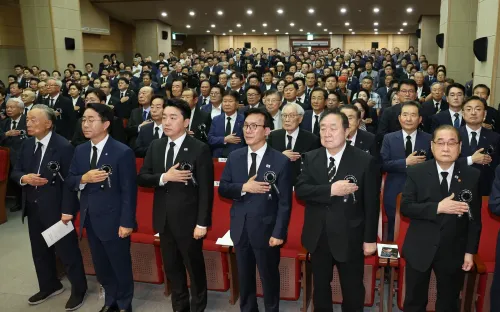
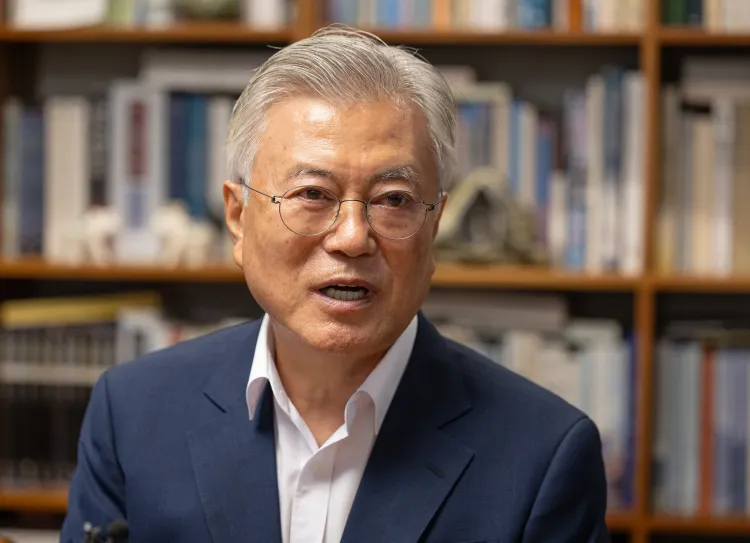
Seoul, Dec 3 (NationPress) Former South Korean President Moon Jae-in on Wednesday called upon South Koreans to reflect on the lessons learned from last year's unexpected martial law crisis in order to foster a more robust democracy as the nation commemorated the first anniversary of the declaration.
"Let us remember the lessons of that day and progress towards a democracy so resilient that it remains unshakeable," Moon expressed on his Facebook page.
"The past year has involved a journey to restore a democracy that had faced significant challenges."
Moon expressed immense pride in the South Korean populace for showcasing exceptional democratic resilience to the globe and safeguarding democracy through what he termed the "revolution of light."
The former liberal leader also condemned the "insurrectionist forces" responsible for the martial law declaration on December 3, criticizing them for failing to "reflect or apologize."
On December 3 of the previous year, former President Yoon Suk Yeol declared an emergency martial law during a surprise televised address. The martial law was rescinded within hours following a unanimous vote against it by lawmakers in the National Assembly, as reported by Yonhap news agency.
The 2024 South Korean martial law crisis stemmed from President Yoon's controversial announcement. On December 3, 2024, Yoon, then president, revealed the imposition of martial law in a televised speech.
This declaration was met with opposition from both political parties and sparked widespread protests. On December 4, a total of 190 legislators present in the National Assembly passed a motion to revoke martial law, despite attempts by the Republic of Korea Army Special Warfare Command to obstruct the vote. Subsequently, Yoon and his cabinet lifted martial law and disbanded the Martial Law Command.
In response, the opposition initiated impeachment proceedings against Yoon, vowing to continue until he resigned. The uproar surrounding the declaration led to the resignation of numerous officials in Yoon's administration, including Defence Minister Kim Yong-hyun, who had advocated for the martial law during a last-minute cabinet meeting just before the announcement and played a pivotal role in the martial law order.
Yoon, along with various officials from his administration and military personnel, faced investigations regarding their roles in executing the decree.
On December 7, Yoon publicly apologized for the martial law declaration. The following day, former Defence Minister Kim Yong-hyun was arrested and taken to a detention facility, where he later attempted suicide just before a warrant could be filed against him. On December 12, Yoon declared his determination to "fight to the end," asserting that the martial law declaration was a necessary "act of governance" to counter anti-state forces.
It is widely believed that the declaration was driven by political tensions with the DPK-controlled Assembly stemming from repeated impeachment attempts against officials, opposition to his budget, and various scandals involving him and his spouse, Kim Keon Hee.
On December 14, Yoon was impeached by the National Assembly and suspended from office pending a final ruling by the Constitutional Court regarding the validation of his presidential removal. Prime Minister Han Duck-soo acted as president until his own impeachment on December 27, leading to Finance Minister Choi Sang-mok stepping in as acting president. However, Han's impeachment was later overturned by the Constitutional Court on March 24, reinstating him.
Yoon was arrested on January 15, and on January 26, he was indicted for leading an insurrection, marking a historic moment as he became the first sitting president in South Korea to face arrest and indictment. On April 4, the Constitutional Court unanimously upheld Yoon's impeachment and removal from office over the martial law declaration.
Point of View
It is imperative to note that the call for stronger democracy by former President Moon Jae-in is a significant reminder of the challenges faced in South Korea's political landscape. The resilience of the citizens during the martial law crisis demonstrates their commitment to democratic principles, which remains crucial for the nation's future.
NationPress
15 Oct 2026
Frequently Asked Questions
What prompted the martial law declaration in South Korea?
The martial law was declared by President Yoon Suk Yeol during a televised address, amidst political tensions and opposition to his administration.
What was the response from lawmakers regarding the martial law?
Lawmakers unanimously voted to lift the martial law within hours of its announcement, highlighting the political opposition to the declaration.
How did the public react to the martial law declaration?
The declaration sparked widespread protests across South Korea, reflecting the citizens' commitment to democratic values.