Cambodia freezes $300 million linked to online scam networks in year-long crackdown
Synopsis
Cambodia's year-long war on cyber-fraud has produced a striking headline number — more than $300 million frozen, nearly 30,000 detained, and 22,045 deported. But the CCOS's own admission that scam activity has merely migrated to guesthouses and private homes raises the question of whether the industrial-scale compounds have truly been eradicated or simply broken into harder-to-trace fragments.
Key Takeaways
Cambodia has frozen more than $300 million in bank accounts linked to cyber-fraud crimes, according to the CCOS press release dated 2 September .
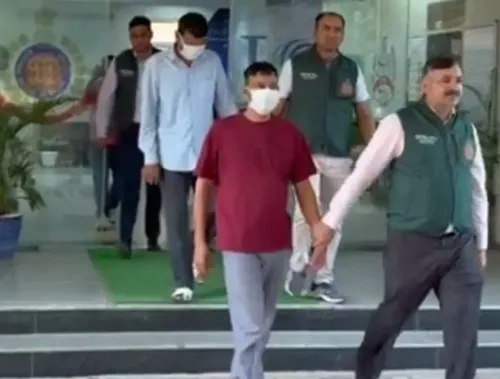
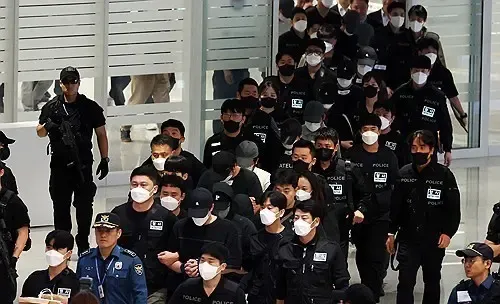
Law enforcement suppressed 663 scam operations between July 2025 and August 2026 , detaining nearly 30,000 suspects of 39 nationalities .
446 case files involving 3,927 suspects — including ringleaders — have been forwarded to court.
Authorities deported 58,266 foreign nationals ; 22,045 were found directly involved in scam operations across 38 nationalities .
18 casino licences were permanently revoked and 9 suspended as part of the regulatory sweep.
The CCOS acknowledges residual small-scale fraud activity operating covertly in rental rooms, guesthouses, and private vehicles.
Cambodia has frozen more than $300 million in bank accounts tied to cyber-fraud operations, according to a press release issued on Wednesday, 2 September by the Secretariat of the Ad-Hoc Commission for Combating Online Scams (CCOS). The disclosure marks one of Southeast Asia's largest single financial freezes targeting transnational scam networks.
Scale of the Crackdown
According to the CCOS press release, Cambodian law enforcement suppressed 663 online scam operations between July 2025 and August 2026, resulting in the apprehension of nearly 30,000 suspects representing 39 nationalities. Authorities forwarded 446 case files to court involving 3,927 suspects — including ringleaders and accomplices — spanning 29 nationalities.
Specialised law enforcement units inspected 793 suspected locations during the same period, conducting direct crackdowns on 624 sites, according to Senior Minister Chhay Sinarith, who heads the CCOS.
Casino Licences Revoked, Thousands Deported
Regulatory action extended to Cambodia's casino sector. Authorities targeted 27 casinos, permanently revoking the licences of 18 establishments and suspending nine others. The move signals that the crackdown went beyond street-level enforcement to target institutional enablers of fraud networks.
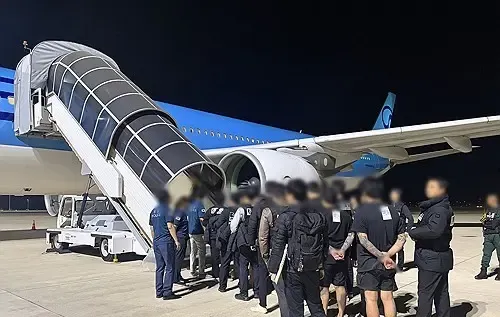
In total, Cambodian authorities rescued and deported 58,266 foreign nationals, including 7,282 women. Of these, 22,045 individuals from 38 nationalities were found to be directly involved in scam operations and deported accordingly.
What the Government Said
Speaking at a briefing with approximately 50 representatives from foreign diplomatic missions and international organisations in Cambodia on Thursday afternoon, Senior Minister Sinarith said that online scam compounds had been 'entirely eradicated' through strict legal action against criminal networks and complicit officials.
The CCOS press release stated: 'At present, there are no remaining large-scale online scam sites operating within Cambodia.' However, it acknowledged that 'some fraudulent activities persist,' noting they have 'shifted to small-scale, covert operations hidden in rental rooms, guesthouses, private homes, vehicles, or coffee shops.'
Broader Context and Regional Significance
Cambodia had long been identified as a regional hub for cyber-fraud compounds, where trafficked individuals — many from South and Southeast Asia — were reportedly forced to conduct online scams targeting victims globally. This crackdown represents a significant policy reversal, coming after sustained international pressure from governments including those of India, China, and the United States.
Notably, the CCOS confirmed on the previous Friday that Cambodia had eliminated large-scale scam compounds following the rigorous, year-long nationwide operation — a claim now reinforced by the financial figures released Wednesday. The shift of remaining fraud activity to covert, small-scale settings suggests that while the industrial-scale infrastructure has been dismantled, enforcement challenges persist at the margins.
What Comes Next
With large compounds reportedly eliminated, authorities face the harder task of tracking dispersed, low-profile operations embedded in civilian settings. The involvement of suspects from 39 nationalities underscores the transnational nature of the threat, making cross-border cooperation a critical variable in sustaining the gains achieved over the past year.
Point of View
But the CCOS's own press release quietly concedes that fraud has not been eliminated — only decentralised. Dismantling compounds is the visible, photogenic part of enforcement; tracking hundreds of small cells hidden in guesthouses and private cars is far harder and far less headline-friendly. The involvement of suspects from 39 nationalities also signals that Cambodia was a node, not the source, of a global criminal network — meaning the pressure must follow the money and the recruiters across borders, not stop at Phnom Penh's city limits.
NationPress
17 Oct 2026
Frequently Asked Questions
How much money has Cambodia frozen in its online scam crackdown?
Cambodia has frozen more than $300 million in bank accounts linked to cyber-fraud crimes, according to the CCOS press release issued on 2 September. The freeze is the result of a nationwide crackdown spanning more than a year.
How many suspects have been arrested in Cambodia's anti-scam operation?
Nearly 30,000 suspects representing 39 nationalities were apprehended between July 2025 and August 2026. Of these, 3,927 individuals — including ringleaders and accomplices across 29 nationalities — have had their case files forwarded to court.
Have large-scale scam compounds been fully eliminated in Cambodia?
Cambodian authorities, led by Senior Minister Chhay Sinarith, say large-scale compounds have been 'entirely eradicated.' However, the CCOS press release acknowledges that some fraudulent activity persists in small-scale, covert settings such as rental rooms, guesthouses, and private homes.
How many people were deported as part of Cambodia's crackdown?
A total of 58,266 foreign nationals were rescued and deported, including 7,282 women. Of these, 22,045 individuals from 38 nationalities were confirmed to be directly involved in online scam operations.
What action was taken against casinos linked to scam networks?
Authorities targeted 27 casinos as part of the crackdown. Eighteen establishments had their licences permanently revoked, while nine others received suspensions, signalling that regulatory action extended beyond street-level enforcement to institutional enablers.