CCP fifth plenum: Empty seats and purges raise questions on Xi's grip
Synopsis
The CCP's fifth plenum ended not with unity but with visibly empty chairs — a direct result of Xi Jinping's sweeping purges. The closing communiqué named and shamed dozens of officials, while a new resolution doubled down on ideological loyalty. With the all-important 2027 Party Congress approaching, the question is whether Xi's campaign is consolidating power or quietly multiplying his enemies.
Key Takeaways
The CCP fifth plenum , held 26–29 October in Beijing , concluded with a communiqué publicly naming and shaming dozens of party and military members.
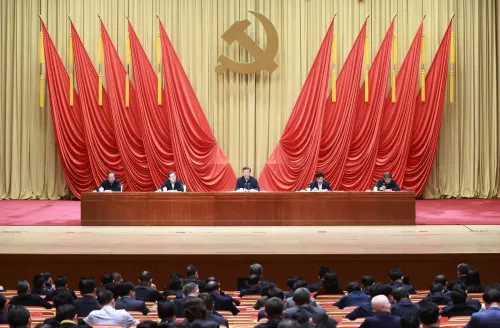
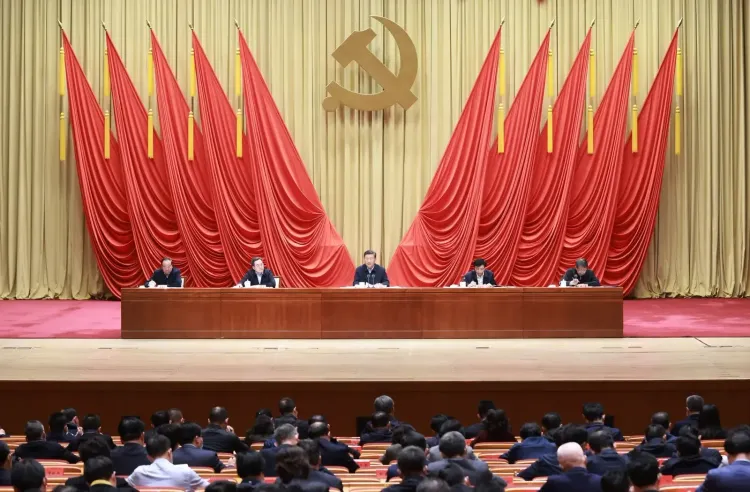
Significant empty seats at the meeting prompted questions over whether it could technically be called a 'plenum,' according to The Diplomat .
The plenum adopted a resolution on 'Full and Rigorous Party Self-Governance' , aimed at reinforcing Xi Jinping's core status and demanding strict ideological loyalty.
Xi has pursued an anti-corruption campaign since becoming General Secretary in 2012 , resulting in the removal of millions of cadres at all levels.
The 21st National Party Congress , due in the second half of 2027 , is seen as the next critical test of Xi's political consolidation, with potential internal challengers emerging from those purged.
The Chinese Communist Party (CCP) fifth plenum, held from 26 to 29 October in Beijing, concluded with a closing communiqué that publicly called out failings in party leadership and 'named and shamed' dozens of members from both the party and military establishments, according to a report by online magazine The Diplomat. The document carries a stark warning that anti-corruption scrutiny will show little mercy to those found in violation of party rules.
A Plenum With Empty Seats
One of the more striking observations from the meeting was the significant number of empty seats — a detail that, according to The Diplomat, raises a definitional question. The Cambridge Dictionary describes a plenum in politics as 'a meeting at which all the members of a group or organisation are present.' By that standard, critics argue, the October gathering may not fully qualify. The absences are widely seen as a visible consequence of the ongoing wave of expulsions and disciplinary actions that have thinned the party's senior ranks.
Xi's Anti-Corruption Campaign Deepens
The purge is part of an expansive anti-corruption drive that Chinese President Xi Jinping has pursued since taking the position of General Secretary of the CCP in 2012. The plenum adopted a resolution — formally titled 'Resolution on Certain Major Issues concerning Persevering with Full and Rigorous Party Self-Governance' — which, according to Global Times, an English-language outlet affiliated with the official CCP mouthpiece People's Daily, was aimed at 'reinforcing Xi Jinping's core status and emphasising strict ideological and political loyalty within the party.'
In his explanatory remarks on the resolution, Xi described the plenum's focus on self-governance as an 'inevitable requirement' for safeguarding ideological purity, curbing corruption, and consolidating the party's hold on power, The Diplomat report noted.
The Legitimacy Question
The report raises a pointed contradiction: the CCP, while claiming total legitimacy, has simultaneously exposed millions of its own cadres — from grassroots members to senior officials — as having abused their positions for personal gain. The Diplomat noted that Xi 'did not explain, however, how his party can continue to claim total legitimacy in the face of having exposed millions of party cadres, from top to bottom, who have abused their office and CCP membership for personal gain.' While some of the documented corruption reportedly dates to the tenures of Xi's predecessors, critics argue the party's institutional continuity makes such distinctions difficult to sustain.
What Lies Ahead: The 2027 Party Congress
According to The Diplomat, Xi's anti-corruption crusade is expected to intensify further before the 21st National Party Congress, scheduled for the second half of 2027 — a gathering that will determine CCP leadership for the following five years. The report flagged that while Xi retains strong support within the party, his purges have also generated significant internal opposition. 'A challenge to Xi's continued leadership may be in the offing. He has his supporters, to be sure, but through his purges, he has also made enemies, many of them,' it stated. The 2027 congress is now widely viewed as the next major test of his political consolidation.
Point of View
Self-inflicted image problem for a party that prizes optics above almost everything else. Xi's anti-corruption drive has undeniable political utility — it neutralises rivals under the cover of discipline — but the communiqué's own logic is now turning against itself: a party that has exposed millions of its members as corrupt cannot simultaneously claim unbroken moral authority. The 2027 Congress will reveal whether the purges have produced a leaner, more loyal machine or a leadership that has traded institutional depth for personal control. Either outcome carries significant consequences for how China is governed — and how it projects power abroad.
NationPress
14 Nov 2026
Frequently Asked Questions
What happened at the CCP fifth plenum in October 2024?
The CCP fifth plenum, held from 26 to 29 October in Beijing, concluded with a communiqué that publicly named and shamed dozens of party and military members as part of Xi Jinping's ongoing anti-corruption campaign. The meeting also adopted a resolution on party self-governance, reinforcing Xi's core leadership status.
Why were there empty seats at the CCP plenum?
The empty seats are widely attributed to the large number of party and military members expelled or disciplined under Xi Jinping's anti-corruption purges since 2012. According to The Diplomat, the absences raised the question of whether the gathering could technically be called a 'plenum,' which by definition requires all members to be present.
What is the resolution adopted at the CCP fifth plenum?
The plenum adopted a resolution formally titled 'Resolution on Certain Major Issues concerning Persevering with Full and Rigorous Party Self-Governance.' According to Global Times, it was designed to reinforce Xi Jinping's core status and demand strict ideological and political loyalty from party members.
What is the significance of the 2027 National Party Congress for Xi Jinping?
The 21st National Party Congress, expected in the second half of 2027, will determine CCP leadership for the following five years and is seen as the next major test of Xi's political consolidation. The Diplomat has suggested that while Xi retains supporters, his purges have also created internal enemies, and a leadership challenge cannot be ruled out.
How long has Xi Jinping's anti-corruption campaign been running?
Xi Jinping launched his anti-corruption campaign after becoming General Secretary of the CCP in 2012, making it over a decade old. It has resulted in disciplinary action against millions of party cadres across all levels of the organisation, from grassroots members to senior military and political officials.