Xi Jinping's 2027 power play: Empty seats at CCP plenum reveal who's out
Synopsis
The CCP's October plenum wasn't meant to reshuffle power — but the empty chairs did it anyway. With 37 full members purged, the military stripped of Politburo representation, and Xi promoting only those he fully trusts, the 2027 Party Congress is shaping up as the most consequential leadership overhaul in a generation.
Key Takeaways
The CCP fifth plenum , which closed on 29 October , saw only 162 of 205 full members and 117 of 171 alternates attend.
A total of 37 full members and 15 alternates have now been removed, including former general Zhang Youxia and ex-foreign minister Qin Gang .
Nearly 20 more full members were absent without formal announcement, suggesting ongoing investigations in the officer corps.
Only one promotion was made: Zhang Shengmin joined the Politburo as the CMC's sole remaining vice chair.
Only 10 of 24 vacant Central Committee seats were filled, reflecting Xi Jinping's caution in elevating officials.
The CMC is expected to be rebuilt at the 2027 Party Congress , coinciding with the PLA's centenary .
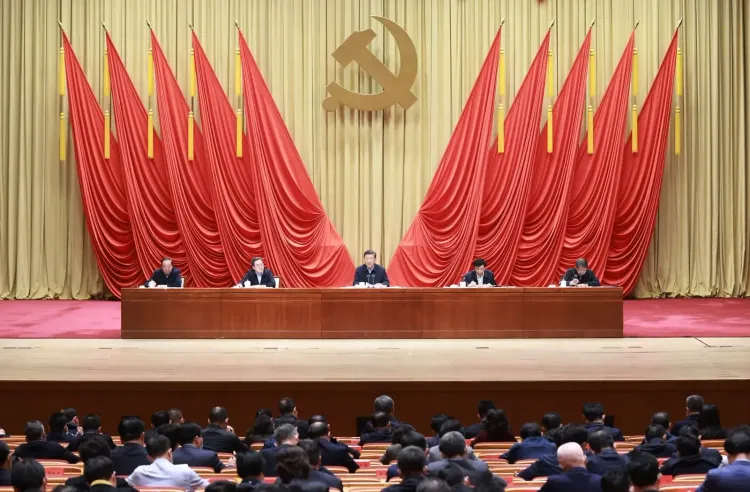
Empty seats and silent back-row observers at the Chinese Communist Party's (CCP) fifth plenum of the Central Committee, which concluded on 29 October, are offering a telling preview of how President Xi Jinping plans to reshape China's ruling elite ahead of the pivotal 2027 Party Congress, according to an analysis by The Diplomat. The gathering was not formally convened to make appointments — yet the absences spoke louder than the agenda.
The Numbers Behind the Absences
The Central Committee elected in 2022 comprised 205 full members and 171 alternates. At this plenum, only 162 full members and 117 alternates were present. According to the analysis, 'barring sudden illness, an empty seat at a plenum points to chronic ill health or political trouble.'
The plenum formally confirmed the expulsion of 33 individuals, including Zhang Youxia, once Xi's most senior general. Combined with earlier removals — among them two members of the military commission, He Weidong and Miao Hua, and former foreign minister Qin Gang — the total purged now stands at 37 full members and 15 alternates.
Key Absentees and What Their Absence Signals
Nearly 20 more full members stayed away from the plenum without any formal announcement of their removal, though only three are officially listed as being under investigation, the report noted. Among those conspicuously absent were Han Jun, removed as agriculture minister in April, navy commander Hu Zhongming, and air force political commissar Guo Puxiao — all three of whom are, according to the analysis, 'probably finished.'
This comes amid what analysts describe as an ongoing, far-reaching purge of China's officer corps, suggesting that the investigations are far from concluded. Notably, this is not the first such wave: Xi has systematically removed senior military figures across multiple plenum cycles since consolidating power.
The Military's Shrinking Voice at the Top
The plenum promoted just one individual: Zhang Shengmin, the sole remaining vice chair of the Central Military Commission (CMC), who was elevated to the Politburo. The fall of Zhang Youxia has left the armed forces with no representation on the Politburo — a vacuum that, critics argue, risks breeding resentment within the ranks.
The CMC itself gained no new members, reportedly because Xi has too few trusted full generals to draw from. Beyond Xi's own post, only three of the commission's positions are currently filled. The Diplomat's analysis warned that 'anyone Xi promotes must be clean, or the high command could collapse again.'
Who Is Rising: The 2027 Contenders
Only 10 of the Central Committee's 24 vacant seats were filled at this plenum, reflecting what the report characterises as Xi's growing caution in elevating officials. Two names stand out among those promoted: Lu Dongliang, the Shanxi governor, and Liu Jie, governor of Zhejiang.
The report also flagged Shanghai mayor Zhu Zhongming as a 'back-row observer' who could follow the trajectory of Cai Qi — rising directly into the Politburo. 'Most party careers move step by step, so jumping the queue usually signals patronage from the top,' the analysis stated.
What the 2027 Party Congress Could Look Like
The CMC is expected to be substantially rebuilt at the 2027 Party Congress, which coincides with the centenary of the People's Liberation Army (PLA) — a symbolically charged milestone that Xi is likely to use as a backdrop for a sweeping reorganisation of military leadership. How Xi fills those seats — and whom he trusts enough to elevate — will define the contours of Chinese power for the decade ahead.
Point of View
Which itself signals how deep distrust runs within the officer corps. The military's absence from the Politburo is a structural anomaly that China's political system has historically not tolerated for long — the PLA is too large and too consequential to go unrepresented at the apex. The 2027 centenary framing gives Xi a deadline and a stage, but it also creates pressure: if investigations are still unresolved by then, a rushed reshuffle could produce exactly the instability it is meant to prevent.
NationPress
7 Nov 2026
Frequently Asked Questions
What did the CCP fifth plenum reveal about Xi Jinping's grip on power?
The plenum, which closed on 29 October, showed that Xi is systematically removing officials he does not trust, with 37 full members and 15 alternates now purged from the Central Committee. Dozens more were absent without explanation, signalling that internal investigations are ongoing.
Who are the most notable figures expelled or absent from the plenum?
Confirmed expulsions include former senior general Zhang Youxia, military commission members He Weidong and Miao Hua, and former foreign minister Qin Gang. Among the unexplained absentees were agriculture minister Han Jun, navy commander Hu Zhongming, and air force political commissar Guo Puxiao.
Why does the military's absence from the Politburo matter?
Zhang Youxia's removal left the armed forces with no representative on the Politburo, which analysts say risks building resentment within the PLA's ranks. The military is described as a vast interest group that historically requires a voice at the top of the party hierarchy.
Who was promoted at the plenum, and what does it signal?
Zhang Shengmin, the sole remaining vice chair of the Central Military Commission, was elevated to the Politburo — the only promotion made at the plenum. Shanxi governor Lu Dongliang and Zhejiang governor Liu Jie were among those newly added to the Central Committee, with Shanghai mayor Zhu Zhongming flagged as a potential future Politburo entrant.
What is expected to happen at the 2027 Party Congress?
The Central Military Commission is expected to be substantially rebuilt at the 2027 Party Congress, which coincides with the centenary of the People's Liberation Army. Analysts see it as the moment Xi will finalise his reshaping of China's military and political elite for the coming decade.