CM Yogi Hails Ayodhya Ablaze at Deepotsav 2026
Synopsis
Chief Minister Yogi Adityanath declared Ayodhya 'radiant like the Treta Yuga' at Deepotsav 2026, marking ten years of the UP government's annual festival of lights on the Sarayu riverfront — a milestone framed as the fulfilment of a decade-long cultural and infrastructure promise.
Key Takeaways
The Chief Minister's Office of Uttar Pradesh shared CM Yogi's statement at Deepotsav 2026 on 7 November 2026 .
CM Yogi invoked the Treta Yuga to frame Ayodhya's transformation as the fulfilment of a civilisational resolve.
Deepotsav was first launched by the UP government in 2017 ; the 2026 edition marks its tenth anniversary under the hashtag #Deepotsav1Dasak.
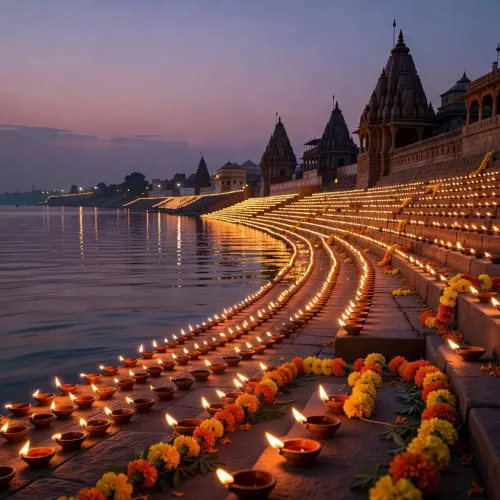
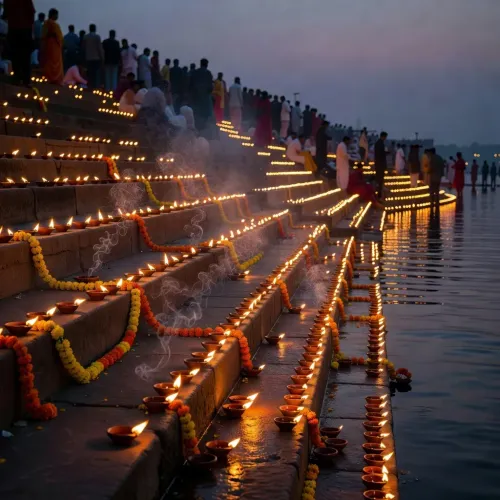
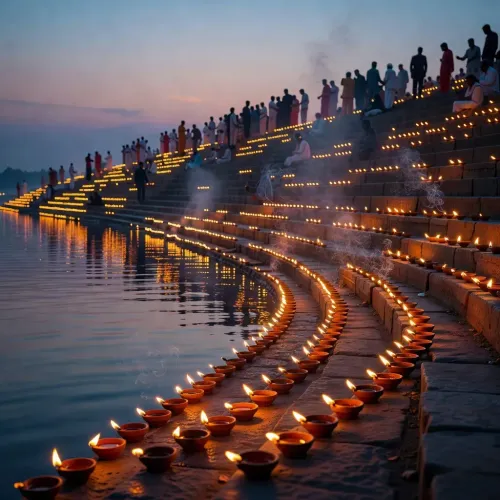
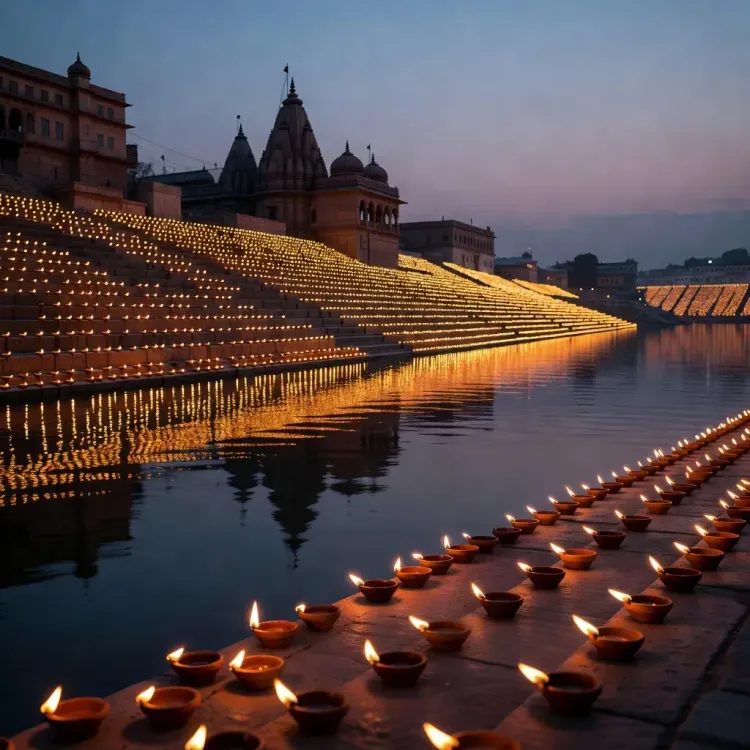
The festival is held on the banks of the Sarayu river in Ayodhya , featuring thousands of earthen lamps and cultural performances.
UP has used successive Deepotsav editions to showcase ghat development, lighting, and connectivity infrastructure as part of a broader Ayodhya tourism push .
Local traders and the growing hospitality sector in Ayodhya treat the festival as a major commercial peak season.
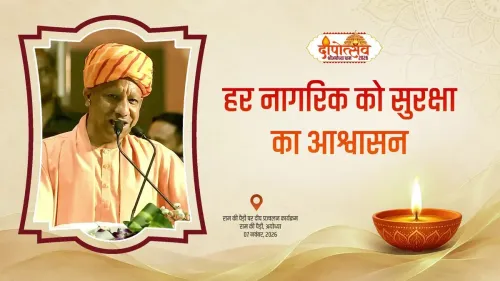
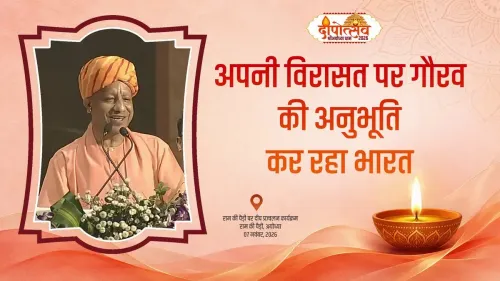
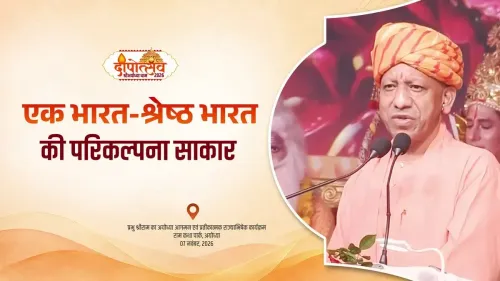
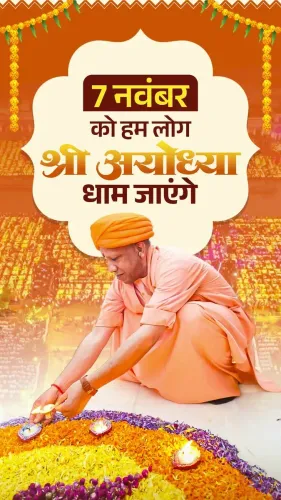
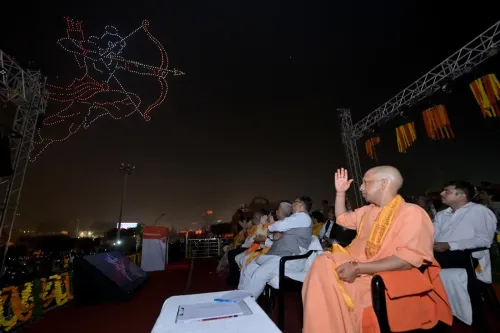
Ayodhya is glowing — and Chief Minister Yogi Adityanath wants the country to know it. On the evening of Saturday, 7 November 2026, the Chief Minister's Office of Uttar Pradesh shared a statement from CM Yogi at Deepotsav 2026, marking what the hashtag calls a full decade of the festival — ek dasak — since the Uttar Pradesh government first transformed this ancient city's riverfront into a sea of lamps.
The statement, quoted verbatim by his office, reads: 'Log sochte the — kya hoga Ayodhya mein! Hum kehte the — chinta mat kijiye, hamara sankalp avashya poora hoga. Aaj Ayodhya jagmaga rahi hai, tretayug ka smaran kara rahi hai.' In English: 'People used to wonder — what will become of Ayodhya! We would say — do not worry, our resolve will certainly be fulfilled. Today Ayodhya is radiant, evoking the memory of the Treta Yuga.' The invocation of the Treta Yuga — the cosmic age associated with Lord Rama — is deliberate and loaded: it frames a government festival as the fulfilment of a civilisational promise.
A Decade of Diyas on the Sarayu
Deepotsav was first organised by the UP government in 2017, the same year CM Yogi took office, on the banks of the Sarayu river in Ayodhya. What began as a cultural initiative to lift the city's religious tourism profile has grown year on year, drawing pilgrims, traders, and visitors from across the country. The 2026 edition, branded #Deepotsav1Dasak and #Deepotsav2026AyodhyaPuri, marks the tenth anniversary of that vision.
The event combines thousands of earthen lamps — diyas — lit along the ghats with cultural performances and state-level ceremonies. Uttar Pradesh has consistently used successive editions to showcase new infrastructure: improved ghat development, lighting networks, road connectivity, and hospitality capacity — all part of a broader push to position Ayodhya alongside Varanasi and Mathura as a flagship pilgrimage circuit for domestic and global Hindu visitors.
From Skepticism to 'Jagmag': The Political Subtext
CM Yogi's framing is worth pausing on. The rhetorical structure — 'they doubted, we delivered' — is a direct rejoinder to years of skepticism about whether the state could transform a historically significant but infrastructure-poor city into a modern pilgrimage powerhouse. The Ram Janmabhoomi temple consecration in January 2024 was the centrepiece of that transformation; Deepotsav 2026 is positioned as its cultural continuation, proof that the momentum has not faded.
For local traders and Ayodhya's growing hospitality sector, the festival is not merely symbolic — it is a commercial peak period. The state government's investment in ghats, connectivity, and event infrastructure has directly shaped foot traffic and revenue cycles in the city.
Ten editions in, the diyas keep multiplying — and so do the expectations riding on every flame.
Point of View
We delivered' framing at the tenth edition is a calculated consolidation narrative, linking the 2024 Ram temple consecration to a sustained state-driven religious-tourism economy. The Treta Yuga invocation also signals that the government intends to keep Ayodhya's symbolic salience at the centre of UP's identity politics well beyond any single electoral cycle. For rival parties, the optics of a glowing, pilgrim-filled Ayodhya remain genuinely difficult to contest on cultural terms.
NationPress
7 Nov 2026
Frequently Asked Questions
What is Deepotsav in Ayodhya?
Deepotsav is an annual festival of lights organised by the Uttar Pradesh government on the banks of the Sarayu river in Ayodhya, featuring thousands of earthen lamps, cultural performances, and state ceremonies. It was first held in 2017.
What did CM Yogi say at Deepotsav 2026?
CM Yogi Adityanath said that while people once doubted Ayodhya's future, his government's resolve has been fulfilled — and that Ayodhya today shines so brightly it evokes the memory of the Treta Yuga, the cosmic age of Lord Rama.
How many years has Deepotsav been held in Ayodhya?
The 2026 edition marks ten years — one dasak — since the Uttar Pradesh government launched Deepotsav in 2017.
What is the significance of the Treta Yuga reference at Deepotsav?
The Treta Yuga is the Hindu cosmic age in which Lord Rama is believed to have lived and ruled. By evoking it, CM Yogi positioned Ayodhya's transformation as a spiritual and civilisational fulfilment, not merely an administrative achievement.
How has Ayodhya developed under the UP government's Deepotsav initiative?
Since 2017, the UP government has invested in ghat development, lighting infrastructure, road connectivity, and hospitality capacity in Ayodhya, using each Deepotsav edition to showcase new additions alongside the broader Ayodhya tourism and pilgrimage push.