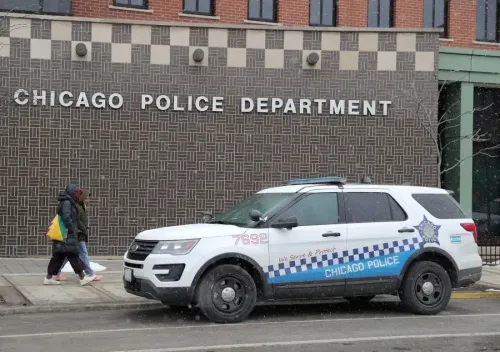
Hindu temple attack plot: Chicago suburbs boost security at places of worship
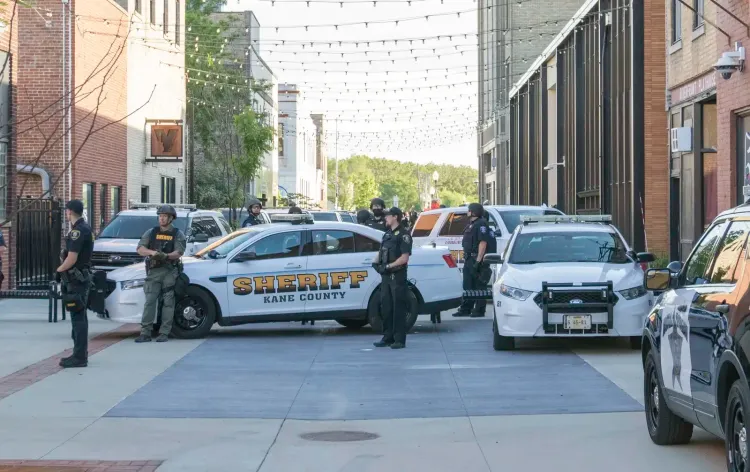
Synopsis
A foiled neo-Nazi plot to attack the Sri Venkateswara Swami Temple in Aurora on Navaratri has sent shockwaves through Chicago's Indian American suburbs. With 105 members of Congress demanding an FBI federal hate crime investigation by 29 October, and Naperville police deploying free security assessments across seven faith communities, the case is rapidly escalating from a local incident into a national reckoning on organised hate.
Key Takeaways
Naperville Police Chief Jason Arres announced enhanced patrols and free security assessments for places of worship after the Aurora Hindu temple attack plot on 11 October 2026 .
Alleged attacker Alexandros Paporakis , 19 , of Palatine faces state charges of making a terrorist threat and unlawful possession of a short-barrelled rifle; his next court date is 30 October .
Paporakis allegedly wrote an eight-page white supremacist manifesto targeting people of Indian descent at the Sri Venkateswara Swami (Balaji) Temple .
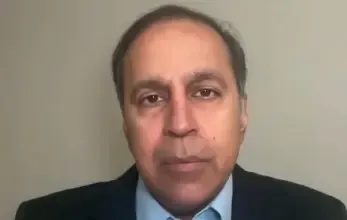
A group of 105 members of Congress led by Congressman Raja Krishnamoorthi has asked FBI Director Kash Patel to respond by 29 October on whether the case is being investigated as a federal hate crime.
The Justice Department's Civil Rights Division has indicated it is reviewing the case; no federal charges have been filed yet.
More than 50 people from seven faith communities attended an interfaith 'Dialogue on Hate Crimes' in Naperville, underscoring the attack's cross-community impact.
Police in Naperville, a Chicago suburb home to a large Indian American population, have ramped up patrols at religious sites and launched free security assessments for places of worship — more than two weeks after an alleged neo-Nazi plot to attack a Hindu temple in neighbouring Aurora was foiled on 11 October 2026, the first day of Navaratri. The stepped-up measures reflect deepening anxiety across multiple faith communities in the region.
What the Naperville Police Are Doing
Naperville Police Chief Jason Arres outlined the new measures at an interfaith 'Dialogue on Hate Crimes' held at Wesley United Methodist Church, which drew more than 50 people from at least seven faith communities. The event was organised by United for Peace and the Naperville Interfaith Leaders Association.
'We have a group that will come in and does assessments of your places of worship,' Chief Arres said. 'Everything from where you have cameras, if you need them, where you may even trim bushes or add lighting to keep [your facility] safe, all kinds of free things that we'll do to help the security of our community.' He also encouraged faith leaders to enrol in the department's free Civilian Response to Active Shooter Events course and urged anyone who sees suspicious activity to call 911 without hesitation.
The Aurora Temple Attack: What Happened
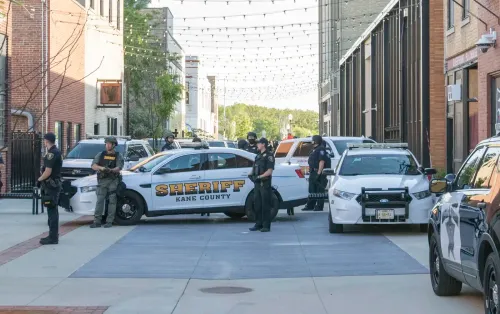
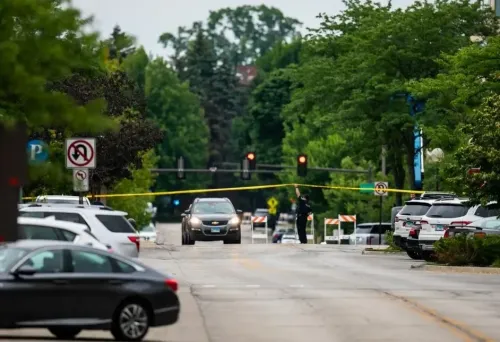
Prosecutors allege that Alexandros Paporakis, 19, of Palatine — a self-identified neo-Nazi — attempted to shoot a man outside the Sri Venkateswara Swami (Balaji) Temple in Aurora on 11 October, but his rifle jammed. Investigators say he had written an eight-page white supremacist manifesto describing violence against people of Indian descent at a Hindu house of worship.
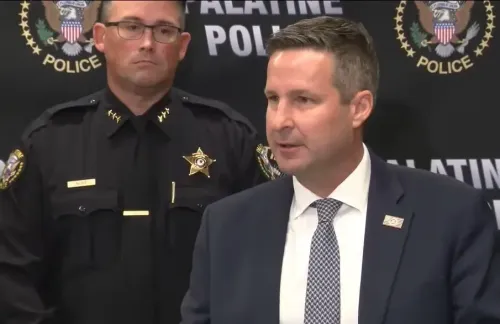
Paporakis faces state charges of making a terrorist threat and unlawful possession of a short-barrelled rifle, according to the Palatine Police Department. His next court date is 30 October. No federal charges have been announced; the Justice Department's Civil Rights Division has indicated it is reviewing the case.
Community and Political Response
Naperville Mayor Scott Wehrli addressed attendees directly: 'There was an attempted attack on our residents, members of our community, who were at a Hindu temple in Aurora, by somebody who was full of hate and all sorts of ideas that our community just does not tolerate.' Aurora Mayor John Laesch also attended the gathering.
Shalini Gupta, a board member of United for Peace, noted the manifesto's broad targeting: 'The manifesto the shooter had expressed hate towards many communities and the Jewish community, African Americans, Indians, and others.' Naperville resident Saily Joshi, whose family visits the temple, said: 'To see that happen so close to home, it was scary, that's a temple that our family goes to.'
Rabbi David Eber of Congregation Beth Shalom observed that synagogues across America were already implementing similar security protocols — a sign that organised hate poses a threat well beyond any single community.
Congressional Push for Federal Hate Crime Probe
A bipartisan group of 105 members of Congress, led by Congressman Raja Krishnamoorthi — who was present at the temple with his family during the attempted attack — has formally asked FBI Director Kash Patel to confirm by 29 October whether the bureau is investigating the incident as a federal hate crime. The request adds political pressure on federal law enforcement to elevate the case beyond the current state-level proceedings.
What Comes Next
With Paporakis's next court hearing on 30 October and the congressional deadline for an FBI response on 29 October, the coming days will be pivotal in determining whether this alleged attack is formally classified as a federal hate crime. The interfaith dialogue in Naperville signals that community-led vigilance is already under way, but many residents and faith leaders say sustained institutional action — not one-off meetings — is what the moment demands.
Point of View
Free security audits, active-shooter training for clergy — is a model of rapid municipal action, but it also exposes how far local authorities must stretch when federal structures lag. The fact that no federal charges have been filed more than two weeks after an alleged neo-Nazi attempted to shoot worshippers at a Hindu temple on a major religious holiday is a conspicuous gap. Congress members are right to press the FBI: the manifesto's explicit targeting of Indian Americans at a house of worship fits the federal hate crime statute squarely. Criminalising the act at only the state level risks under-signalling the gravity of organised supremacist violence to a national audience that needs the deterrent effect of federal prosecution.
NationPress
28 Oct 2026
Frequently Asked Questions
What happened at the Hindu temple in Aurora, Illinois?
On 11 October 2026, the first day of Navaratri, an alleged neo-Nazi named Alexandros Paporakis, 19, of Palatine, reportedly attempted to shoot a man outside the Sri Venkateswara Swami (Balaji) Temple in Aurora but his rifle jammed. He is accused of writing an eight-page white supremacist manifesto targeting people of Indian descent at the temple.
What charges does Alexandros Paporakis face?
Paporakis faces state-level charges of making a terrorist threat and unlawful possession of a short-barrelled rifle, according to the Palatine Police Department. No federal charges have been announced; the Justice Department's Civil Rights Division is reviewing the case. His next court date is 30 October.
Why are 105 members of Congress writing to the FBI?
A bipartisan group of 105 Congress members, led by Congressman Raja Krishnamoorthi — who was at the temple with his family during the alleged attack — has asked FBI Director Kash Patel to confirm by 29 October whether the bureau is investigating the incident as a federal hate crime. They argue the manifesto's explicit targeting qualifies under federal statute.
What security measures is Naperville taking after the Aurora attack?
Naperville Police have added patrols at religious sites, are offering free security assessments covering cameras, lighting, and landscaping, and are encouraging faith leaders to complete a free Civilian Response to Active Shooter Events course. Police Chief Jason Arres also urged community members to call 911 for any suspicious activity without hesitation.
Which communities are affected beyond the Hindu community?
According to Shalini Gupta of United for Peace, the attacker's manifesto also expressed hate towards the Jewish community, African Americans, and other groups. The interfaith dialogue in Naperville drew representatives from at least seven faith communities, and Rabbi David Eber noted that synagogues across America already operate under similar elevated security protocols.