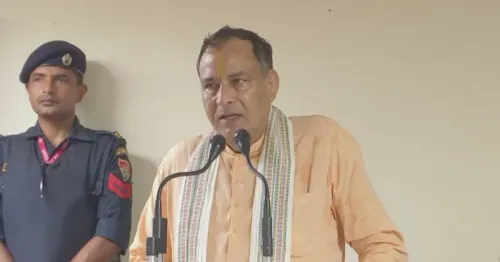
CM Pema Khandu hails Army's Sainik School coaching drive in Arunachal
Synopsis
Arunachal Pradesh CM Pema Khandu commended the Gajraj Corps' 'Yuva Sashaktikaran: Mission Sainik School' on 28 October 2026, which has secured Sainik School admissions for 59 tribal students across two batches, with 75 now preparing for AISSEE-2027.
Key Takeaways
CM Pema Khandu on 28 October 2026 publicly praised the Gajraj Corps' Yuva Sashaktikaran: Mission Sainik School initiative.
The Indian Army runs AISSEE coaching at Jang, Rama Camp, and Dirang in Arunachal Pradesh's border districts.
The first two batches produced 59 students who secured Sainik School admissions.
A new cohort of 75 students has commenced preparation for AISSEE-2027 .
BEO Dirang Sonam Tsering and local community leaders are named as civilian partners in the programme.
The initiative builds on a two-decade tradition of Army civic-action outreach in India's Northeast under frameworks like Operation Sadbhavana .
Along India's most sensitive northern frontier, soldiers of the Gajraj Corps are fighting a different kind of battle — one fought with textbooks, not rifles. Arunachal Pradesh Chief Minister Pema Khandu on Wednesday, 28 October 2026, publicly commended the Indian Army's Yuva Sashaktikaran: Mission Sainik School initiative, calling it a transformative force for tribal youth in the state's remote border districts.
Coaching camps in Jang, Rama Camp, and Dirang
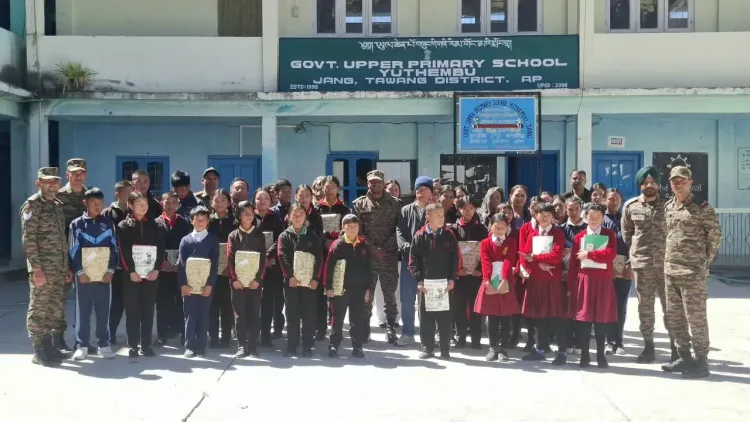
The programme, run by the Sela Warriors of Gajraj Corps, delivers targeted coaching for the All India Sainik Schools Entrance Examination (AISSEE) at three locations: Jang, Rama Camp, and Dirang — all deep inside Arunachal Pradesh's Tawang and West Kameng districts. These are not classroom suburbs; they are high-altitude, largely tribal communities where access to quality exam preparation has historically been near zero.
The initiative appears to have gained traction quickly. According to CM Khandu's post, the first two batches produced 59 students who secured admissions to Sainik Schools. A third cohort of 75 students has now begun preparing for AISSEE-2027.
Sainik Schools and the 1961 ambition to widen the officer pipeline
Sainik Schools were established in 1961 by the Ministry of Defence with an explicit goal: widen the social base of officer recruitment by drawing talent from every corner of the country, not just urban centres. The network of residential schools prepares students for the National Defence Academy (NDA) and instils discipline and leadership from early adolescence.
Getting a student from a tribal village in West Kameng into one of these schools requires cracking a competitive national entrance exam — precisely the gap this Army-run coaching programme is designed to close.
Army's long civic-action footprint in the Northeast
The Indian Army's formations in the Northeast have run targeted coaching and civic outreach programmes in border areas for over two decades, building on the framework of Operation Sadbhavana. The Gajraj Corps, headquartered in Tezpur, has operational responsibility over the Arunachal sector and has long paired its security mandate with human-capital development work.
CM Khandu's message singled out Block Education Officer (BEO) Dirang, Mr. Sonam Tsering, alongside the Indian Army, supportive parents, and community leaders as partners in the effort — underscoring that the programme draws on civilian administrative networks, not just military resources.
What 75 students heading for AISSEE-2027 signals
The jump from two completed batches to a new cohort of 75 suggests the programme is expanding in scale, not winding down. Whether similar coaching centres will be extended to other districts within Arunachal Pradesh, or replicated across other northeastern states, is the logical next question for state and central policymakers to answer.
For now, the arithmetic is simple and striking: young people from some of India's most geographically isolated communities are clearing a national defence examination at measurable rates. That is the story the Chief Minister wants told — and the Army's quiet work in those hills has earned it.
Point of View
The Army simultaneously builds long-term community trust in a border state that shares a contested frontier with China. CM Khandu's vocal endorsement also serves a political purpose — aligning the BJP-led state government with a visible, tangible welfare outcome in constituencies that are difficult to reach through conventional development spending. The mention of AISSEE-2027 as an active cohort signals institutional continuity rather than a one-off programme, which matters for any serious assessment of its impact. If the model scales to other districts, it could meaningfully shift the demographic profile of Northeast India's intake into national defence institutions over the next decade.
NationPress
28 Oct 2026
Frequently Asked Questions
What is Yuva Sashaktikaran Mission Sainik School in Arunachal Pradesh?
It is an Indian Army initiative run by the Gajraj Corps that provides free AISSEE coaching to tribal students in border districts of Arunachal Pradesh at centres in Jang, Rama Camp, and Dirang, aiming to secure their admission into Sainik Schools.
What is the AISSEE exam?
AISSEE stands for All India Sainik Schools Entrance Examination, a national exam conducted annually by the Ministry of Defence for admission to Class VI and Class IX in Sainik Schools across India.
How many students got admitted to Sainik Schools through this Army coaching programme?
According to CM Pema Khandu's post, 59 students from the first two batches of the programme secured Sainik School admissions.
What is Gajraj Corps and where is it based?
Gajraj Corps is an Indian Army corps headquartered in Tezpur, Assam, with operational responsibility over the Arunachal Pradesh sector and a sustained civic-action mandate in the region.
What are Sainik Schools in India?
Sainik Schools are residential schools run under the Ministry of Defence, established in 1961 to prepare students for the National Defence Academy and to widen the social base of officer recruitment across India.