China's Ambition for AI Supremacy and Military Modernization: Insights from Tulsi Gabbard

Synopsis
Tulsi Gabbard discusses China's strategic goals to dominate artificial intelligence by 2030 and its military modernization efforts, highlighting the potential for conflict over Taiwan while noting the preference for peaceful reunification.
Key Takeaways
China's AI Ambition: Targeting leadership in AI by 2030.
Military Modernization: Rapid upgrades in military capabilities.
Taiwan Strategy: Potential forceful takeover vs. preference for peaceful reunification.
Cyber Threats: Persistent risks to US infrastructure.
Global Influence: Expanding economic and geopolitical reach.
Washington, March 19 (NationPress) China is ambitiously aiming to surpass the United States as the foremost power in artificial intelligence by the year 2030. Concurrently, it is enhancing its military capabilities to prepare for a potential forceful takeover of Taiwan, as stated by Director of National Intelligence Tulsi Gabbard during a briefing to lawmakers. She noted that, despite these preparations, Beijing seems to favor a strategy of "eventual peaceful reunification with Taiwan without conflict."
In her presentation of the 2026 Annual Threat Assessment to the House Intelligence Committee, Gabbard asserted that China is determined to dethrone the US as the global leader in AI by 2030, while simultaneously advancing its technological and military prowess to bolster its international standing.
According to the intelligence community, China is regarded as "the most capable competitor" in the realm of artificial intelligence, a field that is rapidly transforming the international threat landscape.
Gabbard cautioned that the widespread implementation of AI carries significant dangers, including its potential applications in weapons design, battlefield targeting, and decision-making systems.
She emphasized that "AI can significantly assist in the design of weapons and systems, and has been employed in recent conflicts to influence targeting and streamline decision-making processes," highlighting the growing importance of emerging technologies in future military confrontations.
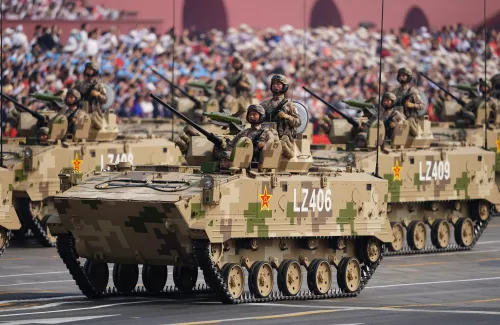
On the military aspect, Gabbard mentioned that China is swiftly modernizing its armed forces across all domains, aiming for "world-class status by mid-century." This modernization includes developing capabilities intended to deter US and allied forces in the Indo-Pacific region.
The intelligence assessment also highlighted China's strategic goal of acquiring the means to take Taiwan by force if necessary. Nonetheless, Gabbard indicated that China likely prefers to create conditions for "an eventual peaceful reunification with Taiwan short of conflict."
China's aspirations extend beyond military advancements; it is also focused on enhancing its economic and geopolitical influence. Gabbard pointed out that Beijing is striving to elevate its political, economic, military, and technological power to expand its global reach and counter perceived threats.
In the cyber arena, she warned that China remains one of the most persistent threats to US networks and critical infrastructure. The intelligence community assesses that China, alongside Russia, continues to heavily invest in cyber capabilities to gather intelligence and prepare for future disruptions.
Gabbard also noted China's increasing involvement in regions like Latin America and the Arctic. In the Western Hemisphere, she stated that China's appetite for raw materials is likely to fuel ongoing economic outreach, while in the Arctic, it is pursuing "more limited efforts" to further its strategic and economic interests.
Additionally, China and Russia are collaborating on advanced missile delivery systems designed to "penetrate or bypass US missile defenses," illustrating a broader trend of escalating strategic rivalry among major powers.
The report further mentioned that emerging technologies such as quantum computing could provide early adopters with a significant advantage, allowing them to process sensitive national security data and crack existing encryption systems.
Gabbard concluded by stating that the intelligence community remains focused on threats to the US homeland and global risks, identifying China, Russia, North Korea, and Iran as key state actors shaping the evolving security landscape.
Point of View
The focus remains on understanding these dynamics while prioritizing national security and global stability.
NationPress
19 Sept 2026
Frequently Asked Questions
What is China's goal for artificial intelligence?
China aims to surpass the US as the world leader in artificial intelligence by 2030.
What military strategy is China pursuing regarding Taiwan?
China is modernizing its military to prepare for a potential forceful takeover of Taiwan while preferring peaceful reunification.
What are the risks associated with AI according to Tulsi Gabbard?
The widespread adoption of AI poses serious risks including its use in weapons design and decision-making systems.
How is China expanding its global influence?
China is working to elevate its political, economic, military, and technological power to enhance its global influence.
What threats does China pose to the US?
China is considered one of the most persistent threats to US networks and critical infrastructure, investing heavily in cyber capabilities.