China's factory crisis: CCP's structural failures fuel manufacturing collapse
Synopsis
It is not a cyclical dip — China's factory crisis is the bill arriving for three decades of CCP-engineered imbalance. With the Hormuz closure slashing oil supply by 77%, bromine prices more than doubling, and Party officials still praising stability at Boao while factories shut en masse, the gap between political rhetoric and ground reality has rarely been wider.
Key Takeaways
A structural manufacturing crisis is unfolding across China's factory towns, according to a Eurasia Review report.
The Strait of Hormuz closure has cut China's oil supply from 5.35 million to roughly 1.22 million barrels per day .
Bromine prices surged from 22,000 to 53,000 yuan per ton , severely squeezing export factory margins.
The CCP has reportedly known of structural imbalances for over a decade but chose stimulus over consumer-led reform.
Hundreds of factories closed in March 2026 even as senior Party officials praised economic stability at the Boao Forum .
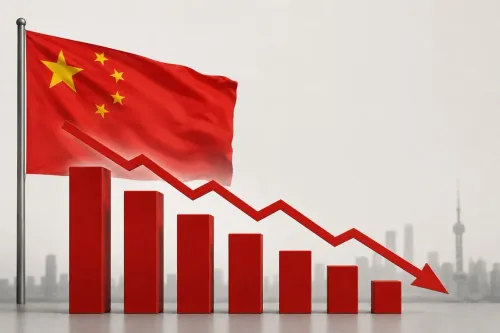
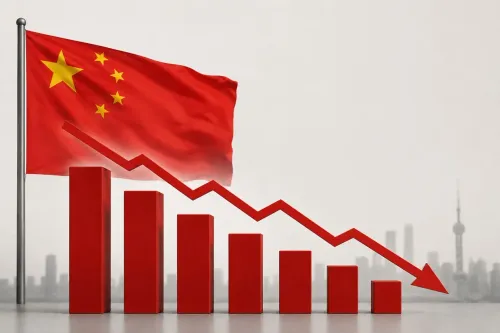
A slow-moving but deepening crisis is unfolding across China's factories and manufacturing hubs, driven not by a cyclical downturn but by the simultaneous convergence of multiple structural failures, according to a report published in Eurasia Review. At the centre of the crisis, the report argues, stands the Chinese Communist Party (CCP), whose ideological rigidity and political opacity have left it ill-equipped to confront the storm it helped engineer over three decades.
From Factory Floors to Unsettling Silence
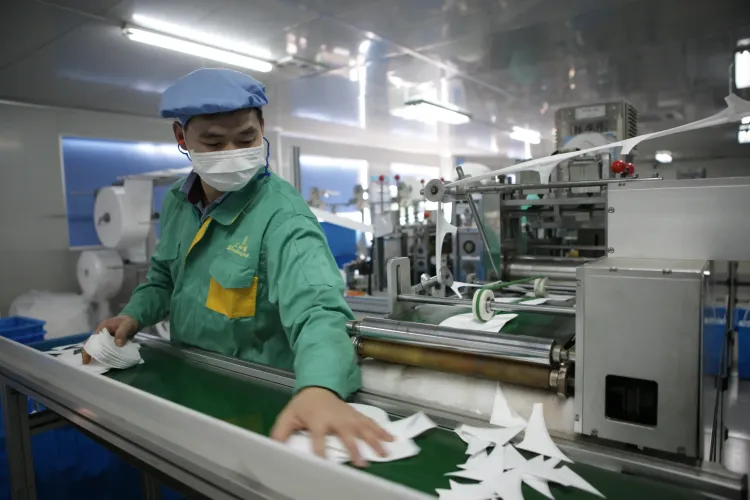
The report paints a stark picture of China's industrial heartland, describing how the once-familiar "rhythmic percussion of sewing machines, injection molds and assembly lines" has given way to an unsettling silence. Factory closures have accelerated across manufacturing towns, with hundreds of units reportedly shutting down as recently as March 2026. The scale of disruption, the report notes, is no longer a manageable correction — it is a structural unravelling.
Hormuz Closure Compounds the Crisis
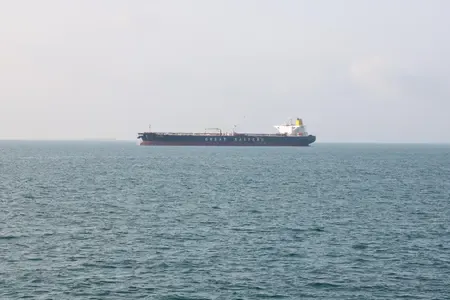
The crisis has been significantly worsened by the closure of the Strait of Hormuz following the US-Iran war. Prior to the conflict, China received approximately 5.35 million barrels of oil per day through the strait. That figure has since fallen sharply to roughly 1.22 million barrels per day — a reduction of nearly 77%.
The resulting shock to raw material costs has been severe. Bromine prices surged from 22,000 to 53,000 yuan per ton, while plastics and textiles followed suit. "For export factories already operating on margins measured in fractions of a percentage point, this is not a headwind. It is a wall," the Eurasia Review report states. This comes amid an already fragile global trade environment, where Chinese exporters had limited pricing power to begin with.
Decades of Structural Imbalance Coming Due
According to the report, the CCP spent three decades constructing an economic model so heavily skewed toward fixed investment, cheap labour, and exports that a reckoning was always a question of timing, not possibility. The report warns: "Add a global oil shock of historic proportions, a domestic housing market in prolonged decline and a population too anxious about the future to spend, and you have the conditions for the kind of collapse now playing out in factory towns across the country."
China's housing sector, which accounts for a disproportionately large share of household wealth, has been in prolonged decline, eroding consumer confidence and suppressing domestic spending — the very engine the economy needs to rebalance toward. Notably, the CCP has reportedly been aware of this structural imbalance for more than a decade, yet has consistently chosen stimulus-led growth over the more politically difficult task of redistributing income and empowering consumers.
Party Rhetoric Diverges from Ground Reality
The political response has drawn sharp criticism in the report. Even as hundreds of factories were closing in March 2026, senior Party officials at the Boao Forum were publicly praising China's economic stability and openness. The report characterises the CCP's public statements as "increasingly disconnected from reality," suggesting that political opacity is now actively impeding crisis management.
"The CCP has known about this imbalance for more than a decade and has consistently chosen the politically safe path of stimulus-led growth over the riskier task of redistributing income and empowering consumers," the report adds. Whether Beijing pivots toward meaningful structural reform — or doubles down on stimulus — will determine the depth and duration of the crisis now gripping China's factory towns.
Point of View
Suppressed consumption, export dependency — was always a bet that structural reform could be indefinitely postponed. The Hormuz shock has simply accelerated the timeline. What is striking is not the crisis itself but the Party's response: Boao Forum optimism while factory towns go dark. That disconnect between official narrative and ground reality is itself a systemic risk — it delays the policy corrections that might still limit the damage. India and other emerging manufacturing economies may find unexpected opportunity in China's structural retreat, but only if they move faster than the next stimulus cycle out of Beijing.
NationPress
19 Sept 2026
Frequently Asked Questions
What is causing China's factory crisis in 2026?
China's factory crisis stems from the convergence of multiple structural failures: decades of CCP-driven over-reliance on fixed investment and exports, a prolonged domestic housing market decline, suppressed consumer spending, and an acute oil supply shock following the closure of the Strait of Hormuz. The combination has pushed export factories — already operating on razor-thin margins — to the brink.
How has the Strait of Hormuz closure affected China's manufacturing?
Before the US-Iran war, China received approximately 5.35 million barrels of oil per day via the Strait of Hormuz. That figure has since dropped to roughly 1.22 million barrels per day. The resulting raw material cost surge — bromine alone more than doubled to 53,000 yuan per ton — has been devastating for export-oriented factories.
What has the CCP's response been to the manufacturing crisis?
According to the Eurasia Review report, the CCP's public response has been notably optimistic and disconnected from reality. Senior Party officials praised China's economic stability at the Boao Forum in March 2026, even as hundreds of factories were closing. The report argues the CCP has long prioritised stimulus-led growth over structural reform.
Is this a temporary or long-term crisis for China?
The Eurasia Review report characterises it as a structural, not cyclical, crisis — the result of three decades of economic imbalance. With a declining housing market, low consumer confidence, and a historic oil supply shock compounding pre-existing vulnerabilities, a quick recovery is not anticipated without fundamental policy shifts.
What structural reforms does China need to address the crisis?
According to the report, China needs to redistribute income and empower consumers to drive domestic demand, rather than relying on fixed investment and exports. The CCP has reportedly been aware of this need for over a decade but has consistently chosen the politically safer path of stimulus-led growth instead.