China's Indian Ocean and Pacific strategy: Economic ties masking wider ambitions
Synopsis
A new report lays out how China has systematically converted economic aid and infrastructure deals into diplomatic leverage across Indian Ocean and Pacific island states — pulling Solomon Islands, Kiribati, and Nauru away from Taiwan while quietly building a web of influence from Seychelles to the wider Indo-Pacific. The pattern is deliberate, replicable, and accelerating.
Key Takeaways
China has built substantial influence in Seychelles through schools, hospitals, and public infrastructure over nearly three decades, prompting the US to reopen its embassy there in 2023 .
Solomon Islands and Kiribati cut ties with Taiwan in 2019 ; Nauru followed in January 2024 , shrinking Taiwan's Pacific diplomatic footprint.
The Centre for Strategic and International Studies (CSIS) identifies Beijing's rivalry with Taipei as a core driver of China's Pacific island engagement.
The report draws a direct parallel between China's Pacific playbook — economic aid leading to diplomatic realignment — and its Indian Ocean strategy.
The Indian Ocean 's role as a critical corridor for global trade, energy transit, and naval projection makes China's island-state outreach strategically significant beyond economics.
China's expanding footprint across Indian Ocean island states and the Pacific reflects a deliberate blend of economic investment, diplomatic outreach, and strategic positioning, according to a report by Uganda-based media outlet PML Daily. Infrastructure projects have served as entry points for broader political influence, while deepening bilateral ties have strengthened Beijing's regional reach in waters of growing geopolitical consequence.
Seychelles and the Indian Ocean Calculus
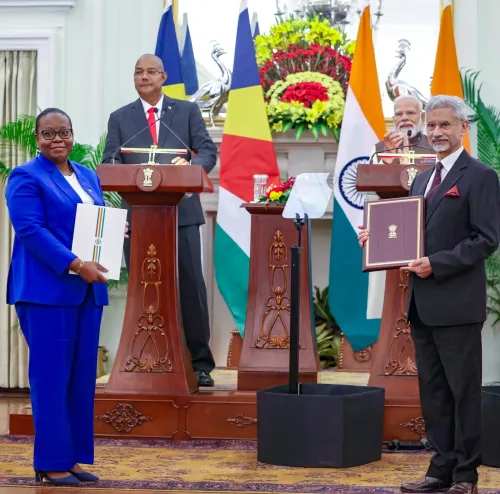
The report draws particular attention to Seychelles, whose strategic weight far exceeds its population or GDP. Situated in the western Indian Ocean along key maritime corridors linking Africa, the Middle East, and Asia, the island nation occupies a position that major powers consider indispensable. China has built that presence methodically — through schools, hospitals, housing, and public infrastructure — over the nearly three decades since the United States shuttered its embassy in the country in 1996.
Washington's decision to reopen its Seychelles embassy in 2023 was widely interpreted as a direct response to this accumulation of Chinese influence. The report noted that Beijing's engagement with Seychelles is 'part of a wider effort to develop economic and political relationships across the Indian Ocean, where infrastructure, trade and maritime security are becoming increasingly connected.'
Pacific Island Nations: The Taiwan Factor
The Pacific provides a sharper illustration of China's diplomatic method. In 2019, Solomon Islands and Kiribati severed formal ties with Taiwan and established relations with Beijing. Nauru followed in January 2024. These moves progressively narrowed Taiwan's formal diplomatic footprint in the region and underscored how small island nations have become contested terrain in the rivalry between Beijing and Taipei.
The Centre for Strategic and International Studies (CSIS) has identified this Beijing-Taipei competition as a core driver of China's engagement across Pacific island states, according to the report. The pattern — economic assistance and infrastructure investment leading to diplomatic realignment — is consistent across cases.
A Replicable Playbook
The report argues that the Pacific experience carries direct lessons for understanding China's approach in the Indian Ocean. 'Beijing's economic partnerships can strengthen its relationships with small island states, while the resulting political ties may support China's wider strategic interests,' it stated. While acknowledging that the two regions present different circumstances, the report emphasised that the underlying link between development assistance and diplomatic influence is worth examining in both arenas.
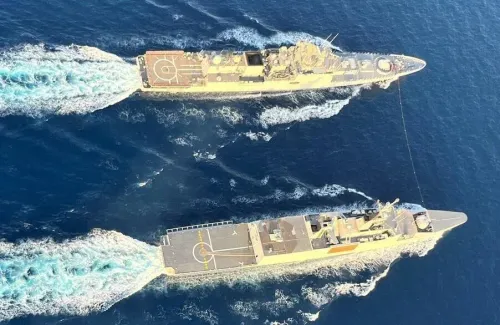
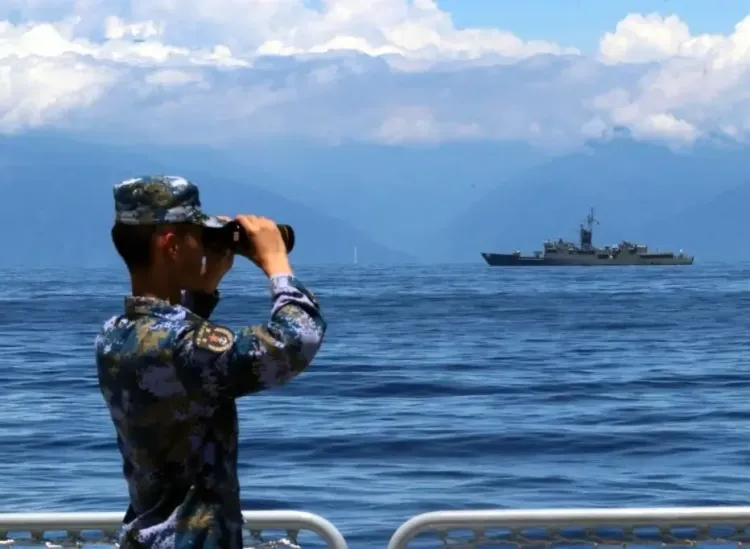
This comes amid intensifying great-power competition over maritime access, with the Indian Ocean increasingly recognised as a critical corridor for global trade, energy transit, and naval projection. Analysts have long flagged that China's port investments and infrastructure deals — sometimes described as a 'string of pearls' — carry dual-use potential, a concern that continues to animate policy debate in New Delhi, Washington, and allied capitals.
Implications for India and Regional Partners
For India, which regards the Indian Ocean as its primary strategic neighbourhood, China's sustained engagement with island states poses a layered challenge. New Delhi has responded with its own outreach — through lines of credit, maritime domain awareness partnerships, and development cooperation — but analysts argue the pace and scale of China's infrastructure commitments remain difficult to match. The evolving dynamics across both ocean theatres suggest that small island nations will remain significant diplomatic battlegrounds for years to come.
Point of View
Infrastructure, recognition switch) is now being deployed across the Indian Ocean, and the sequencing matters. By the time a rival power reopens an embassy, as the US did in Seychelles, China has already had decades to build institutional roots. For India, the strategic challenge is not simply naval — it is the slow accumulation of political goodwill in its own oceanic neighbourhood, where New Delhi's development offers struggle to match Beijing's speed and scale. The CSIS framing around the Taiwan variable is also worth watching: as Taiwan's formal diplomatic space shrinks, the cost to Beijing of those relationships falls, freeing up bandwidth for purely strategic positioning in the Indian Ocean.
NationPress
26 Sept 2026
Frequently Asked Questions
Why is China expanding its presence in Indian Ocean island states?
China is expanding its presence in Indian Ocean island states through infrastructure investment, trade partnerships, and diplomatic engagement to strengthen its maritime reach and political influence along key global trade routes. The strategy mirrors a playbook Beijing has already deployed successfully across Pacific island nations.
How did China gain influence in the Pacific at Taiwan's expense?
China persuaded Solomon Islands, Kiribati (both in 2019), and Nauru (January 2024) to sever diplomatic ties with Taiwan and recognise Beijing instead. These shifts reduced Taiwan's formal diplomatic presence in the Pacific and demonstrated how development assistance can be converted into political realignment.
Why did the United States reopen its embassy in Seychelles in 2023?
The US reopening of its Seychelles embassy in 2023 was widely seen as a direct response to China's accumulated influence in the island nation, where Beijing had built schools, hospitals, housing, and public infrastructure over nearly three decades following the US closure of its mission in 1996.
What is the strategic importance of Seychelles for China?
Seychelles sits at the intersection of key maritime corridors linking Africa, the Middle East, and Asia in the western Indian Ocean. Its location makes it strategically relevant for any power seeking naval access, maritime surveillance capability, or influence over Indo-Pacific trade routes — well beyond its small domestic economy.
What does China's island-state strategy mean for India?
For India, which regards the Indian Ocean as its primary strategic neighbourhood, China's deepening ties with regional island states represent a layered security and diplomatic challenge. New Delhi has responded with its own outreach through development cooperation and maritime partnerships, but analysts note that matching the pace and scale of Chinese infrastructure commitments remains difficult.