Why Have <b>Chinese Military Aircraft</b> Incursions Near Taiwan Increased 15-Fold?
Synopsis
Taiwan faces escalating threats as Chinese military aircraft incursions surge dramatically, raising concerns over regional stability. With a staggering increase nearly 15 times in five years, what does this mean for Taiwan's defense and international relations? Discover the implications of this alarming trend.
Key Takeaways
Chinese military incursions near Taiwan have increased significantly.
The Taiwan Strait is becoming a core theater for China's gray zone activities .
Military exercises by China pose a serious threat to regional stability .
Disinformation campaigns are part of China's cognitive warfare strategy against Taiwan.
Collaboration with fact-checkers is essential to combat misinformation.
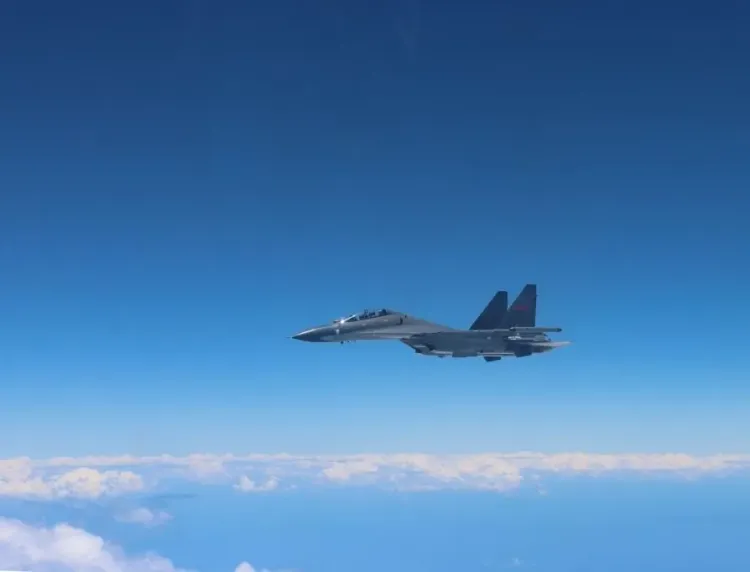
Taipei, Feb 2 (NationPress) Reports indicate that incursions by Chinese military aircraft near Taiwan have surged nearly 15 times in the last five years, according to local media citing a report from the Department of China Affairs, part of Taiwan's ruling party, the Democratic Progressive Party (DPP).
The report highlights that military sorties in the Taiwan Strait were infrequent before, totaling 380 in 2020. However, these sorties have now transitioned into routine operations, as noted by the daily Taipei Times.
It states, "This indicates that the Taiwan Strait has transformed into both a launch point and a testing field for Beijing’s expansionist goals." The report emphasizes that China is systematically employing measures to change the regional "status quo," asserting that Taiwan is a vital component of China's military strategy.
According to the data, the frequency of Chinese military incursions has been markedly consistent and sharp. The report details that sorties in the Taiwan Strait rose from 380 in 2020 to 960 in 2021, 1,738 in 2022, 4,734 in 2023, 5,107 in 2024, and 5,709 in 2025.
It asserts, "The scale and frequency of these operations clearly illustrate that the Taiwan Strait has become the central theater for China’s gray zone activities, aimed at testing deterrence, exhausting Taiwan’s defensive resources, and gradually extending existing security boundaries."
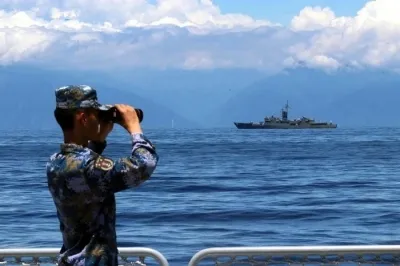
The report indicates that frequent military exercises allow Beijing to exert pressure on Taiwan. It also mentions large-scale drills conducted in 2025, which included joint operations, air and sea blockades, and precision strikes.
The report specifies that exercise zones from China's 2025 drills, such as the 'Strait Thunder-2025A' in April and the 'Justice Mission 2025' drills in December, frequently encroached upon Taiwan’s 12-nautical-mile (22.2 km) territorial sea and airspace baselines. The Department warns, "Such maneuvers pose a significant threat to peace in the Indo-Pacific region," adding that China's strategic ambitions extend well beyond Taiwan, as reported by the Taipei Times.
Furthermore, the report states that China is intensifying high-intensity military and quasi-military operations in various areas, including the Diaoyutai Islands, the Sea of Japan, the Yellow Sea, and the South China Sea. It notes that China's 'Victory Day Parade' on September 3, 2025, aimed to display its military ambitions.
This month, Taiwan's top intelligence agency accused China of employing Chinese IT and marketing firms to generate fake news websites, manage social media accounts, and disseminate misinformation as part of its cognitive warfare against the self-governing island, according to local media.
The National Security Bureau (NSB) released its findings in an analysis regarding the People's Republic of China's (PRC) "cognitive warfare tactics against Taiwan in 2025," as reported by the Central News Agency (CNA). In 2025, Taiwan's national intelligence unit identified over 45,000 fake social media accounts and more than 2.314 million instances of misinformation disseminated through these channels, according to the NSB's report.
The NSB reported that this misinformation was propagated by fake accounts and/or bots managed by Chinese IT companies that have developed databases and automated programs for this purpose, under directives from the PRC's Central Publicity Department and the Ministry of Public Security (MPS).
These departments utilize marketing companies like Haixunshe, Haimai, and Huya to create fake news sites that disseminate narratives aligned with China's official positions. The NSB noted that these sites initially attract followers with clickbait content before shifting their posts to political themes to sway public opinion in Taiwan.
Additionally, the NSB stated that through these efforts, China aims to sow discord within Taiwan, diminish the Taiwanese people's resolve to resist, influence allies' support for Taiwan, and garner backing among the Taiwanese populace for China's interests. The agency mentioned that it is collaborating with relevant government bodies and intensifying efforts to work with fact-checking organizations and social media platforms to uncover and eliminate false information.
Point of View
I firmly believe that the rising frequency of military incursions by China near Taiwan necessitates urgent attention. This issue transcends Taiwan's borders, impacting regional security and international relations. The need for a unified response to safeguard peace and stability in the Indo-Pacific is paramount. Our commitment to reporting on these developments remains unwavering as we stand for national sovereignty and security.
NationPress
26 Sept 2026
Frequently Asked Questions
What is the current trend of Chinese military aircraft incursions near Taiwan?
Chinese military aircraft incursions near Taiwan have surged nearly 15-fold in the last five years, indicating a significant escalation in military activity in the region.
What actions has Taiwan's government taken in response?
Taiwan's government is closely monitoring the situation and working to enhance its defense capabilities to counter the increasing military pressure from China.
How is China using cognitive warfare against Taiwan?
China is utilizing IT and marketing firms to spread misinformation and create fake news sites aimed at influencing public opinion and sowing discord within Taiwan.
What implications do these military activities have for the Indo-Pacific region?
The increased military incursions pose a serious threat to peace in the Indo-Pacific region and could destabilize international relations and security.
What is the role of the National Security Bureau in Taiwan?
The National Security Bureau is responsible for intelligence gathering and analysis regarding national security threats, including monitoring military activities from China.