2,300-year-old sealed bronze wine jar found near Qin Great Wall
Synopsis
A perfectly sealed bronze wine jar buried for 2,300 years near China's Warring States Qin Great Wall has been unearthed in Ningxia — and its intact contents are rewriting what scholars know about ancient Chinese brewing technology.
Key Takeaways
A 2,300-year-old bronze wine vessel was discovered at the Shanjiabao cemetery , located 2 km from the Warring States Qin Great Wall in Ningxia, China .
The jar dates to the Warring States period of Qin (325–251 BC) and was found perfectly sealed and gleaming.
Findings were published in the June 2026 issue of the Journal of Archaeological Science .
Chen Ruru , a PhD candidate at Northwest University , is the first author of the study and says it clarifies ancient cereal use and brewing methods.
The Ningxia Institute of Archaeology began excavating the Shanjiabao cemetery in March 2024 .
The find sits within a 170-kilometre stretch of the Qin Great Wall that once supported a network of military garrison communities.
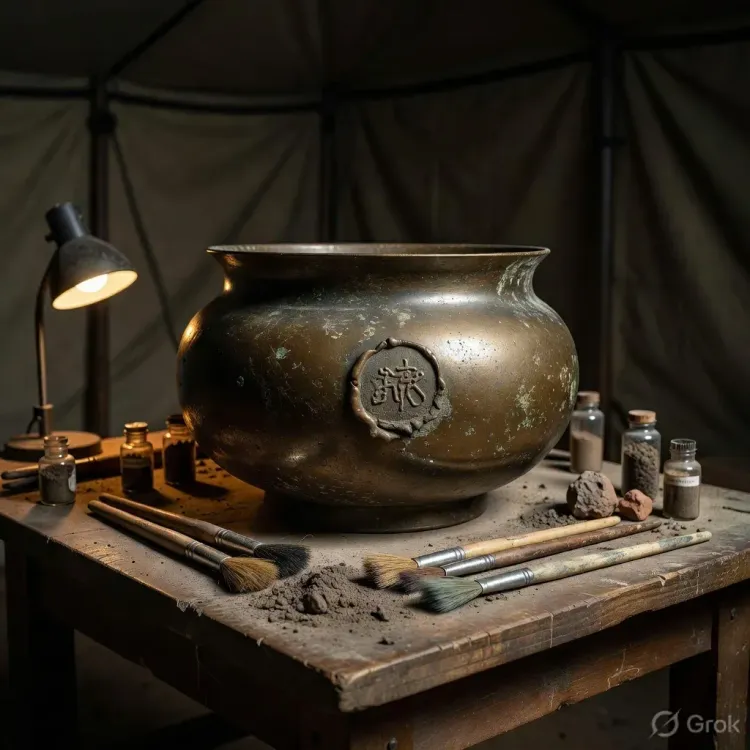
A 2,300-year-old bronze wine vessel, still perfectly sealed and gleaming, has been unearthed at the Shanjiabao cemetery in Ningxia, China — just 2 kilometres from a surviving stretch of the Warring States Qin Great Wall. The discovery, detailed in the June 2026 issue of the Journal of Archaeological Science, is offering researchers an unprecedented window into ancient Chinese brewing technology and the daily lives of Qin border soldiers.
What was found — and where
The ancient jar, dating to the Warring States period of Qin (325–251 BC), was recovered from the Shanjiabao cemetery, which the Ningxia Institute of Archaeology began excavating in March 2024. The vessel was found intact, its seal unbroken after more than two millennia, with its surface still bearing a metallic sheen according to the published study.
The cemetery sits within a 170-kilometre stretch of the Qin Great Wall — one of the earliest defensive walls built in China — that once anchored a network of forts, castles, and barrier outposts garrisoned by border soldiers and their families.
What the brewing secrets reveal
Chen Ruru, a Northwest University PhD candidate and first author of the study, said the find carries significant scholarly weight. 'This study provides a clear understanding of the cereals utilisation and brewing techniques of the Qin people, contributing to the reconstruction of ancient Chinese brewing technology and also refining the development process,' Chen wrote in the paper.
The analysis of the vessel's contents sheds light on which grains the Qin people fermented and how they processed them — details that had previously been inferred only from fragmentary textual sources.
Why it matters — the Great Wall connection
The Qin Great Wall referenced in the study is the same structure immortalised by former Chinese leader Mao Zedong in a poem written while passing through the Liupan Mountains in Guyuan, Gansu, during the Long March in October 1935. 'He who has never been to the Great Wall is not a true man,' Mao wrote, invoking a structure already ancient by his time.
The proximity of the Shanjiabao cemetery to the wall suggests the buried individuals were likely connected to the garrison communities that sustained Qin's northern frontier — making the wine vessel as much a military artefact as a cultural one.
What's next
The Ningxia Institute of Archaeology is continuing excavations at the Shanjiabao site, and researchers expect further analysis of the vessel's organic residues to yield more precise data on fermentation methods. As ancient DNA and residue-analysis techniques advance, this find could become a reference point for tracing the deeper origins of Chinese yellow wine traditions.
Point of View
Not just tourist narratives. What makes this find analytically significant is the vessel's intact seal: organic residue chemistry from an uncontaminated 2,300-year-old sample is a rare opportunity that modern archaeobotany rarely gets. Mainstream coverage tends to frame such stories as curiosities, but the brewing-technique data could anchor comparative studies linking Qin fermentation practices to later Han-dynasty and Tang-dynasty wine traditions. The military-garrison context also complicates the romantic image of the Great Wall — it was, at its core, a logistics and supply chain problem, and alcohol was part of that supply chain.
NationPress
11 Aug 2026
Frequently Asked Questions
What was found near the Qin Great Wall in Ningxia?
A perfectly sealed, 2,300-year-old bronze wine vessel was unearthed at the Shanjiabao cemetery, located 2 kilometres from the Warring States Qin Great Wall in Ningxia, China. The jar dates to the Qin Warring States period (325–251 BC) and was still gleaming when discovered.
What does the ancient wine jar reveal about Qin brewing?
According to the study published in the Journal of Archaeological Science, analysis of the vessel provides clear evidence of which cereals the Qin people used and how they fermented them. Researcher Chen Ruru said it contributes to 'the reconstruction of ancient Chinese brewing technology and also refining the development process.'
Who is excavating the Shanjiabao cemetery and when did it start?
The Ningxia Institute of Archaeology began excavating the Shanjiabao cemetery in March 2024. The site is situated within a 170-kilometre stretch of the Qin Great Wall that once supported military garrison communities.
Why is the Qin Great Wall historically significant?
The Qin Great Wall, built during the Warring States period (325–251 BC), is one of the earliest defensive walls constructed in China — predating the more famous Ming-dynasty wall by roughly 1,700 years. Former Chinese leader Mao Zedong referenced it in a poem written during the Long March in October 1935.
Where was the study about the ancient wine vessel published?
The study was published in the June 2026 issue of the Journal of Archaeological Science. Northwest University PhD candidate Chen Ruru is listed as the first author.