China researchers name new fish species after Blackpink's Jennie
Synopsis
A master's student at Sun Yat-sen University named a newly discovered Chinese fish species Brachygobius jennie after Blackpink's Jennie, saying the K-pop star's music was 'a constant source of inspiration' — making the singer an unlikely but permanent entry in the global taxonomic record.
Key Takeaways
Brachygobius jennie is the first bumblebee goby species discovered in China , found in mangrove wetlands near the Pearl River estuary in April 2025 .
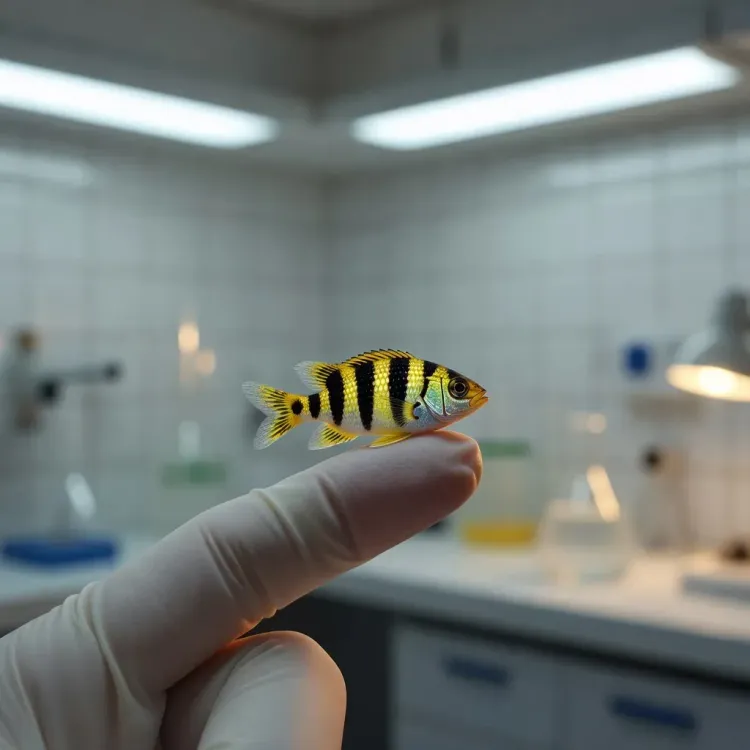
The fish is shorter than an average human fingernail and displays distinctive black-and-yellow markings.
Discoverer Tian Jiangyan , a master's student at Sun Yat-sen University, Guangzhou , named the species after Jennie Ruby Jane of Blackpink for her 'positive influence' on the researcher's studies.
The species description was published last week in the peer-reviewed journal Zoosystematics and Evolution .
Scientists say the species could serve as a model for studying the biological limits of vertebrate miniaturisation.
Blackpink member Jennie Ruby Jane has entered the scientific record after Chinese researchers named a newly discovered fish species Brachygobius jennie in her honour. The tiny black-and-yellow fish — shorter than an average human fingernail — was found near southern China's Pearl River estuary and represents the first bumblebee goby species documented in the country.
The discovery
Tian Jiangyan, a master's student at Sun Yat-sen University in Guangzhou, first spotted the miniature fish during fieldwork in mangrove wetlands near the Pearl River estuary in April 2025. She initially assumed the specimens were juvenile fish, but their distinctive markings did not correspond to any known local species. Further analysis at the laboratory, conducted with colleagues from Sun Yat-sen University and external collaborators, confirmed it as a species new to science.
Why the K-pop connection
Tian said that listening to Jennie's music had been 'a constant source of inspiration' throughout her graduate studies, and that naming the species after the singer was her way of acknowledging Jennie's 'positive influence' on her work. The decision reflects a growing — if informal — tradition among younger researchers of honouring cultural figures who shaped their academic journeys.
Scientific significance
According to a paper published last week in the peer-reviewed journal Zoosystematics and Evolution, Brachygobius jennie could serve as a model organism for studying the biological limits of vertebrate miniaturisation. Bumblebee gobies are already among the smallest vertebrates on Earth, and a new Chinese representative of the genus adds meaningful data to research on how small a backbone-bearing animal can feasibly become.
What's next
The formal description published in Zoosystematics and Evolution cements the name in the taxonomic record, making Brachygobius jennie a permanent fixture in biological nomenclature. Researchers are expected to investigate the species' ecological role in the mangrove wetland ecosystem of the Pearl River delta, a biodiversity hotspot under increasing environmental pressure. The find also raises the possibility that other undescribed gobies remain in the region's complex estuarine habitats.
Point of View
A domain that typically resists pop-culture influence. What mainstream coverage tends to underplay is the scientific substance — a new vertebrate species with potential utility in miniaturisation research is a meaningful find, regardless of its celebrity name. The Pearl River delta, already one of the world's most ecologically stressed estuaries due to rapid urbanisation, continues to yield undescribed biodiversity, underscoring how much baseline taxonomy remains unfinished even in heavily studied regions. Researchers and conservationists will be watching whether the media attention around the name translates into broader public interest in delta ecosystem preservation.
NationPress
22 Sept 2026
Frequently Asked Questions
What is Brachygobius jennie?
Brachygobius jennie is a newly described fish species — the first bumblebee goby found in China — discovered in mangrove wetlands near the Pearl River estuary. It is a tiny black-and-yellow fish smaller than a human fingernail, formally named in a paper published in the journal Zoosystematics and Evolution .
Why was the fish named after Jennie from Blackpink?
Discoverer Tian Jiangyan, a master's student at Sun Yat-sen University in Guangzhou, said Jennie's music was 'a constant source of inspiration' during her studies. Naming the species after the singer was her way of recognising Jennie's 'positive influence' on her academic work.
When and where was the fish discovered?
Tian Jiangyan first encountered the fish during fieldwork in April 2025 in mangrove wetlands near southern China's Pearl River estuary. She initially mistook the specimens for juvenile fish before laboratory analysis confirmed they belonged to a previously unknown species.
Why does this fish matter to science?
According to the published study, Brachygobius jennie could serve as a model organism for researching the biological limits of vertebrate miniaturisation — how small an animal with a backbone can physically become. It also adds to knowledge of biodiversity in the ecologically significant Pearl River delta.
Is naming species after celebrities common?
While not standard practice, researchers do occasionally name species after cultural figures who inspired their work. The formal publication in a peer-reviewed journal makes the name Brachygobius jennie a permanent part of global biological nomenclature, regardless of its pop-culture origins.