China's desert moss survives Mars-like conditions aboard Qingzhou spacecraft

Synopsis
A desert moss called Syntrichia caninervis survived microgravity, intense radiation, and severe dehydration aboard China's Qingzhou spacecraft — making it the most space-validated candidate yet for Mars colonisation and a potential cornerstone of future off-Earth ecological systems.
Key Takeaways
Syntrichia caninervis , a highly drought-resistant desert moss, was successfully revived after exposure to microgravity, intense radiation, and severe dehydration aboard China's Qingzhou spacecraft.
The experiment results were released on Monday, 29 June 2026 , forming part of a second batch of in-orbit trial outcomes from the Qingzhou prototype cargo spacecraft.
The Qingzhou spacecraft, developed by the Chinese Academy of Sciences' Innovation Academy for Microsatellites (IAMCAS) , was launched on 30 March 2026 aboard a Kinetica-2 rocket from Jiuquan , northwestern China .
Chinese scientists had previously validated the moss as a promising pioneer species in ground-based simulated Martian environments; the in-orbit data now provides real-space confirmation.
The findings are expected to 'provide theoretical backing' for low-energy ecological improvement and in-situ resource use at future off-Earth settlements, according to state broadcaster CCTV .
China has identified a highly drought-resistant desert moss, Syntrichia caninervis, as a potential pioneer species for Mars colonisation after the plant demonstrated remarkable resilience during in-orbit experiments aboard the prototype Qingzhou experimental cargo spacecraft, state broadcaster CCTV reported on Monday, 29 June 2026. The moss was successfully revived after being subjected to extreme space conditions — including microgravity, intense radiation, and severe dehydration — inside a mini space laboratory. The findings mark a significant step in China's ambitions to develop self-sustaining off-Earth settlements.
What the experiment revealed
The moss specimen was exposed to a battery of harsh conditions that closely simulate the Martian environment, and scientists confirmed it survived and revived following the ordeal, according to the broadcaster. Chinese scientists had previously validated Syntrichia caninervis as a promising candidate in ground-based simulated Martian environments, and the in-orbit results now add a critical layer of real-space data. The findings are expected to 'provide theoretical backing' for its application in low-energy ecological improvement and the in-situ use of local resources at future extraterrestrial settlements.
The Qingzhou spacecraft behind the tests
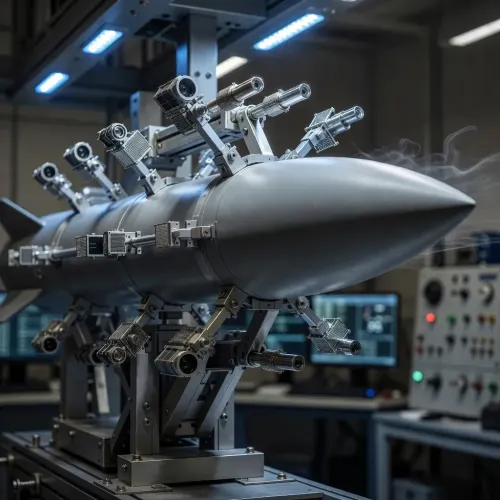
The experiment formed part of a broader batch of in-orbit test results from the Qingzhou prototype cargo spacecraft released on Monday, following an earlier set of scientific and engineering trial outcomes announced in April. Developed by the Chinese Academy of Sciences' Innovation Academy for Microsatellites (IAMCAS), the Qingzhou experimental cargo spacecraft — along with two small satellites — was launched on 30 March aboard a Kinetica-2 carrier rocket from the Jiuquan launch centre in northwestern China. The spacecraft is designed to help China deploy new space technologies, operate its space station safely, and maximise future space resource utilisation, according to CCTV.
Why it matters for Mars colonisation
Establishing a biological foothold on Mars is one of the most formidable challenges in deep-space exploration, and pioneer plant species capable of surviving extreme conditions are considered foundational to any terraforming or habitat-support strategy. Syntrichia caninervis, native to arid desert ecosystems on Earth, has long attracted scientific interest for its near-unparalleled tolerance to desiccation and radiation. Its successful revival in actual space conditions — not merely simulated ones — elevates it from a laboratory curiosity to a credible candidate for real-world deployment.
The competitive backdrop
The results arrive as multiple space agencies and private actors accelerate their Mars-readiness programmes. China's Tiangong space station continues to serve as a testbed for long-duration biological and materials experiments, while the Qingzhou cargo platform extends that capability to new experimental hardware. The pace of biological space research being published from Chinese institutions signals a deliberate strategy to build sovereign expertise in space life sciences ahead of any crewed interplanetary mission.
What's next
Researchers are expected to use the Qingzhou data to refine protocols for deploying Syntrichia caninervis in controlled extraterrestrial environments, potentially informing the design of future Chinese lunar or Martian base life-support systems. The broader programme of in-orbit trials aboard Qingzhou is ongoing, and further results batches are anticipated. Whether this moss ultimately travels beyond Earth orbit will depend on the timeline of China's crewed deep-space ambitions — a programme that is advancing faster than many outside observers anticipated.
Point of View
One that mainstream coverage tends to underweight relative to rocket launches and crewed missions. It fits a deliberate pattern: China is systematically building a sovereign biological knowledge base for deep-space habitation, using platforms like Tiangong and now Qingzhou to accumulate data that Western programmes have not yet prioritised at this scale. The moss research also underscores a low-cost, low-energy approach to planetary surface preparation — terraforming through biology rather than engineering — which could prove strategically decisive if crewed Mars missions materialise within the next two decades. What to watch: whether IAMCAS publishes peer-reviewed findings that allow independent replication, and how quickly this feeds into China's official crewed deep-space mission roadmap.
NationPress
28 Sept 2026
Frequently Asked Questions
What is Syntrichia caninervis and why is it important for Mars?
Syntrichia caninervis is a highly drought-resistant desert moss that Chinese scientists believe could serve as a pioneer species for colonising Mars . It has demonstrated the ability to survive microgravity, intense radiation, and severe dehydration — conditions closely resembling the Martian environment — during in-orbit experiments aboard China's Qingzhou spacecraft.
What is the Qingzhou spacecraft and what does it do?
The Qingzhou is a prototype experimental cargo spacecraft developed by the Chinese Academy of Sciences' Innovation Academy for Microsatellites (IAMCAS) . It was launched on 30 March 2026 aboard a Kinetica-2 carrier rocket from Jiuquan in northwestern China , and is used to test new space technologies and conduct in-orbit scientific experiments to support China's space station operations and future resource utilisation.
Has China tested this moss before?
Yes — Chinese scientists had previously established in ground-based simulated Martian environments that Syntrichia caninervis was a promising candidate for extraterrestrial colonisation. The Qingzhou experiment marks the first time the moss has been subjected to actual space conditions, including real microgravity and space radiation, adding critical real-world validation.
What are the practical implications of this discovery?
The findings are expected to 'provide theoretical backing' for the use of Syntrichia caninervis in low-energy ecological improvement and the in-situ use of local resources at future off-Earth settlements, according to state broadcaster CCTV . In practical terms, a radiation- and desiccation-tolerant pioneer plant could help establish rudimentary biological life-support systems on Mars without requiring heavy infrastructure.
How does this fit into China's broader space ambitions?
China is systematically expanding its in-orbit research capabilities through platforms including the Tiangong space station and the new Qingzhou cargo spacecraft, accumulating biological and materials science data relevant to long-duration deep-space missions. The moss experiment is one of multiple in-orbit test results released from Qingzhou , following an earlier batch announced in April 2026 , reflecting an accelerating cadence of space life-science research.