Chhattisgarh's 'Solar Didi' Power Homes and Livelihoods
Synopsis
Chhattisgarh's Chief Minister's Office spotlights 'Solar Didi' — women from self-help groups installing and maintaining rooftop solar units under the DWEEPTI Yojana — combining clean energy access with rural livelihood generation across the state.
Key Takeaways
The Chief Minister's Office of Chhattisgarh announced on 29 July 2026 that women from self-help groups are leading rooftop solar installations as 'Solar Didis'.
The programme operates under the DWEEPTI Yojana , the state government's clean-energy livelihood scheme.
Self-help groups have been promoted under India's National Rural Livelihoods Mission since 2011 as vehicles for rural women's micro-enterprises.
India's national target of 500 GW non-fossil fuel capacity by 2030 depends significantly on rooftop solar rollout at the village level.
Multiple Indian states have integrated SHG women into rooftop solar programmes to build local installation and maintenance capacity.
The central government's PM Surya Ghar Muft Bijli Yojana subsidy pipeline is a key variable for how quickly state programmes like DWEEPTI can scale.
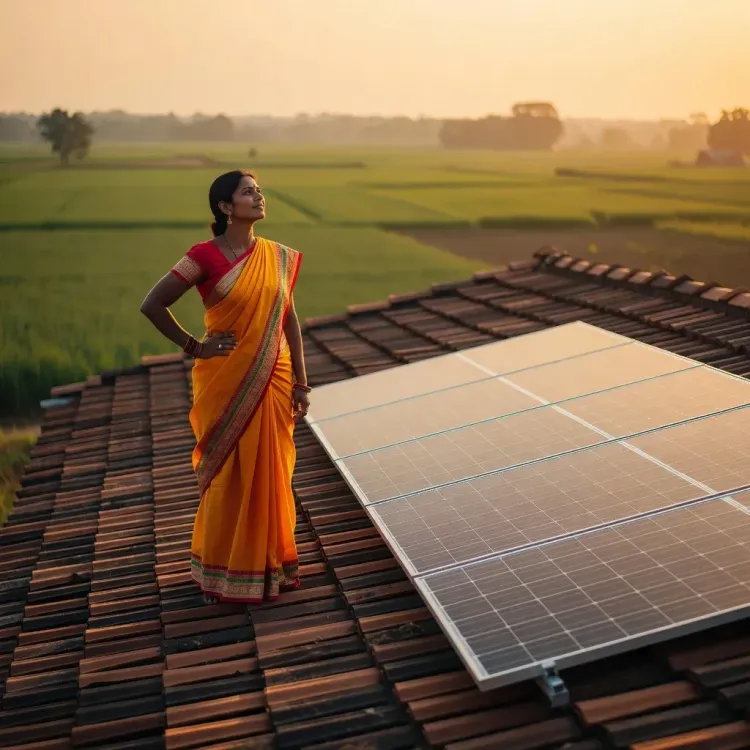
They climbed onto rooftops to install solar panels — and in doing so, rewrote what rural women in Chhattisgarh could be. The Chief Minister's Office of Chhattisgarh announced on Wednesday, 29 July 2026 that women from self-help groups across the state are leading a rooftop solar movement under the DWEEPTI Yojana, earning the grassroots title of 'Solar Didi'.
Who the Solar Didis are — and what they are doing
'Solar Didi' is not a ceremonial label. These are women drawn from self-help groups (SHGs) — the community micro-enterprise collectives promoted under India's National Rural Livelihoods Mission since 2011 — who are being trained and deployed to install, operate, and maintain rooftop solar units in their own villages. The CMO's post describes them as 'illuminating homes while transforming lives,' promoting clean energy and building sustainable livelihoods across the state.
The DWEEPTI Yojana is the Chhattisgarh government's vehicle for this initiative. While the scheme's precise launch date, installation targets, and scale remain to be confirmed in official public records, the programme's design follows a well-established national playbook: combine rooftop solar access with local employment so that the energy transition pays a livelihood dividend at the village level.
A national grid, a state-level bet
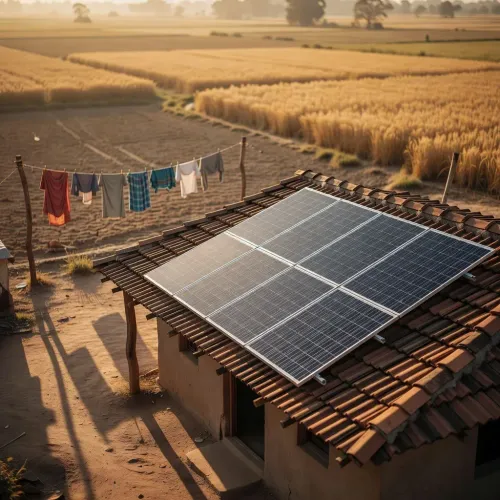
Chhattisgarh's Solar Didi model sits inside a much larger national ambition. India is racing toward a target of 500 GW of non-fossil fuel capacity by 2030, a goal that traces back to the Jawaharlal Nehru National Solar Mission launched in 2010. Rooftop solar — cheaper to deploy than large utility plants and directly useful to households — is a critical piece of that puzzle.
Several Indian states have already integrated rooftop solar rollouts with women's SHGs to create what planners call 'last-mile' installation and maintenance capacity. The logic is tight: SHG women are already embedded in rural communities, trusted by neighbours, and organised for collective action. Train them, and you get both faster adoption and a new income stream for some of the country's most economically marginalised women. Chhattisgarh, a state with substantial tribal populations and a historically mining-heavy economy, is now staking a claim in that green-jobs story.
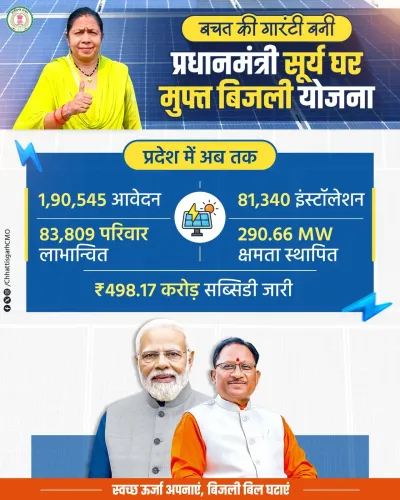
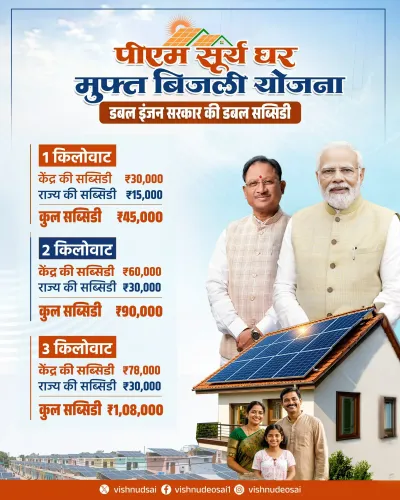
One programme worth watching in parallel is the central government's PM Surya Ghar Muft Bijli Yojana, which offers subsidies for rooftop installations. Whether DWEEPTI Yojana is formally linked to that subsidy pipeline — and how installation numbers stack up — will be the real measure of scale.
From a grid connection to a green career
The deeper shift the CMO is signalling is economic, not just environmental. A rural woman who can diagnose a faulty solar inverter or wire a new panel is not dependent on a distant contractor — she is the contractor. That skill, once transferred, compounds: lower household electricity bills free up income, while the maintenance work itself generates fees. Clean energy and financial independence arrive together.
Chhattisgarh's Solar Didis are a small but vivid proof-of-concept for what India's energy transition can look like at ground level — not just megawatts on a dashboard, but women on rooftops, tools in hand, building something that lasts.
Point of View
The state embeds technical skills and income directly in communities that have historically been on the margins of both the power grid and formal employment. The approach aligns with a broader national pattern, but its success will ultimately be measured by verified installation numbers and sustained income for SHG members — metrics the DWEEPTI Yojana has yet to publicly report at scale. If those numbers hold up, Chhattisgarh's model could become a replicable template for other resource-rich but infrastructure-lagging states.
NationPress
28 Oct 2026
Frequently Asked Questions
What is the Solar Didi programme in Chhattisgarh?
'Solar Didi' refers to women from self-help groups in Chhattisgarh who are trained to install and maintain rooftop solar panels in their villages under the state's DWEEPTI Yojana, earning income while expanding clean energy access.
What is the DWEEPTI Yojana?
DWEEPTI Yojana is a Chhattisgarh government scheme that channels rooftop solar installation work through women's self-help groups, combining clean energy deployment with rural livelihood generation. Detailed targets and launch dates have not been confirmed in publicly available records.
How do self-help groups connect to India's solar mission?
Self-help groups, promoted under the National Rural Livelihoods Mission since 2011, provide an organised network of rural women who can be trained as local solar installers and maintenance workers, helping states meet national renewable energy targets while creating green jobs.
What is India's renewable energy target by 2030?
India aims to achieve 500 GW of non-fossil fuel electricity capacity by 2030 , a goal that relies heavily on rooftop solar expansion across urban and rural areas.
Is Chhattisgarh's Solar Didi linked to the PM Surya Ghar scheme?
The PM Surya Ghar Muft Bijli Yojana is the central government's subsidy programme for rooftop solar installations. Whether DWEEPTI Yojana is formally integrated with that subsidy pipeline has not been officially confirmed yet.