Former Chinese Premier Zhu Rongji dies at 98 in Beijing
Synopsis
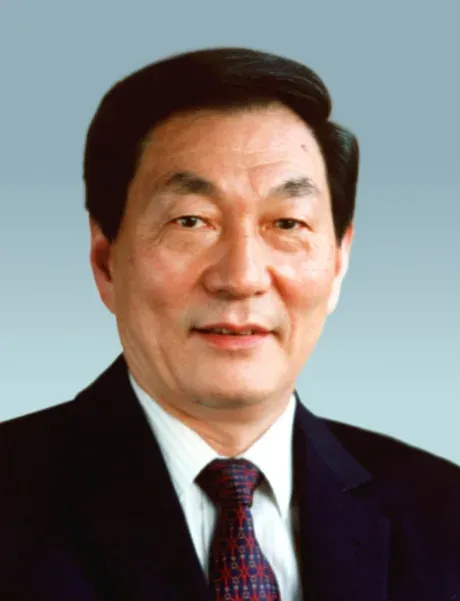
One of the last surviving architects of China's post-Deng economic revolution is gone. Zhu Rongji, who as Premier from 1998 to 2003 held the renminbi steady during the Asian financial crisis, dismantled triangular debts, and rewired China's tax system, died in Beijing on 13 August 2025 at 98. His reforms still underpin the world's second-largest economy.
Key Takeaways
Former Chinese Premier Zhu Rongji died on 13 August 2025 at 11:06 am local time in Beijing , aged 98 .
A joint state obituary from the CPC Central Committee and three other top bodies called his death 'a great loss to the Party and the state.' Zhu served as Premier of the State Council from March 1998 to March 2003 , steering China through the Asian financial crisis .
He overhauled China's fiscal and taxation system , introduced the central-local tax-sharing arrangement, and held the renminbi steady against devaluation pressure.
Born in Changsha, Hunan in October 1928 , Zhu joined the CPC in October 1949 and studied at Tsinghua University .
Former Chinese Premier Zhu Rongji died of illness on Wednesday, 13 August 2025, at 11:06 am local time in Beijing, aged 98. A towering figure in China's economic transformation, Zhu served as Premier of the State Council from 1998 to 2003 and is widely credited with steering China through the Asian financial crisis and engineering a historic shift from a planned economy to a socialist market system.
Official Tribute and State Obituary
A joint obituary was issued by the Communist Party of China (CPC) Central Committee, the Standing Committee of the National People's Congress, the State Council, and the National Committee of the Chinese People's Political Consultative Conference. The document described Zhu as 'an excellent Party member, a time-tested and loyal communist fighter, and an outstanding proletarian revolutionist, statesman and leader of the Party and the state.' The obituary concluded: 'His death is a great loss to the Party and the state.'
A Life in Public Service
Born in October 1928 in Changsha, Hunan Province, Zhu studied electrical engineering at Tsinghua University from 1947 to 1951 and joined the CPC in October 1949. Over the following three decades, he held a series of economic posts across regional and central government institutions. Between 1987 and 1991, he served as Mayor of Shanghai and later as Secretary of the CPC Shanghai Municipal Committee, where he pushed the city toward export-led growth and industrial restructuring.
In 1991, Zhu was appointed Vice Premier of the State Council. By June 1993, he concurrently held the role of Governor of the People's Bank of China, a dual mandate that underscored his grip on economic policy at a critical juncture.
Economic Legacy: Reforms That Reshaped China
Zhu's tenure as Premier — from March 1998 to March 2003 — coincided with one of the most turbulent periods in modern Asian economic history. Confronting the fallout of the Asian financial crisis and severe domestic flooding, he pivoted China's policy stance from moderately tight fiscal management to a proactive fiscal posture, expanding domestic demand while holding firm against pressure to devalue the renminbi.
Among his most consequential reforms was the overhaul of China's fiscal and taxation system, introducing a tax-sharing arrangement between the central and local governments that remains a structural pillar of Chinese public finance. He also resolved the 'triangular debt' crisis — a web of inter-enterprise and state-sector arrears that had paralysed credit flows — and brought inflation under control through macroeconomic tightening, achieving what analysts have described as a rare economic 'soft landing.'
Zhu also championed China's entry into the World Trade Organization (WTO) during his premiership, a move that accelerated the country's integration into global supply chains. He actively attracted foreign investment and worked to stabilise Hong Kong as an international financial centre amid regional turbulence.
Later Years and Political Standing
After stepping down as Premier in March 2003, Zhu retired from active leadership. He had served as a member of the Standing Committee of the Political Bureau of the 14th and 15th CPC Central Committees. The state obituary noted that in retirement he 'steadfastly upheld and supported' successive CPC leaderships, including those of Hu Jintao and Xi Jinping.
With Zhu's passing, China loses one of the last major architects of its post-Deng reform era — a period that set the foundation for the world's second-largest economy.
Point of View
Which centralised fiscal power in ways that both funded China's infrastructure decade and starved local governments of revenue, a tension that festers today. Western obituaries will lionise the technocrat; the harder question is whether the institutional architecture he built has become too rigid for the challenges his successors now face.
NationPress
27 Sept 2026
Frequently Asked Questions
When and where did Zhu Rongji die?
Zhu Rongji died on Wednesday, 13 August 2025, at 11:06 am local time in Beijing, aged 98. The cause of death was reported as illness.
What was Zhu Rongji's role in China's government?
Zhu Rongji served as Premier of the State Council from March 1998 to March 2003 and was a member of the Standing Committee of the Political Bureau of the 14th and 15th CPC Central Committees. He was one of the most influential economic policymakers in modern Chinese history.
What economic reforms is Zhu Rongji known for?
Zhu is credited with overhauling China's fiscal and taxation system, introducing a central-local tax-sharing arrangement, resolving the 'triangular debt' crisis, achieving an economic soft landing by curbing inflation, and keeping the renminbi stable during the Asian financial crisis of 1997-98.
How did China's government respond to his death?
A joint obituary was issued by the CPC Central Committee, the Standing Committee of the National People's Congress, the State Council, and the National Committee of the Chinese People's Political Consultative Conference, describing Zhu as 'an outstanding proletarian revolutionist, statesman and leader' and calling his death 'a great loss to the Party and the state.'
What was Zhu Rongji's early life and education?
Zhu Rongji was born in October 1928 in Changsha, Hunan Province. He studied electrical engineering at Tsinghua University from 1947 to 1951 and joined the Communist Party of China in October 1949.