Active fault line beneath Yarlung Tsangpo mega dam alarms Chinese scientists

Synopsis
A study by Chinese state-linked geologists has identified an active fault line running directly beneath the construction site of the world's largest hydropower project on the Yarlung Tsangpo in Tibet — roughly 50 kilometres from the Indian border. The finding raises structural safety questions about a dam whose failure would have catastrophic consequences downstream in India.
Key Takeaways
Chinese scientists have identified the Paizhen Fault , an active fault line, running directly beneath the Medog Hydropower Station in Tibet's Metog County .
The study was published in Sedimentary Geology and Tethyan Geology and conducted under the China Geological Survey .
The fault has been active since the Ice Age and threatens roads, bridges, tunnels, and the reservoir area, in addition to the dam itself.
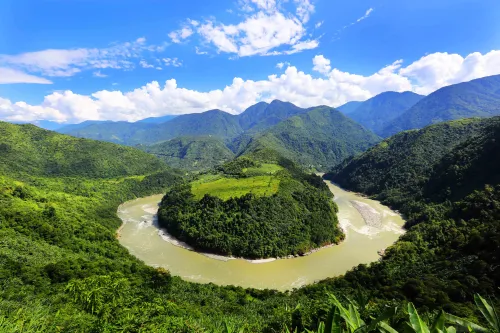
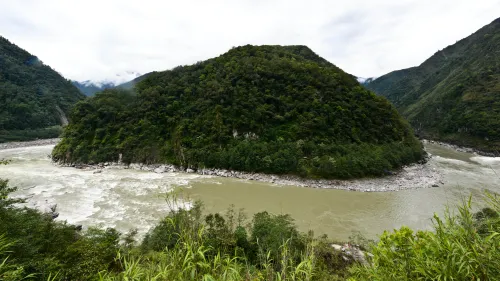
The dam site is approximately 50 kilometres upstream from where the Yarlung Tsangpo enters India as the Brahmaputra .
Researchers did not call for the project to be abandoned but urged stronger slope stabilisation and retaining structures.
The Himalayan seismic belt is among the most earthquake-prone regions in the world, adding further risk to the site.
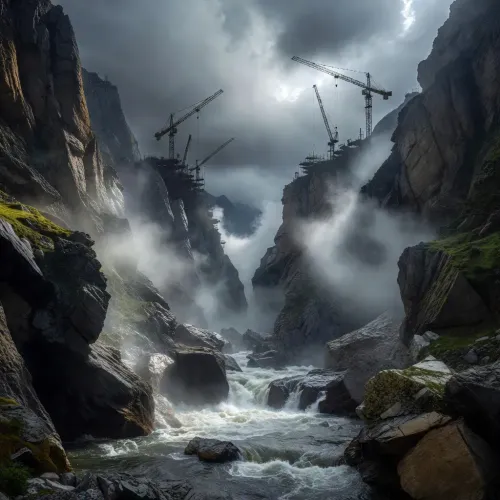
Chinese scientists have sounded a fresh geological alarm over the Medog Hydropower Station, the world's largest hydropower project under construction on the Yarlung Tsangpo river in Tibet's Metog County, warning that an active fault line running directly beneath the site could compromise the dam's structural integrity. The warning, based on a study published last month, adds a significant new dimension to concerns already surrounding the project — which sits roughly 50 kilometres upstream from the point where the Yarlung Tsangpo crosses into India.
The Paizhen Fault: What the Study Found
The research, published in the Chinese-language journal Sedimentary Geology and Tethyan Geology and conducted under the supervision of the state-owned China Geological Survey, identifies the Paizhen Fault — an active fracture in the Earth's crust in the eastern Himalayan region — as running directly beneath the hydropower station's construction zone. The study was carried out by geologists from Chengdu University of Technology, the Civil-Military Integration Centre of the China Geological Survey, and the Middle Yarlung Zangbo River Natural Resources Observation and Research Station.
According to the researchers, the Paizhen Fault has remained highly active since the Ice Age. It has fractured surrounding rocks and altered their mechanical properties, making foundations and structural elements of engineering projects in the area more susceptible to damage. The scientists also noted that the Paizhen area falls within the reservoir zone of the downstream Yarlung Tsangpo hydropower station, compounding the risk profile.
Landslide and Earthquake Risks Flagged
The study warned that the terrain surrounding the reservoir has a loose structure and weak cohesion, making slopes particularly vulnerable to instability after prolonged water immersion or during seismic events. The researchers highlighted that the Himalayan seismic belt experiences some of the strongest and most frequent earthquakes in the region, and that a major seismic activity zone has developed along the Yarlung Tsangpo corridor.
The fault's influence, according to the study, extends beyond the dam itself — threatening roads, bridges, tunnels, and the broader reservoir area. This is not the first time geologists have flagged seismic hazards along this stretch of the Himalayas, but the identification of an active fault running directly beneath the construction site represents a sharper, more site-specific warning.
What the Researchers Recommended
Notably, the study stopped short of calling for the project to be halted. Instead, the researchers urged engineers to adopt stronger safety measures, including improving slope stability and installing retaining structures to reduce the risk of landslides, collapses, and other geological hazards. The framing — urge caution, not cancellation — reflects the political sensitivity of a project that is a centrepiece of China's energy ambitions.
Why This Matters for India
The Yarlung Tsangpo enters India as the Brahmaputra river, flowing through Arunachal Pradesh and Assam before emptying into Bangladesh. Any structural failure or controlled release from the Medog dam could have catastrophic downstream consequences for millions of people in northeastern India. Indian officials and water security experts have repeatedly raised concerns about China's upstream dam-building activity, citing a lack of data-sharing and the absence of a binding bilateral agreement on transboundary river management. This latest scientific disclosure from within China is likely to intensify those concerns.
Broader Context
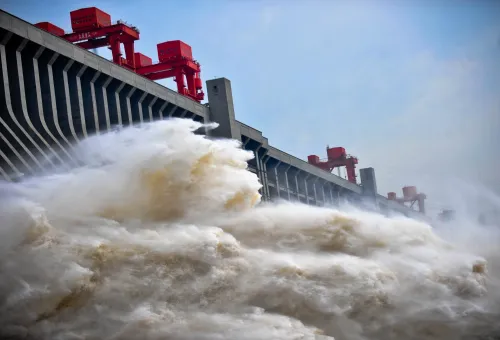
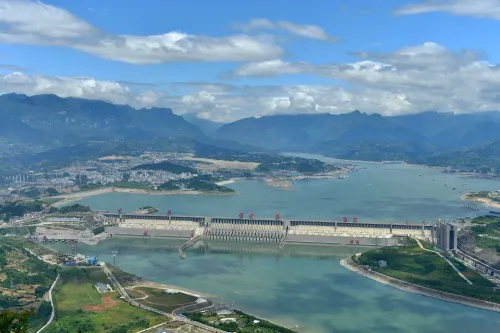
The Medog Hydropower Station, once complete, is projected to be the world's largest hydropower facility, surpassing China's own Three Gorges Dam. The project has been described by Chinese state media as a cornerstone of the country's renewable energy transition. However, the combination of extreme terrain, seismic exposure, and now a confirmed active fault beneath the site raises questions about whether engineering ambition is outpacing geological prudence. The scientific community will be watching whether China's authorities respond to the study's recommendations with transparent safety disclosures or continue to treat project details as strategically sensitive.
Point of View
And India would have limited warning time in the event of a catastrophic release. The researchers' recommendation to 'improve slope stability' rather than pause construction suggests the project will proceed regardless — making the absence of a transboundary river treaty between India and China a more urgent policy gap than it is typically treated.
NationPress
12 Jul 2026
Frequently Asked Questions
What is the Paizhen Fault and why is it significant?
The Paizhen Fault is an active fracture in the Earth's crust in the eastern Himalayan region that runs directly beneath the construction site of the Medog Hydropower Station in Tibet. It has remained highly active since the Ice Age and can compromise the structural integrity of the dam, surrounding infrastructure, and the reservoir area.
Which dam is at risk, and where is it located?
The Medog Hydropower Station, under construction in Tibet's Metog County on the Yarlung Tsangpo river, is the project in question. Once complete, it is projected to be the world's largest hydropower facility, surpassing China's Three Gorges Dam.
What are the risks for India?
The Yarlung Tsangpo enters India as the Brahmaputra river, flowing through Arunachal Pradesh and Assam. The dam site is approximately 50 kilometres from the Indian border, meaning any structural failure or uncontrolled release could have severe downstream consequences for millions of people in northeastern India.
Did the scientists recommend stopping the project?
No. The researchers urged engineers to adopt stronger safety measures — including improving slope stability and installing retaining structures — but did not call for the project to be abandoned. The study was conducted under the supervision of the state-owned China Geological Survey.
How serious is the earthquake risk in the area?
The Himalayan seismic belt, where the dam is being built, experiences some of the strongest and most frequent earthquakes in the region. The study noted that a major seismic activity zone has developed along the Yarlung Tsangpo corridor, compounding the geological risks posed by the Paizhen Fault.