Are Pakistani Forces Responsible for Another Civilian Death in Balochistan?
Synopsis
In a shocking revelation, a leading human rights organization reports the extrajudicial killing of a Baloch youth by state forces in Balochistan, highlighting the alarming trend of violence and human rights abuses in the region.
Key Takeaways
Rising violence: Balochistan faces escalating violence against civilians.
Extrajudicial killings: Kamal Dad's death is part of a troubling trend.
Human rights violations: The BYC and Paank report serious violations in the province.
International law: These acts breach fundamental human rights guarantees.
Call for action: Urgent international attention is needed to protect Baloch civilians.
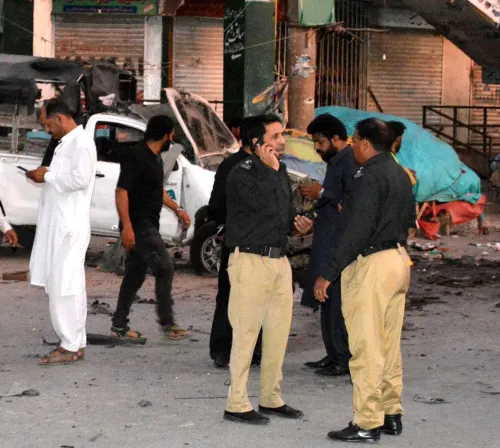
Quetta, Feb 14 (NationPress) As the violence against civilians escalates in Balochistan province, a prominent human rights organization highlighted the extrajudicial execution of yet another Baloch youth by state forces on Saturday.
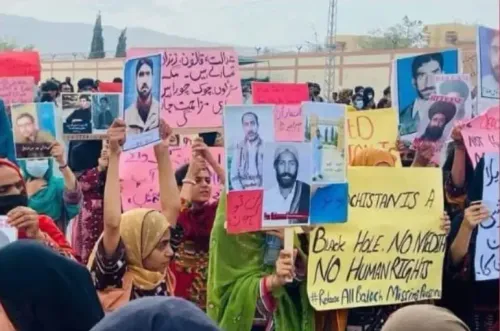
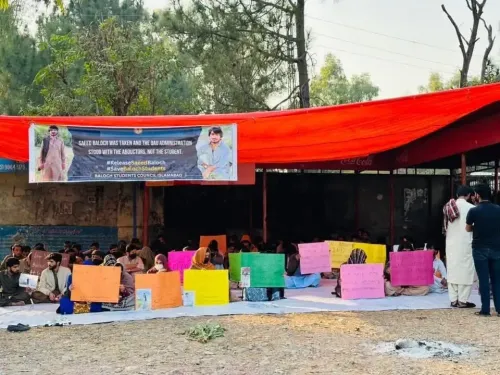
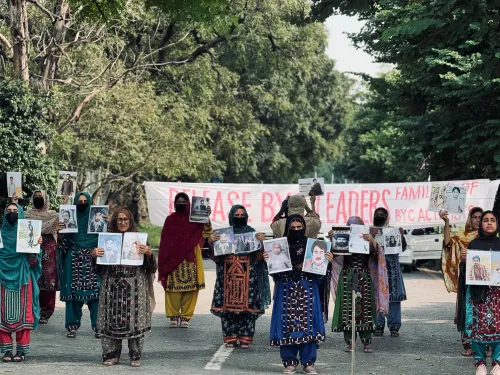
This tragic event emerges amidst a rising tide of targeted killings and enforced disappearances in the region.
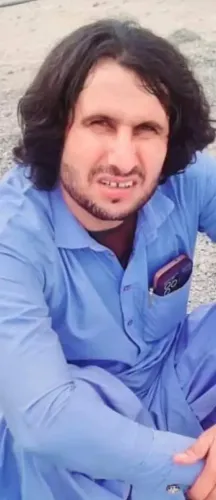
The Baloch Yakjehti Committee (BYC) reported that 25-year-old Kamal Dad, a driver, was slain by a Pakistan-backed death squad in the Kontani area of Gwadar district on February 12.
“Kamal Dad had previously suffered an enforced disappearance in 2025, only to be released after a month of unlawful detention. Following his return, he survived an assassination attempt in Fakir Colony, where he was injured. Despite this prior attempt on his life, no protective measures or legal actions were initiated against those responsible,” the BYC stated.
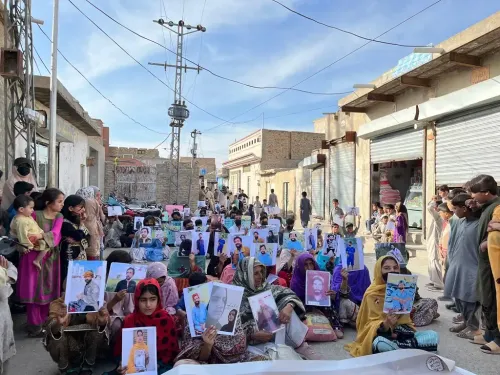
Condemning this incident, the BYC emphasized that Kamal's killing underscores the persistent violence faced by individuals in the province who have previously endured enforced disappearances.
“This act is a breach of Article 6 of the International Covenant on Civil and Political Rights (ICCPR), which affirms the fundamental right to life and prohibits arbitrary deprivation of life,” the rights group asserted.
“The repeated targeting of a previously disappeared individual further highlights the ongoing violence and the total lack of accountability,” it added.
The BYC urged international human rights organizations, United Nations mechanisms, and global civil society to promptly address the ongoing human rights violations in Balochistan to avert further loss of innocent lives and to uphold fundamental human rights.
In the meantime, the latest annual human rights report titled “A Year of Repression: Balochistan 2025” from Paank documented extensive human rights abuses throughout the province in 2025.
The report logged 1,355 instances of enforced disappearances, 225 extrajudicial killings, ongoing aerial bombardments of civilian areas, and alleged systematic misuse of legal and administrative measures to suppress peaceful civic movements and silence victims’ families and witnesses.
“Enforced disappearance remains the main tool of state-sponsored terror in Balochistan. Under international law, these acts are crimes against humanity when executed as part of a widespread or systematic attack against a civilian populace,” Paank stated.
“The discovery of 225 bodies of previously disappeared individuals in 2025 illustrates the harsh reality of the 'kill and dump' policy. This strategy involves executing detainees in custody and discarding their mutilated remains in remote areas, often labeled as 'terrorists' or 'insurgents' to justify their deaths retroactively,” it continued.
According to Paank, Pakistan’s state apparatus—primarily the military, its diverse intelligence agencies, and the paramilitary Frontier Corps—“has escalated its campaign against the Baloch population through a calculated mix of enforced disappearances, extrajudicial killings, and the innovative use of advanced aerial warfare technology targeting civilians.”
Point of View
We remain committed to highlighting human rights violations in Balochistan. The persistent violence against civilians calls for urgent international attention and accountability. Our focus will always be on ensuring justice for the victims and holding perpetrators responsible.
NationPress
26 Sept 2026
Frequently Asked Questions
What happened to Kamal Dad?
Kamal Dad, a 25-year-old driver, was reportedly killed by a Pakistan-backed death squad in Gwadar district on February 12.
What does the BYC say about this incident?
The Baloch Yakjehti Committee condemned the killing, stating it reflects ongoing violence against individuals who have survived enforced disappearances.
How many enforced disappearances occurred in Balochistan in 2025?
According to the report, there were 1,355 documented cases of enforced disappearances in Balochistan during 2025.
What international laws are being violated?
The extrajudicial killing of Kamal Dad constitutes a violation of Article 6 of the ICCPR, which protects the right to life.
What does the report from Paank indicate?
The report highlights extensive human rights violations, including 225 extrajudicial killings and the misuse of legal systems to suppress civic movements.