Climate change battering Rajasthan: Health, water, schools at risk
Synopsis
At a Jaipur workshop on the eve of World Environment Day, UNICEF and meteorological officials warned that climate change is no longer a future threat for Rajasthan — it is already eroding health systems, depleting groundwater, and burdening schools. A new youth climate leadership programme and district-level health plans signal the state is beginning to act, but the scale of the challenge dwarfs current responses.
Key Takeaways
UNICEF Rajasthan Head Rushabh Hemani declared climate change a present-day crisis, with children, pregnant women, and the elderly among the worst affected.
District-level programmes under the National Programme on Climate Change and Human Health have been established across Rajasthan to identify climate-induced health risks.
Specialised heatwave awareness modules have been developed for government schools, covering preventive measures and water conservation.
Meteorological Centre Director Radheshyam Sharma warned of rising pressure on water resources due to erratic rainfall and groundwater depletion.
A new 'Youth for Climate Action' programme will train young people in climate science, policy, green jobs, and community leadership across Rajasthan.
Rajasthan held its first state-level climate consultation in 2023 , bringing together government, technical, and development partners.
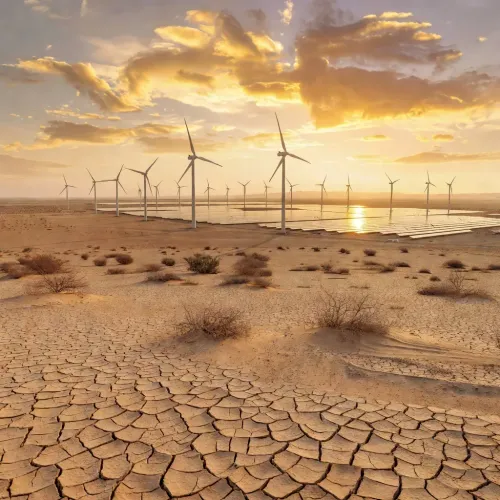
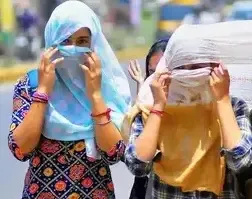
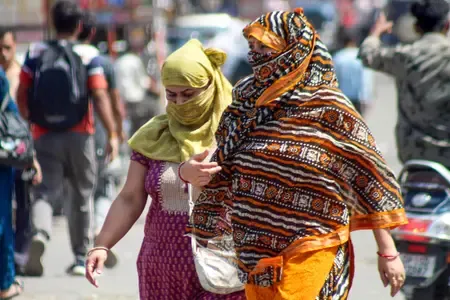
Climate change has become an immediate and escalating crisis for Rajasthan, threatening public health, water security, education, nutrition, and livelihoods as rising temperatures, prolonged heatwaves, erratic rainfall, and groundwater depletion intensify across the state. Experts and senior officials sounded the alarm on Thursday, 5 June, at a workshop held at the Constitution Club, Jaipur, on the eve of World Environment Day.
Climate Crisis Is Now, Not Later
UNICEF Rajasthan Head Rushabh Hemani opened the discussion with a stark framing: climate change is no longer a future developmental challenge but a present-day emergency. “Its impact is felt most severely by children, pregnant women, the elderly, and vulnerable communities. Extreme heat and water scarcity place an additional burden on women and girls,” he said.
Hemani noted that Rajasthan organised its first state-level climate consultation in 2023, convening government departments, technical institutions, and development partners to assess emerging climate risks and strengthen inter-departmental coordination for adaptation planning.
Health Sector Response
UNICEF Chief K.L. Rao outlined concrete steps being taken in the health sector. In collaboration with the Department of Medical and Health, support has been extended for implementing the National Programme on Climate Change and Human Health. “District-level programmes have now been established across Rajasthan to identify climate-induced health risks and improve disaster preparedness and response,” Rao said.
He stressed that climate-sensitive health systems are becoming increasingly critical as extreme weather events grow in both frequency and intensity. This is particularly relevant for Rajasthan, which recorded some of its highest-ever summer temperatures in recent years.
Schools and Heatwave Awareness
In the education sector, Rao said specialised heatwave awareness modules have been developed for government schools across the state. “Students and teachers are being sensitised about the causes of extreme heat, associated illnesses, preventive measures, water conservation, and environmental protection,” he added. The initiative reflects a broader push to embed climate literacy into school curricula before the problem worsens.
Water Security Under Pressure
Meteorological Centre Director Radheshyam Sharma described water security as the foundation of climate resilience and warned that Rajasthan’s water resources face growing strain. “Rising temperatures, erratic rainfall, and groundwater depletion are creating serious challenges. Efforts are underway with various departments to strengthen source conservation, groundwater recharge, rainwater harvesting, water budgeting, and monitoring systems,” Sharma said.
Work is also reportedly under way to define key indicators for achieving a water-secure Rajasthan under the state’s long-term development vision — a recognition that current frameworks are insufficient for the scale of the challenge.
Youth Leadership and What Comes Next
UNICEF Communication Specialist Ankush Singh announced a new youth-focused initiative at the workshop. Under the ‘Youth for Climate Action’ programme, young people will receive training in climate science, climate policy, green jobs, sustainable development, carbon markets, and community leadership. “The goal is to create a network of climate-aware youth leaders across Rajasthan,” Singh said.
Officials also emphasised strengthening environmental health through improved solid and liquid waste management, resource recovery centres, and community-based waste models. The workshop concluded with a consensus that climate-resilient health services, water security, climate-smart schools, and youth engagement will be critical to safeguarding communities in the years ahead.
Point of View
Not cyclical — a desert state with historically stressed water tables is among the least equipped to absorb the compounding shocks of rising heat and erratic monsoons. The workshop’s consensus language around ‘resilience’ and ‘coordination’ is welcome, but district-level health programmes and school modules are downstream fixes. The harder question — whether Rajasthan’s groundwater governance and agricultural water use are being reformed at the pace the crisis demands — was not answered. A youth leadership programme is valuable symbolically, but climate adaptation in a state of this scale requires institutional overhaul, not just awareness campaigns.
NationPress
21 Oct 2026
Frequently Asked Questions
How is climate change affecting Rajasthan?
Climate change is intensifying heatwaves, disrupting rainfall patterns, depleting groundwater, and straining public health and education systems across Rajasthan. Officials at a Jaipur workshop on 5 June 2025 described it as a present-day crisis affecting children, women, the elderly, and vulnerable communities most severely.
What is the 'Youth for Climate Action' programme in Rajasthan?
It is a UNICEF-backed initiative announced at the Jaipur workshop that will train young people in climate science, climate policy, green jobs, sustainable development, carbon markets, and community leadership. The goal is to build a network of climate-aware youth leaders across the state.
What steps is Rajasthan taking to address climate-related health risks?
District-level programmes under the National Programme on Climate Change and Human Health have been established across Rajasthan to identify climate-induced health risks and improve disaster preparedness. These were set up in collaboration with the Department of Medical and Health, with support from UNICEF.
Why is water security a key concern for Rajasthan amid climate change?
Rajasthan faces rising temperatures, erratic rainfall, and accelerating groundwater depletion, which together threaten the state’s already scarce water resources. Meteorological Centre Director Radheshyam Sharma said efforts are under way to strengthen groundwater recharge, rainwater harvesting, and water budgeting systems.
When did Rajasthan first hold a state-level climate consultation?
Rajasthan organised its first state-level climate consultation in 2023, bringing together government departments, technical institutions, and development partners to assess climate risks and improve inter-departmental coordination for adaptation planning.