CM Bhajanlal Sharma Reviews Summer Water, Power Supply in Cabinet Meet
Synopsis
Chief Minister Bhajanlal Sharma chaired a Rajasthan Cabinet meeting on May 23, 2026, reviewing departmental readiness to maintain water and electricity supply during severe summer heat — a recurring governance priority under the state's Viksit Rajasthan 2047 framework.
Key Takeaways
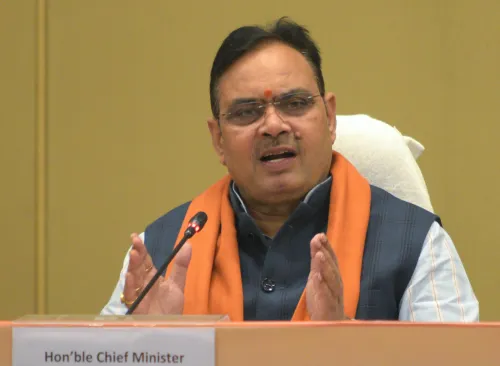
Chief Minister Bhajanlal Sharma chaired a Cabinet meeting at the Chief Minister's Office in Jaipur on May 23, 2026 .
The meeting reviewed steps taken by departments to ensure smooth water and electricity supply amid severe summer heat.
Rajasthan routinely runs annual summer action plans coordinating discoms and PHED for peak-season demand management.
The review is linked to the state's Viksit Rajasthan 2047 vision, which treats reliable infrastructure as foundational to development.
Primary stakeholders include urban households, rural consumers, and farmers dependent on uninterrupted power for irrigation and water access.
Follow-up directives to discoms and PHED, and possible supplementary budget moves, are expected in the coming days.
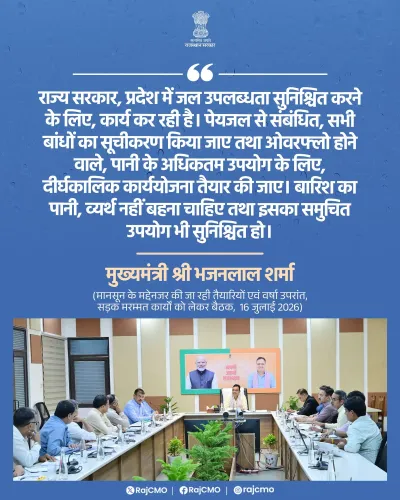
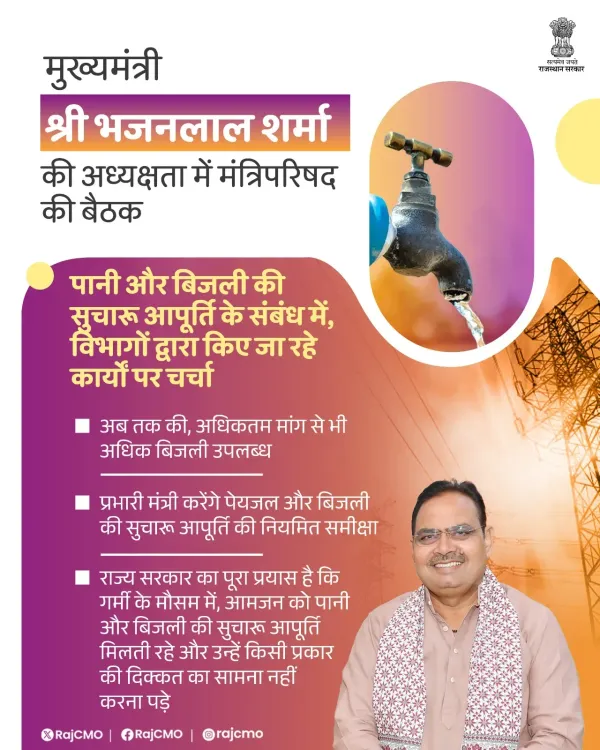
The Chief Minister's Office of Rajasthan announced on Saturday, May 23, 2026, that a Cabinet meeting chaired by Chief Minister Bhajanlal Sharma reviewed departmental efforts to ensure uninterrupted water and electricity supply across the state amid severe summer heat.
Context
The Cabinet meeting, held at the Chief Minister's Office in Jaipur, focused on the challenges posed by intense summer temperatures that routinely strain Rajasthan's power grids and drinking water infrastructure. Departments responsible for water and electricity distribution presented updates on measures being taken to manage the seasonal surge in demand. The official post stated: 'bheeshan garmi ke maddenazar paani aur bijli ki suchaaru aapurti' — 'ensuring smooth supply of water and electricity in view of the severe heat.'
Rajasthan's arid and semi-arid geography makes it one of India's most heat-vulnerable states, with summer temperatures frequently crossing 45 degrees Celsius in several districts. Peak summer months place simultaneous stress on electricity distribution companies (discoms) and the Public Health Engineering Department (PHED), which manages drinking water supply.
Policy Backdrop
The Sharma government, which took office in December 2023 following the BJP's victory in the state assembly elections, has framed infrastructure reliability — including power and water security — as a pillar of its Viksit Rajasthan 2047 vision. This state-level roadmap mirrors the national Viksit Bharat goals and treats dependable basic services as foundational to long-term development.
Rajasthan has maintained annual summer action plans since at least 2022, coordinating across discoms and PHED to pre-position resources, manage load distribution, and deploy emergency water tankers in deficit areas. The Sharma administration has also pursued reviews of power purchase agreements and distribution reforms aimed at reducing the frequency and severity of summer outages.
Stakeholders and Impact
Urban households, rural consumers, and farmers are the primary stakeholders in any disruption to water and electricity supply during peak summer. Unscheduled power cuts affect irrigation pumps and cold storage, directly threatening agricultural output and livelihoods in a state where farming remains a major economic activity.
For urban residents, reliable water supply during heatwaves is a public health necessity, particularly in cities and towns where piped supply is the primary source. Cabinet-level attention signals that the government is treating the issue as an administrative priority rather than a routine operational matter.
What's Next
Follow-up directives to discoms on load management and to PHED on tanker deployment and supply schedules are expected in the coming days. The Cabinet review may also precede supplementary budget allocations or emergency procurement decisions if departmental assessments flag critical shortfalls.
As heatwave conditions intensify across northern and western India, Rajasthan's approach to cabinet-level summer preparedness reviews is part of a broader pattern seen in arid-climate states — one that will be closely watched as the government's 2047 development commitments are tested by immediate climate pressures.
Point of View
Not merely an administrative one — a posture that reflects lessons from past governments that faced public backlash over power cuts and water scarcity. By anchoring the discussion within the Viksit Rajasthan 2047 framework, the BJP-led administration is attempting to connect routine seasonal governance to a long-term development narrative. This dual framing — immediate crisis management plus visionary roadmap — is a deliberate communication strategy ahead of what could be a difficult summer. Whether departmental follow-through matches the Cabinet-level attention will be the real test of the government's preparedness.
NationPress
24 Sept 2026
Frequently Asked Questions
Why did Rajasthan CM Bhajanlal Sharma hold a Cabinet meeting on water and electricity?
The meeting was convened to review departmental efforts to maintain uninterrupted water and electricity supply across Rajasthan during severe summer heat, which routinely strains the state's power grids and water infrastructure.
What is Viksit Rajasthan 2047?
Viksit Rajasthan 2047 is the state government's long-term development vision aligned with the national Viksit Bharat goals, treating reliable infrastructure — including power and water — as foundational to economic and social progress by 2047.
What departments are involved in Rajasthan's summer water and electricity management?
The primary agencies are electricity distribution companies (discoms) for power supply management and the Public Health Engineering Department (PHED) for drinking water supply, both of which coordinate under state government direction during peak summer months.
Does Rajasthan face water and power shortages every summer?
Yes. Rajasthan's arid and semi-arid geography, combined with temperatures that frequently cross 45 degrees Celsius, creates annual peak-demand stress on both power grids and water supply systems, prompting the state to run summer action plans since at least 2022.
What happens after a Rajasthan Cabinet review of summer preparedness?
Typically, follow-up directives are issued to discoms on load management and to PHED on tanker deployment and supply schedules. The government may also announce supplementary budget allocations if departments flag critical resource shortfalls.