Divided Congress on Trump's Military Action in Iran and DHS Funding
Synopsis
Tensions rise as Congress debates President Trump's military actions against Iran and the implications of DHS funding cuts. With conflicting views and urgent calls for a War Powers resolution, both parties face a critical moment regarding national security and military engagement.
Key Takeaways
Congress is divided over military action and funding issues.
Democrats advocate for a War Powers resolution.
Republicans defend Trump's actions as necessary for national security.
The War Powers Resolution mandates Congressional oversight on military engagements.
DHS funding cuts could impact border security and disaster response.
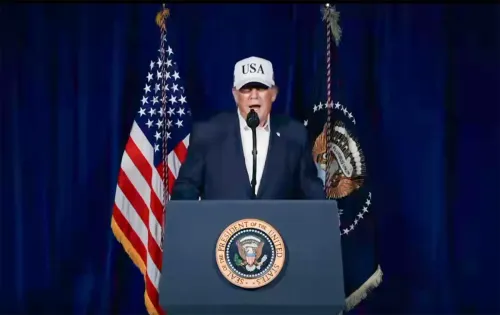
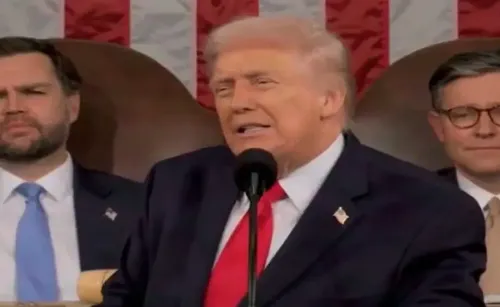
Washington, March 5 (NationPress) Tensions escalated on Capitol Hill as House Democrats and Republicans engaged in a heated debate regarding President Donald Trump's military intervention in Iran, coupled with a contentious funding issue surrounding the Department of Homeland Security.
During distinct weekly press briefings, the two parties presented starkly opposing perspectives on the situation and the responsibilities of Congress.
Democratic leaders in the House advocated for the approval of a War Powers resolution aimed at restricting military actions. In contrast, Republicans supported the military operation and accused Democrats of undermining homeland security by obstructing DHS funding.
Representative Pete Aguilar criticized Trump, stating he has "broken yet another promise to the American populace." He referred to the military engagement as "a reckless war with Iran" that "has already resulted in the deaths of six courageous American service members." Aguilar emphasized the necessity for Congress to intervene. "It's vital that we enact a War Powers resolution to curtail further military engagement in the Middle East that endangers our heroes," he declared.
Representative Ted Lieu insisted that such military actions require Congressional approval. "Only Congress has the authority to declare war, and this constitutes a war," he asserted. "Furthermore, this conflict is illegal since it lacks Congressional endorsement."
Lieu raised concerns about the risks to Americans stranded in the Middle East as well as the protection of military bases, noting that eleven US bases have been targeted by Iran.
House Minority Leader Hakeem Jeffries criticized Trump for dragging the nation into conflict without justifiable evidence of imminent threat. He stated that the President has, "without authorization and contrary to the Constitution, thrust America into what he described yesterday as potentially an endless war."
Jeffries also pointed out the administration's shifting rationales for military action, recalling Trump's previous claims that Iran's nuclear program had been "completely and utterly destroyed."
Several seasoned lawmakers expressed their disapproval of the decision to engage in war. Representative Jason Crow stated, "There was no immediate threat, and this is a war of choice initiated by Donald Trump."
Representative Chrissy Houlahan cautioned about the human toll of war, declaring, "War is not a reality show. There are no second chances. The consequences are real, measured in American lives and resources."
On the other hand, Republicans defended the President's actions and redirected focus toward the homeland security funding dispute.
Representative Lisa McClain accused Democrats of compromising security. "Almost every Democrat voted to close down the Department of Homeland Security," she noted.
McClain argued that current border policies have heightened risks, adding that "Biden allowed over 700 Iranians to enter the US illegally after crossing our border."
Representative Brian Mast maintained that Iran has long posed a threat to the US, asserting that Trump acted to neutralize that threat and had the authority to execute "this very limited operation under Article Two and the War Powers Resolution Act."
House Majority Whip Tom Emmer labeled Operation Epic Fury "a bold, decisive, and necessary demonstration of strength."
House Majority Leader Steve Scalise emphasized the persistent threat posed by Iran, stating that Republicans "back President Trump in this crucial action."
Speaker Mike Johnson characterized the military operation as focused and restrained. "It has been precise, limited, and extremely effective," he remarked.
Johnson also criticized Democrats for hindering DHS funding amid escalating risks, stressing the agency's crucial role in safeguarding the nation against foreign threats.
Under the US Constitution, Congress holds the power to declare war. However, Presidents have frequently initiated military operations without formal declarations. The War Powers Resolution of 1973 mandates that the President inform Congress when US forces engage in hostilities and restricts the duration of such operations without Congressional consent.
The Department of Homeland Security was established post-September 11, 2001, to oversee border protection, counterterrorism efforts, disaster response, and cybersecurity. Funding disagreements regarding DHS and discussions about presidential war powers have repeatedly emerged in Congress during times of international conflict.
Point of View
Congress finds itself at a crossroads. The necessity for a unified stance on national security and the implications of unilateral military action are paramount. A balanced approach is essential in addressing both the urgency of military engagement and the critical nature of homeland security.
NationPress
28 Aug 2026
Frequently Asked Questions
What is the War Powers Resolution?
The War Powers Resolution, enacted in 1973, requires the President to notify Congress within 48 hours of deploying military forces and limits operations to 60 days without Congressional approval.
What are the implications of cutting DHS funding?
Cuts to DHS funding could compromise national security, affecting border protection, counterterrorism efforts, and disaster response capabilities.
Why are Democrats opposing Trump's military actions?
Democrats argue that Trump's military actions lack Congressional approval and could escalate conflicts without clear justification.
What do Republicans say about the military operation in Iran?
Republicans defend the operation as a necessary response to ongoing threats from Iran and emphasize the importance of national security.
How does this conflict affect American soldiers?
The ongoing military engagement raises concerns about the safety and well-being of American service members deployed in the region.