What Do Public Comments Reveal About the US Wage-Based H-1B Rule?
Synopsis
Public comments on the US H-1B visa rule reveal a deep divide over its impact on high-skilled immigration. While many argue it fuels innovation, others claim it threatens job prospects for domestic workers. Explore the competing perspectives shaping this critical immigration policy that could redefine the technology workforce in America.
Key Takeaways
Public comments reveal a divided opinion on the US H-1B visa rule.
Supporters view H-1B workers as crucial for innovation and economic growth.
Concerns about job opportunities for domestic graduates persist.
Startups may be disadvantaged under a wage-weighted selection system.
Continued scrutiny of the H-1B program reflects ongoing tensions in immigration policy.
Washington, Dec 26 (NationPress) Public feedback on the US government's revised H-1B visa regulations indicates a significant divide regarding the potential impact of these modifications on high-skilled immigration and the tech workforce.
The Department of Homeland Security (DHS) has compiled hundreds of responses received during the rulemaking process in its final rule published in the Federal Register. The responses showcase conflicting opinions on whether the H-1B program is beneficial or detrimental to the US economy.
Many contributors emphasized the vital role of H-1B professionals in fostering innovation, productivity, and entrepreneurship within the United States. They contended that foreign-born workers significantly contribute to economic expansion, especially in technology and research sectors.
Some participants expressed concerns regarding international students, arguing that restricting job opportunities for graduates from US universities could stifle innovation and diminish the nation’s global competitiveness.
Responses from startups and small enterprises were prevalent, with commenters noting that these businesses are significant sources of innovation but often lack the financial means to compete with larger firms regarding salaries. They cautioned that a wage-weighted selection system could exclude startups from the H-1B program.
Several submissions highlighted that many innovations stem from early-career professionals and research institutions. These respondents warned that increased wage thresholds might favor established companies, thereby reducing diversity in innovation.
One submission pointed out that startups rely on the H-1B program to attract workers with specialized knowledge. The commenter warned that the new rule would make the program more costly and difficult to navigate, which could hinder growth and global leadership in technology.
Conversely, other commenters challenged the notion of a STEM labor shortage, citing studies that indicate the US has a surplus of qualified tech workers compared to available positions.
Some respondents referred to unemployment statistics among recent US graduates in computer science and related fields, arguing that job prospects for domestic workers have deteriorated while employers continue to seek H-1B hires.
Numerous submissions argued that the technology sector has exaggerated skill shortages. One comment characterized the US IT job market as “awash with supply.” Others asserted that American students are both interested in and capable of performing high-skilled tech roles.
Wage trends were another focal point. Some commenters referred to research showing stagnant or declining real wages in computer and mathematical occupations over several years, suggesting an oversupply of labor rather than a shortage.
Additional comments accused tech and outsourcing firms of exploiting the H-1B program, indicating that these companies continued hiring H-1B workers even during widespread layoffs of US employees.
Several respondents claimed the program has been employed to replace domestic workers or suppress wages, advocating for stronger regulations to safeguard US labor standards.
Some public submissions supported the DHS’s position, asserting that discouraging the hiring of lower-wage foreign workers would incentivize employers to seek qualified US workers who are unemployed or underemployed.
Others raised concerns about the system's integrity, pointing to potential wage manipulation, inconsistent job postings, and the use of multiple registrations to enhance selection chances.
The DHS stated it evaluated public feedback and disagreed with claims that the rule would hinder innovation or economic growth, asserting that the adjustments would aid employers in attracting and retaining “highly skilled and highly paid” workers.
The public comments underscore enduring tensions surrounding the H-1B program, which remains at the forefront of US discussions about jobs, wages, and immigration.
The H-1B visa, which is capped by Congress annually, has faced intense scrutiny for decades, particularly in the tech sector, where foreign-born professionals constitute a significant portion of the workforce.
Point of View
I recognize the complexity surrounding the H-1B visa debate. It's vital to consider both the contributions of foreign professionals and the concerns of domestic workers. Striking a balance that fosters innovation while safeguarding job opportunities for Americans is essential for a thriving economy.
NationPress
1 Oct 2026
Frequently Asked Questions
What is the H-1B visa program?
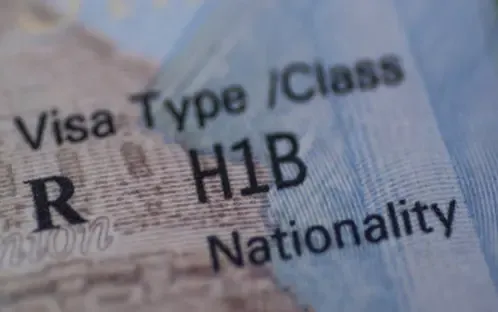
The H-1B visa program allows US employers to temporarily employ foreign workers in specialty occupations, particularly in fields such as technology, engineering, and research.
Why is the H-1B rule controversial?
The H-1B rule is controversial due to differing opinions on its impact on the US economy, job market, and the balance between foreign and domestic labor.
What are the arguments for the new wage-based H-1B rule?
Proponents argue that it encourages employers to hire highly skilled and highly paid workers, which could bolster innovation and economic growth.
What concerns do critics have about the new rule?
Critics worry that a wage-weighted selection system may disadvantage startups and small businesses, limit job opportunities for US graduates, and exacerbate existing labor market issues.
How do public comments influence immigration policy?
Public comments provide valuable insights and feedback that policymakers can consider when finalizing rules and regulations, shaping the future of immigration programs like the H-1B.