Did Trump Just Tighten H-1B Rules and Introduce a $100,000 Annual Fee?
Synopsis
In a groundbreaking decision, President Trump has imposed hefty fees on H-1B visa applications, potentially reshaping the future of tech employment in the US. This new policy, aimed at prioritizing American workers, could have profound implications for Indian tech professionals and major tech companies alike. Read on to discover the full impact of this proclamation.
Key Takeaways
Annual H-1B visa fee increased to $100,000.
Visa renewal limited to six years.
Policy aims to promote American workers .
Indian workers accounted for about 73% of approved H-1B visas.
DoJ intensifying scrutiny of hiring practices.
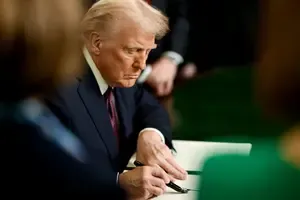
Washington, Sep 20 (NationPress) - In a significant blow to Indian tech professionals in the United States and leading tech firms, President Donald Trump has enacted a proclamation aimed at drastically limiting the H-1B visa program.
Under the new rules, every application will incur an annual fee of $100,000, a move intended to reduce the misuse of the visa program and promote the hiring of local workers.
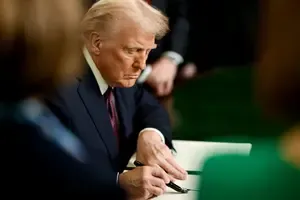
During the signing event at the White House, Trump stated that the policy is designed to create an “incentive to hire American workers.”
“We need skilled labor. We require exceptional talent, and this policy essentially guarantees that,” Trump emphasized.
Commerce Secretary Howard Lutnick supported this decision, explaining that it would deter businesses from employing foreign workers.
“The concept is straightforward: no longer will large tech firms or other major corporations train foreign workers without significant costs. They must pay the government $100,000, in addition to employee wages. This approach is simply not economically viable. We should be training recent graduates from our esteemed universities instead of importing talent,” he elaborated.
Lutnick also mentioned that the visa's renewal is restricted to a maximum of six years, applicable to both new and renewal requests.
“The individual must be either incredibly valuable to the company and the nation, or they will leave. We need to eliminate the practice of allowing individuals to enter our country on visas that were once easily obtainable,” he added.
The proclamation pointed out that the H-1B visa program has been “systematically misused to displace, rather than augment, American workers with lower-paid, less-skilled labor,” posing a risk to both “our economic and national security.”
The Secretary of Labor is set to initiate a rulemaking process to revise prevailing wage standards.
Both Trump and Lutnick asserted backing from all major tech firms.
“They are in favor of it. They truly need it. I believe they will be very satisfied with this, and we will retain productive individuals in our country,” Trump remarked.
Additionally, Trump signed an executive order establishing a gold card program, allowing individuals to secure a visa for $1 million and corporations for $2 million.
The H-1B visa program, limited to 85,000 new visas annually, enabled US companies to recruit skilled foreign workers in sectors such as technology and engineering. This recent action is expected to affect major American tech corporations.
Data from Pew Research indicates that India-born professionals accounted for around 73% of all approved H-1B visas in 2023, while China followed with 12%, primarily due to a significant backlog in approvals and a large influx of skilled immigrants from India.
In August, the Department of Homeland Security proposed reforms to the existing system by abolishing the lottery system with a “weighted selection process.”
The US Department of Justice (DoJ) has also intensified its examination of hiring practices under the H-1B visa program, urging workers and employers to report cases where US citizens are unfairly overlooked in favor of foreign visa holders. This initiative is spearheaded by Harmeet Dhillon, the India-born Assistant Attorney General of Civil Rights at the DoJ.
Dhillon announced in August that the department has initiated “several” investigations and has already taken action against “some” employers. “We encourage Americans to share any leads with us,” she urged, directing them to the DoJ hotline.
In December 2024, post-elections, Trump had previously endorsed the H-1B program, expressing his belief in its value and stating that he has utilized it multiple times.
“I have numerous H-1B visas associated with my properties. I firmly believe in the program. It serves a significant purpose,” he stated.
Trump's comments came amid rising opposition to H-1B visas from far-right activists. Tesla CEO and former Trump aide Elon Musk had also pledged to “fight” for the preservation of H-1B visas.
Point of View
It is essential to state that while the intent behind the proclamation may be to protect American jobs, the potential consequences of limiting skilled foreign workers could stifle innovation and growth in the tech sector. Balancing American interests with the need for global talent is crucial for the future economy.
NationPress
1 Oct 2026
Frequently Asked Questions
What is the new fee for H-1B visa applications?
The new fee for H-1B visa applications is set at $100,000 annually.
How long can the H-1B visa be renewed?
The H-1B visa can be renewed for a total period of six years.
What impact will this have on Indian tech professionals?
This proclamation is expected to significantly impact Indian tech professionals, as many of them rely on the H-1B visa to work in the US.
What is the gold card program introduced by Trump?
The gold card program allows individuals to obtain a visa for $1 million and corporations for $2 million.
How did this change come about?
The change was enacted by President Trump through a proclamation aimed at curbing the overuse of the H-1B visa program.