Make More in America Act: Democrats push bill to revamp US manufacturing, cut China supply chain reliance
Synopsis
Senate Democrats have introduced the Make More in America Act, a sweeping bid to use the Export-Import Bank to finance domestic factories in semiconductors, AI, and critical minerals — framing it explicitly as a counter to China's industrial dominance. With worker safeguards, clawback provisions, and a ban on political insiders benefiting, this is a more structurally rigorous manufacturing push than most, but its Senate fate hinges on Republican buy-in.
Key Takeaways
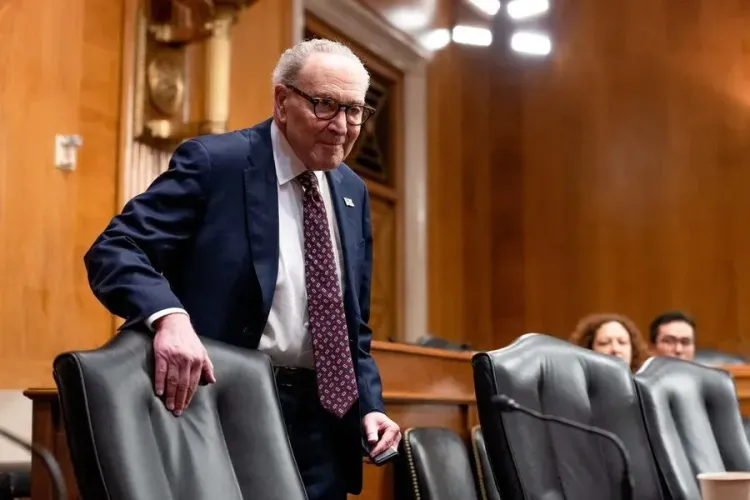
Senate Democratic Leader Chuck Schumer introduced the Make More in America Act on 16 June , backed by 12 co-sponsors .
The bill would expand the Export-Import Bank (EXIM) mandate to finance domestic manufacturing in semiconductors, AI, quantum tech, critical minerals, robotics, batteries, and shipbuilding .
A permanent 'Make More in America Program' would be established to grow US manufacturing capacity nationwide.
Projects must include workforce training commitments and meet prevailing wage requirements ; funds cannot be used for stock buybacks or debt repayment.
Senior officials, lawmakers, and their immediate families are barred from receiving programme benefits .
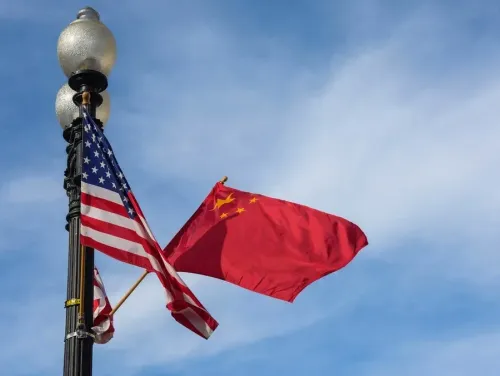
Democrats cited China's dominant share of global manufacturing output as a central justification for the legislation.
Senate Democratic Leader Chuck Schumer on 16 June introduced sweeping legislation in the US Senate aimed at rebuilding America's manufacturing base, reducing dependence on Chinese-dominated supply chains, and channelling federal resources into industries critical to US economic and national security. The proposed Make More in America Act marks one of the most expansive Democratic manufacturing proposals in recent years.
What the Bill Proposes
The centrepiece of the legislation is a significant expansion of the mandate of the Export-Import Bank of the United States (EXIM). Under the bill, EXIM would be empowered to finance domestic manufacturing projects across a wide range of strategic sectors, including semiconductors, artificial intelligence, quantum technology, biotechnology, critical minerals, advanced energy systems, drones, robotics, batteries, and shipbuilding.
The legislation would establish a permanent 'Make More in America Program' focused on expanding manufacturing capacity across the country. Federal support could be used to build or expand manufacturing facilities within the United States, with recipients required to demonstrate tangible benefits for American workers.
Key Safeguards and Worker Protections
The bill includes several provisions designed to protect taxpayer funds and ensure workforce gains are real. Projects would be required to include commitments on workforce training and education, and construction activities would be subject to prevailing wage requirements. Assistance could not be used for stock buybacks or to repay existing debt, and projects that miss agreed deadlines or fail to meet labour commitments could face clawbacks.
Notably, senior executive branch officials, members of Congress, and their immediate family members would be barred from receiving support under the programme — a safeguard that Democrats say insulates the scheme from political patronage.
What the Democrats Said
Schumer framed the legislation as a direct response to repeated global supply chain shocks. 'Americans cannot keep paying the price every time a supply chain crisis hits — whether it's a pandemic, a war, or the whims of the Chinese Communist Party trying to undermine the American economy,' he said. 'We have to break the cycle of supply chain shocks that are raising prices, invest in American industry, and protect our national security,' he added.
Senator Jack Reed pointed to what Democrats describe as a manufacturing decline under the current administration. 'The United States has faced a manufacturing decline under the Trump Administration and we need to reverse that trend,' Reed said. 'We must bolster domestic supply chains, revive America's manufacturing competitiveness, and get our manufacturing workforce growing again to ensure America is capable of responding to global threats and builds critical technologies here at home.'
Senator Cory Booker said the bill was designed to ensure that 'American workers can compete and win in a global economy,' adding that expanding EXIM's core mandate would 'strengthen EXIM's ability to support the industries that are essential to our national security and economic leadership from semiconductors to advanced manufacturing.'
The China Factor
Democrats backing the bill repeatedly cited concerns over China's growing industrial dominance. The bill's findings note that China accounts for a substantially larger share of global manufacturing output than the United States and continues to consolidate its position in advanced technologies. This framing positions the legislation as much a national security measure as an economic one — a bipartisan pressure point that its sponsors appear to be leveraging deliberately.
The bill has been co-introduced by Schumer alongside Senators Jack Reed, Amy Klobuchar, Chris Coons, Brian Schatz, Cory Booker, Elizabeth Warren, Chris Van Hollen, Tammy Duckworth, Mark Kelly, Andy Kim, Lisa Blunt Rochester, and Angela Alsobrooks.
What Happens Next
The bill now enters the Senate legislative process, where its prospects will depend on whether it can attract Republican support in a closely divided chamber. With the 2026 midterms approaching, the legislation also serves as a marker of Democratic economic priorities heading into the election cycle. Industry groups in semiconductors and advanced manufacturing are expected to weigh in as the bill advances through committee review.
Point of View
But the bill's real test is whether it can peel off Republican votes in the Senate — without which it remains a statement of intent rather than law. The China framing is deliberate and shrewd; national security arguments have historically been the one lane where bipartisan manufacturing consensus is possible.
NationPress
15 Sept 2026
Frequently Asked Questions
What is the Make More in America Act?
The Make More in America Act is a Senate bill introduced by Democrats on 16 June that would expand the Export-Import Bank's mandate to finance domestic manufacturing projects in strategic sectors including semiconductors, AI, critical minerals, robotics, and shipbuilding. It aims to reduce US dependence on Chinese-dominated supply chains and rebuild America's industrial base.
How would the Export-Import Bank's role change under this bill?
Currently focused on supporting US exports, EXIM would under this bill be empowered to finance the development, production, and commercialisation of technologies critical to US economic competitiveness and national security — including funding the construction or expansion of manufacturing facilities inside the United States.
What protections does the bill include for workers and taxpayers?
Recipients must commit to workforce training and education programmes, and construction work must meet prevailing wage standards. Federal assistance cannot be used for stock buybacks or debt repayment, and projects that miss deadlines or labour commitments face clawbacks. Senior officials and members of Congress are also barred from receiving programme benefits.
Why are Democrats focusing on China in this legislation?
The bill's findings state that China holds a substantially larger share of global manufacturing output than the United States and is expanding its lead in advanced technologies. Democrats argue that repeated supply chain disruptions — from the pandemic to geopolitical tensions — have exposed dangerous US dependence on overseas, particularly Chinese, suppliers for strategically critical goods.
What are the bill's chances of passing the Senate?
The bill was introduced by Senate Democrats and faces an uncertain path in a closely divided Senate, where Republican support would be needed for passage. Its prospects will become clearer as it moves through committee review; the 2026 midterm cycle may also influence how aggressively both parties engage with its provisions.