Denmark's Social Democrats Maintain Lead in Parliamentary Elections Amid Majority Stalemate
Synopsis
In Denmark's latest parliamentary elections, the Social Democrats emerged as the largest party, yet neither the left nor the right bloc achieved a majority. With coalition talks ahead, Prime Minister Mette Frederiksen faces a challenging path to government formation.
Key Takeaways
Social Democrats secure 38 seats, maintaining their lead.
No bloc achieves a majority in the Folketing .
Coalition negotiations are essential for government formation.
The Moderates may play a crucial role in upcoming talks.
Prime Minister Mette Frederiksen acknowledges challenging negotiations ahead.
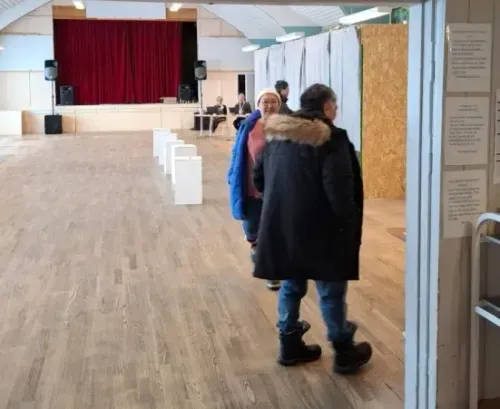
Copenhagen, March 25 (NationPress) In the recent parliamentary elections held in Denmark, the Social Democrats have maintained their position as the leading party, based on preliminary results announced early Wednesday. However, neither the left-leaning red bloc nor the right-leaning blue bloc managed to attain a definitive majority in the Folketing, the unicameral parliament of Denmark, as reported by Xinhua news agency.
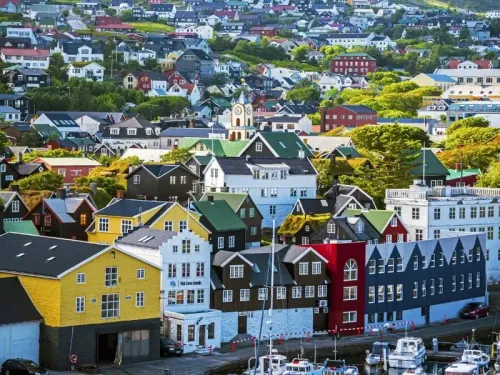
The Folketing consists of 179 seats in total—175 chosen from Denmark proper, alongside two each from Greenland and the Faroe Islands. The final results from these territories are still pending.
Initial figures from Denmark proper indicate that the Social Democrats garnered approximately 21.9% of the votes, amounting to 38 seats, a decline of 12 seats compared to the last election. The Socialist People’s Party followed with 20 seats, while the Venstre, Denmark’s Liberal Party, secured 18 seats. Both the Liberal Alliance and the Danish People’s Party each obtained 16 seats.
According to the preliminary tally from Denmark proper, the red bloc holds 84 seats, in contrast to the blue bloc's 77. As a majority in the Folketing requires 90 seats, the Moderates, which won 14 seats, are anticipated to play a crucial role in the upcoming government formation discussions.
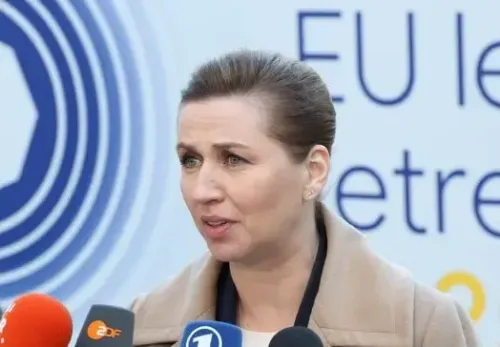
After the election results, Prime Minister Mette Frederiksen expressed her willingness to take charge in the forthcoming negotiations, while also acknowledging that forming a new government will likely prove challenging.
Denmark's multi-party parliamentary system often leads to coalition or minority governments, and discussions among party leaders will dictate the structure of the new administration.
Point of View
The results underscore a fragmented political landscape. While the Social Democrats retain their leading position, the inability of either bloc to secure a majority indicates potential instability in governance. Coalition negotiations will be critical.
NationPress
22 Sept 2026
Frequently Asked Questions
What were the results of the Danish parliamentary elections?
The Social Democrats remained the largest party, winning about 21.9% of the vote and 38 seats, while neither the red nor blue blocs achieved a majority.
How many seats are in the Folketing?
The Folketing consists of 179 seats in total, including 175 elected in Denmark proper and two each from Greenland and the Faroe Islands.
Who is expected to play a key role in government formation?
The Moderates, who won 14 seats, are expected to be pivotal in the negotiations for forming the new government.
What challenges does Prime Minister Mette Frederiksen face?
Prime Minister Frederiksen has indicated that forming a new government will likely be challenging due to the lack of a majority.
What political system does Denmark have?
Denmark operates under a multi-party parliamentary system, which often leads to coalition or minority governments.