Bangladesh radicalisation fears grow after Singapore deports 2 workers
Synopsis
Two Bangladeshi workers deported from Singapore over extremist social media posts are now in police custody in Dhaka — the latest in a string of regional incidents that, combined with a 17% youth unemployment rate and the political opening created by Sheikh Hasina's 2024 ouster, is raising serious questions about radicalisation pathways for Bangladesh's vast migrant workforce.
Key Takeaways
Singapore deported two Bangladeshi workers — Tayani Md Risad , 25, and Islam Sahedul , 37 — over extremist social media activity; both detained in Dhaka on 8 July .
Singapore's ISD found no evidence of planned attacks but said their views threatened social cohesion.
In 2025 , Malaysia arrested 36 Bangladeshi migrant workers over alleged Islamic State links; Bangladesh police issued a nationwide terror alert in April 2026 .
Bangladesh's youth unemployment stood at around 17% in 2025, per ILO estimates; nearly one in five young people aged 15–24 were not in education, employment, or training in 2024, per World Bank data.
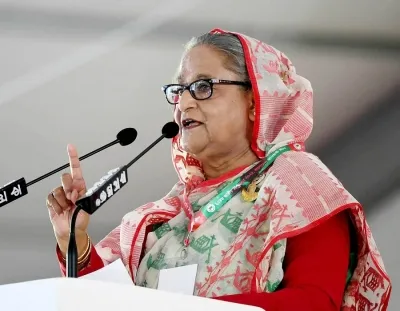
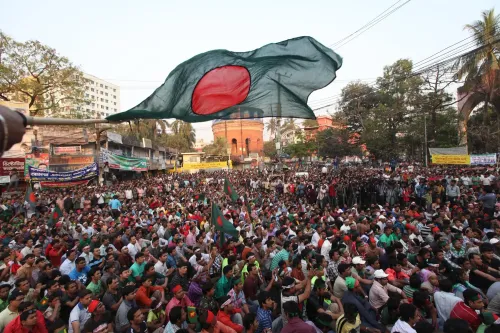
Analysts link the rise in hardline rhetoric partly to the political space opened for Islamist actors after Sheikh Hasina's ouster in 2024 .
Two Bangladeshi construction workers deported from Singapore over extremist social media posts have been taken into police custody in Dhaka, shining a spotlight on the growing spread of hardline religious views in Bangladesh — a trend that analysts say has accelerated since the 2024 protests that ousted former Prime Minister Sheikh Hasina. The case, reported this week by Singapore's The Straits Times, underscores mounting regional concern over radicalisation among Bangladeshi migrant workers.
The Deportation and Detention
Singapore's Internal Security Department (ISD) announced on 17 July that Tayani Md Risad, 25, had expressed support for radical Islamist writer and preacher Shafiur Rahman Farabi, while Islam Sahedul, 37, had posted inflammatory comments about the Israel-Iran conflict and labelled Muslims who opposed Islamic law as infidels. The ISD stated it found no indication of attack plans or terrorist activity within Singapore, but determined that both men's views posed a risk to the country's social cohesion.
Upon their arrival in Dhaka on 8 July, the two men were detained by police. A Dhaka court subsequently placed them in police custody as investigators examine their possible links to militant organisations, according to Bangladesh state prosecutor Muhammad Shamsud Doha. Notably, police have not named any specific organisations connected to the men, and the allegations have not yet been subjected to judicial determination.
A Pattern Across the Region
This case does not stand alone. In 2025, authorities in Malaysia arrested 36 Bangladeshi migrant workers over alleged links to the Islamic State. In April 2026, Bangladesh police issued a nationwide terror alert. Together, these incidents point to a recurring pattern of radicalisation concerns involving Bangladeshi workers employed across Southeast Asia.
Analysts trace part of the shift to the political vacuum created after Sheikh Hasina's ouster in 2024, which reportedly opened greater space for Islamist actors in Bangladesh's public and online discourse.
The Youth Unemployment Link
According to Iftekharul Bashar of the S Rajaratnam School of International Studies in Singapore, educated but unemployed or underemployed Bangladeshi youth may be particularly susceptible to extremist narratives due to what he describes as 'relative deprivation' — the gap between the social status young people were promised through education and what they actually receive.
The data supports this concern. The International Labour Organisation (ILO) estimates Bangladesh's youth unemployment rate at around 17% in 2025, while World Bank figures show that nearly one in five young people aged 15 to 24 were not in education, employment, or training in 2024.
Bashar cautioned, however, that widespread economic frustration does not automatically translate into radicalisation. He argued it can deepen a sense of grievance that extremists seek to exploit, and noted that 'social isolation and political disillusionment' increase vulnerability, while 'algorithms, peer networks and encrypted platforms' accelerate the spread of extremist content.
What Comes Next
Investigations into the two deported workers are ongoing in Dhaka. The cases are expected to test Bangladesh's counter-terrorism framework at a moment when the country's political landscape remains in flux following the 2024 transition. Regional governments and security agencies are likely to face renewed pressure to coordinate more closely on monitoring radicalisation among migrant worker communities across Southeast Asia.
Point of View
But the pattern it fits is not. Three separate incidents — Singapore, Malaysia, and Bangladesh's own April 2026 terror alert — within roughly 18 months suggest that radicalisation among Bangladeshi migrant labour is a structural problem, not a series of isolated cases. What mainstream coverage underplays is the political context: Hasina's removal did not just change a government, it altered the ideological equilibrium Bangladesh had maintained for years. The harder question is whether Dhaka's current administration has both the will and the institutional capacity to push back — and whether receiving countries in Southeast Asia are willing to move beyond deportation toward genuine intelligence-sharing.
NationPress
25 Jul 2026
Frequently Asked Questions
Why were the two Bangladeshi workers deported from Singapore?
Singapore's Internal Security Department deported Tayani Md Risad and Islam Sahedul after finding that they had posted extremist content on social media. Risad had expressed support for radical Islamist preacher Shafiur Rahman Farabi, while Sahedul posted inflammatory remarks on the Israel-Iran conflict and labelled Muslims who opposed Islamic law as infidels. The ISD found no evidence of planned attacks in Singapore but said their views were harmful to social cohesion.
What happened to the two workers after they returned to Bangladesh?
Both men were detained by police upon arriving in Dhaka on 8 July. A Dhaka court subsequently placed them in police custody as investigations into their possible links to militant organisations continue, according to state prosecutor Muhammad Shamsud Doha. No specific organisations have been named and the allegations have not yet been judicially determined.
Is this an isolated case or part of a broader trend?
It is part of a broader pattern. In 2025, Malaysian authorities arrested 36 Bangladeshi migrant workers over alleged Islamic State links. In April 2026, Bangladesh police issued a nationwide terror alert. Analysts also point to a rise in hardline religious rhetoric in Bangladesh since the 2024 protests that ousted Sheikh Hasina.
What role does youth unemployment play in radicalisation in Bangladesh?
Researchers at the S Rajaratnam School of International Studies argue that educated but underemployed Bangladeshi youth face 'relative deprivation' — a mismatch between expectations and outcomes — that can make them more susceptible to extremist narratives. The ILO estimates Bangladesh's youth unemployment rate at around 17% in 2025, and World Bank data shows nearly one in five young people aged 15 to 24 were not in education, employment, or training in 2024.
How has Bangladesh's political situation contributed to the rise of hardline views?
According to analysts, the 2024 protests that removed Prime Minister Sheikh Hasina created a political opening for Islamist actors, contributing to a rise in hardline religious rhetoric in online and public discourse. Researchers caution that economic frustration alone does not cause radicalisation, but that political disillusionment and social isolation can deepen vulnerabilities that extremists exploit.