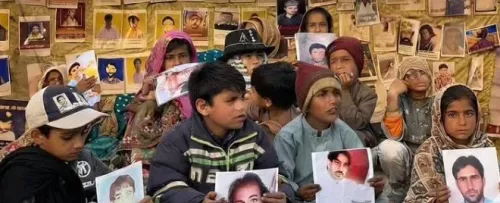
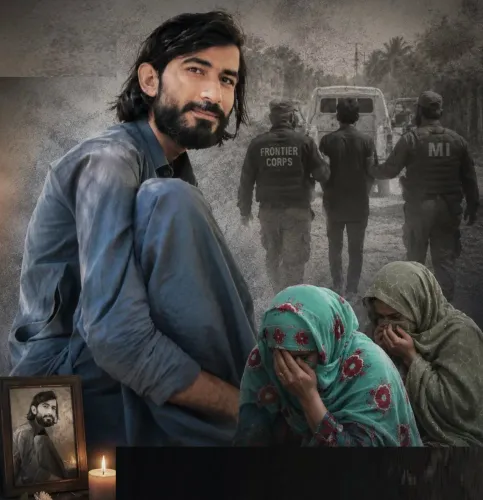
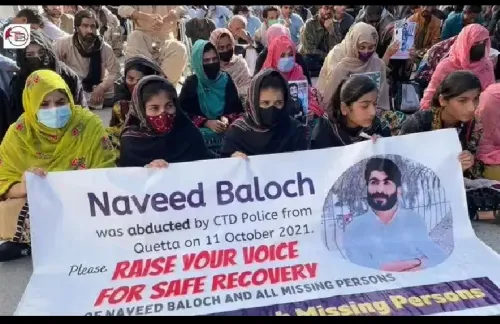
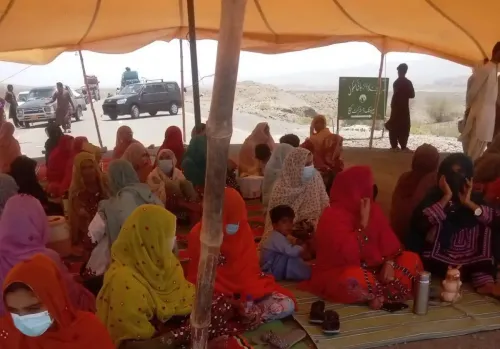
Baloch enforced disappearances: Pakistan's accountability crisis under global scrutiny
Synopsis
Baloch student leader Jiand Baloch has now disappeared at the hands of Pakistani forces three times — nine months in 2018, one month in 2024, and 11 days in July 2026. A European Times report, backed by Amnesty International and a February 2025 UN communication, warns that Pakistan's Anti-Terrorism Act amendments now allow 90-day preventive detention, deepening the risk of disappearance for activists, journalists, and minority groups.
Key Takeaways
Jiand Baloch , chairperson of the Baloch Students Organisation , was forcibly disappeared from Quetta on 24 July 2026 and returned 11 days later on 3 August 2026 .
This was his third enforced disappearance — previously in November 2018 (nine months) and July 2024 (one month).
Amnesty International confirmed he was targeted for his peaceful activism and student leadership role.
A February 2025 United Nations communication flagged arbitrary arrests, enforced disappearances and extrajudicial killings in Balochistan .
Pakistan's Anti-Terrorism Act amendments allow preventive detention for up to 90 days on broad grounds, raising UN alarm over risk to dissidents, journalists, and minorities.
Despite a state commission and judicial interventions, Pakistan's enforced disappearance crisis remains unresolved, the report concluded.
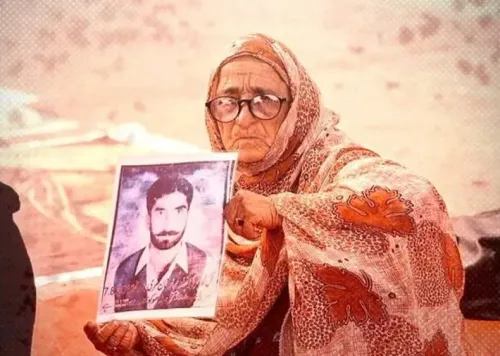
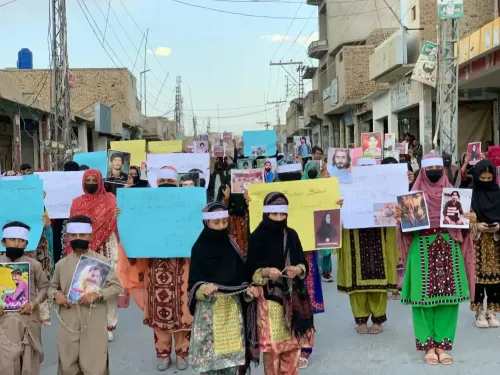
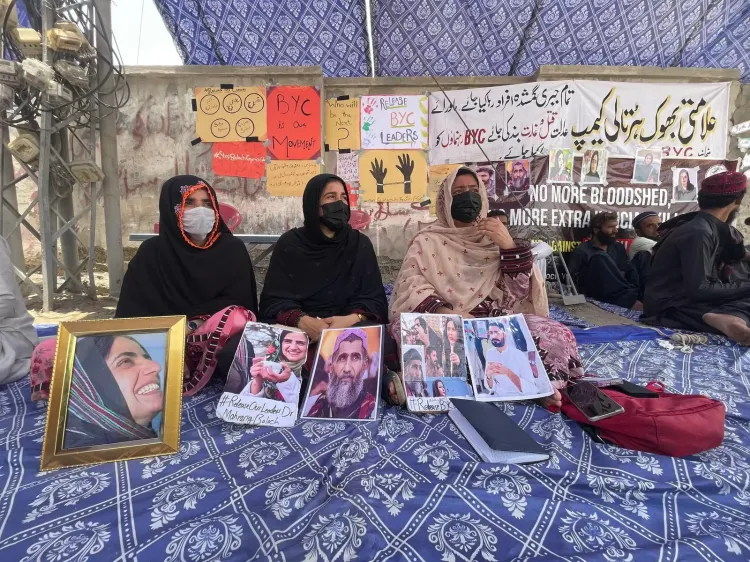
The repeated enforced disappearances of Baloch student leader Jiand Baloch by Pakistani forces have drawn renewed international attention to Pakistan's systemic accountability failure, according to a report published in the European Times. The case, analysts argue, exemplifies a wider pattern in which activists are increasingly targeted for peaceful organising, speaking out, and demanding answers about those already missing.
A Pattern Repeated Three Times
Jiand Baloch, chairperson of the Baloch Students Organisation, was taken from his home in Quetta in the early hours of 24 July 2026 — without explanation and without due process. He returned home 11 days later on 3 August 2026. But this was not the first time. His first disappearance occurred in November 2018, when he was taken along with his father and younger brother and remained missing for nine months. A second disappearance followed in July 2024, lasting approximately one month, during which he was reportedly campaigning around the Baloch Raaji Muchi, or Baloch National Gathering. The third episode — 11 days in duration — followed in 2026.
Citing Amnesty International, the report confirmed that Jiand was targeted for his peaceful activism and his prominent position as organisation chairperson. 'The repetition is significant,' the European Times noted. 'A person can disappear once amid a security operation or an unresolved investigation. When the same activist disappears repeatedly, each time in the context of his public work, the episode becomes part of a wider question about the use of state power, due process and accountability in Pakistan.'
What the Report Says About Pakistan's Accountability Gap
The European Times report frames the Jiand case as symptomatic of a deeper structural failure. Pakistan's crisis of enforced disappearances, it argues, 'goes far beyond the fate of missing persons' — it tests whether security institutions are bound by law, whether courts can compel transparency, and whether families will ever learn what happened to their loved ones. Despite the existence of a state commission, judicial interventions, and sustained international pressure, the issue has remained unresolved for years.
United Nations Experts Raise Alarm
A February 2025 communication by United Nations experts flagged alleged arbitrary arrests, detention-related mistreatment, enforced disappearances and extrajudicial killings in Balochistan. The UN experts expressed concern over restrictions on activists, censorship, and the use of counter-terrorism provisions against individuals exercising rights to freedom of expression and peaceful assembly.
The same experts subsequently raised alarm over amendments to Pakistan's Anti-Terrorism Act and related provincial laws that now permit preventive detention for up to 90 days on broad grounds of suspected links to terrorism. They warned that such provisions 'could increase the risk of arbitrary detention, enforced disappearance and torture, particularly in cases involving political dissenters, human rights defenders, journalists, students and members of minority groups.'
Why This Matters Beyond Balochistan
This comes amid sustained scrutiny of Pakistan's human rights record before multiple international forums. Critics argue that the legal architecture enabling enforced disappearances — including the Anti-Terrorism Act amendments — effectively insulates security institutions from judicial oversight. The Jiand case, analysts note, illustrates precisely why domestic remedies have so far failed: a state commission exists on paper, but families continue to receive no answers. International pressure, while intensifying, has not yet translated into enforceable accountability. How Pakistan responds to mounting UN and civil-society pressure in the months ahead will be closely watched.
Point of View
And the architecture is failing. Three separate disappearances of the same activist, each coinciding with his public work, make it impossible to attribute the pattern to coincidence or operational necessity. What is striking is how little the formal remedies have delivered: a state commission exists, courts have intervened, and UN experts have communicated formally — yet the cycle continues. The Anti-Terrorism Act amendments, permitting 90-day preventive detention on broad grounds, effectively hand security institutions a legal shield against the very judicial oversight that might otherwise constrain them. Until Pakistan separates counter-terrorism law from its use as a tool against peaceful dissent, international pressure will remain a cost it absorbs rather than a consequence it fears.
NationPress
19 Sept 2026
Frequently Asked Questions
Who is Jiand Baloch and why was he disappeared?
Jiand Baloch is the chairperson of the Baloch Students Organisation and a prominent Baloch activist. According to Amnesty International, he was targeted for his peaceful activism; Pakistani forces took him from his Quetta home on 24 July 2026 without explanation, the third such disappearance he has experienced since 2018.
How many times has Jiand Baloch been disappeared?
Jiand Baloch has been subjected to enforced disappearance three times: first in November 2018 for nine months along with his father and brother, again in July 2024 for approximately one month, and most recently from 24 July 2026 for 11 days before returning home on 3 August 2026.
What did UN experts say about enforced disappearances in Balochistan?
In a February 2025 communication, United Nations experts flagged alleged arbitrary arrests, detention-related mistreatment, enforced disappearances and extrajudicial killings in Balochistan. They also warned that amendments to Pakistan's Anti-Terrorism Act, allowing up to 90 days of preventive detention on broad grounds, raised the risk of abuse against political dissenters, human rights defenders, journalists, students, and minority groups.
What is Pakistan's Anti-Terrorism Act and how does it relate to disappearances?
Pakistan's Anti-Terrorism Act, as amended through related provincial laws, permits preventive detention for up to 90 days on broad grounds of suspected links to terrorism. UN experts warn these provisions could be used to detain activists, journalists, and minorities without adequate judicial oversight, increasing the risk of enforced disappearance and torture.
Why has Pakistan's enforced disappearance crisis remained unresolved?
Despite the existence of a state commission, judicial interventions and years of international pressure, the crisis persists because security institutions have not been held accountable, according to the European Times report. Families of the disappeared continue to receive no answers, and the legal framework — including broad counter-terrorism detention powers — insulates these institutions from meaningful judicial scrutiny.