Damascus cafe blast kills 9, injures 20 near Justice Palace
Synopsis
A 1-kg IED packed with metal fragments tore through a Damascus cafe just 70 metres from the Justice Palace, killing 9 and wounding 20 — the deadliest single bombing in the Syrian capital since Assad's fall. With no claim of responsibility and Islamic State sleeper cells reportedly active, Thursday's attack underscores how fragile Syria's post-transition security order remains.
Key Takeaways
A bomb explosion at a cafe on al-Nasr Street, Damascus on 3 July killed 9 people and injured 20 .
The device was a 1-kg IED packed with metal fragments, detonated at approximately 3:00 pm local time .
The cafe was located roughly 70 metres west of the Justice Palace in the Hijjaz area of central Damascus.
No group has claimed responsibility; an investigation is underway by Syrian authorities.
Security officials say Islamic State has been reactivating sleeper cells since the ouster of the previous Syrian administration in late 2024 .
The attack follows a series of incidents targeting Syrian transitional forces, including soldier killings in Aleppo and Hasakah provinces.
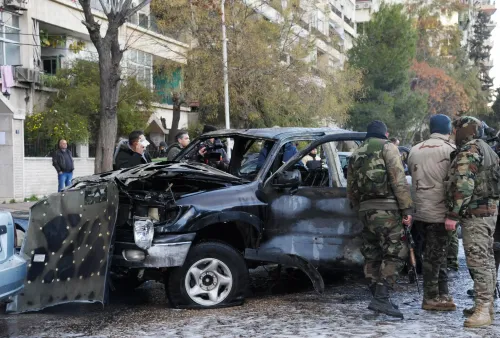
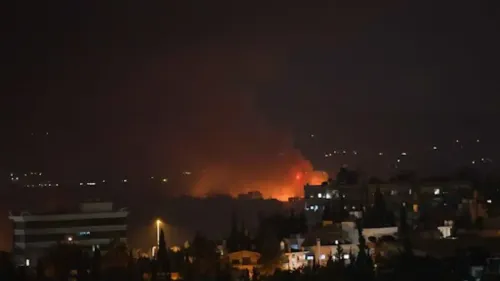
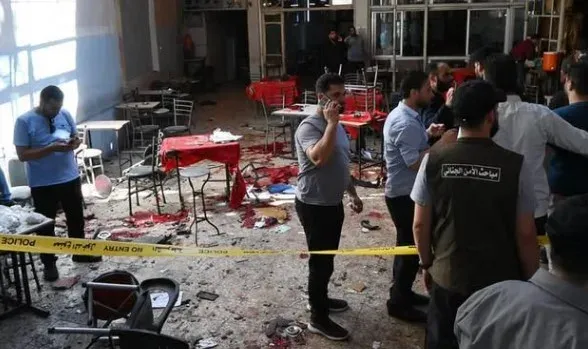
A bomb explosion inside a cafe in central Damascus killed nine people and wounded 20 others on Thursday, 3 July, according to a statement issued by Syria's interior authorities that evening. The blast struck at approximately 3:00 pm local time (1200 GMT), making it one of the deadliest single attacks in the Syrian capital since the fall of the previous administration in late 2024.
How the Attack Unfolded
Authorities said the explosion was caused by an improvised explosive device (IED) weighing approximately 1 kg and packed with metal fragments — a design intended to maximise casualties in an enclosed space. The device was detonated inside the cafe on al-Nasr Street in the Hijjaz area, roughly 70 metres west of the Justice Palace, placing the attack in one of Damascus's more prominent civic corridors.
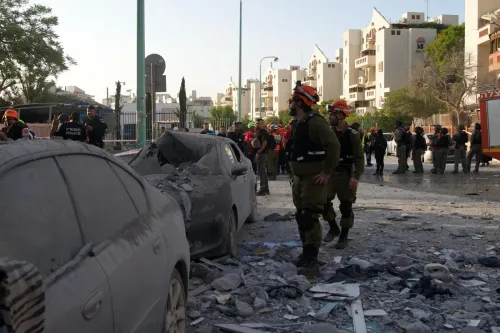
Security forces and emergency teams reached the scene shortly after the blast, evacuating the injured, administering first aid, and cordoning off the area. All casualties were subsequently transferred to hospitals, according to emergency officials. An investigation has been launched to determine the circumstances of the explosion and identify those responsible.
No Claim of Responsibility Yet
As of Thursday night, no group had claimed responsibility for the bombing. However, security officials have noted that the Islamic State has been attempting to exploit the security vacuum that followed the ouster of former Syrian president Bashar al-Assad — reportedly reactivating sleeper cells, recruiting new fighters, and repositioning weapons caches as Syria's new transitional government works to consolidate authority across the country.
Some media reports have suggested Islamic State involvement in a recent pattern of attacks targeting personnel of the new Syrian military forces, though no official attribution has been made for Thursday's cafe bombing.
Pattern of Violence Against New Syrian Forces
The Damascus explosion is the latest in a series of incidents that have tested the security capacity of Syria's transitional authorities. In June, two Syrian soldiers were killed by unidentified assailants near the city of Manbij in the northeastern countryside of Aleppo province, according to state media citing a defence ministry source.
Earlier, on 11 May, two soldiers were killed when their bus was attacked in the countryside of Hasakah province in northeastern Syria. Security officials say these incidents follow a recognisable pattern of ambushes and targeted strikes against military personnel affiliated with the post-Assad administration.
Broader Security Context
Syria's new transitional government has been grappling with a fragmented security landscape since the collapse of the previous administration in late 2024. The IED attack in central Damascus — targeting a civilian space in close proximity to a key government building — signals an escalation in both audacity and geography. This comes amid warnings from regional analysts that non-state armed groups are seeking to undermine the legitimacy of the transitional order before it can entrench itself institutionally.
Investigators are continuing to work the scene; further details on the perpetrators and motive are expected as the inquiry progresses.
Point of View
Targeting both military personnel and civilian spaces to erode public confidence in the new government's ability to provide security. What is striking is that Damascus, historically the most controlled part of Syria, is now visibly porous. If Syria's transitional authorities cannot secure the capital's civic core, their claim to nationwide consolidation will face mounting credibility pressure — and that vacuum is precisely what armed groups are designed to exploit.
NationPress
3 Jul 2026
Frequently Asked Questions
What happened in the Damascus cafe explosion on 3 July?
An improvised explosive device detonated inside a cafe on al-Nasr Street in central Damascus on 3 July, killing 9 people and injuring 20. The 1-kg IED was packed with metal fragments and exploded at around 3:00 pm local time, approximately 70 metres from the Justice Palace.
Who is responsible for the Damascus blast?
No group has claimed responsibility for the attack as of Thursday night. Syrian authorities have launched an investigation, and security officials have noted that the Islamic State has been attempting to reactivate sleeper cells in Syria since the fall of the previous administration in late 2024, though no official attribution has been made.
Where exactly did the Damascus explosion occur?
The bomb went off inside a cafe on al-Nasr Street in the Hijjaz area of central Damascus, roughly 70 metres west of the Justice Palace — one of the Syrian capital's key government buildings.
Is this part of a broader pattern of attacks in Syria?
Yes. The Damascus bombing follows a series of incidents targeting Syria's new transitional military forces, including the killing of two soldiers near Manbij in Aleppo province in June and two more soldiers killed in Hasakah province on 11 May. Some reports have suggested Islamic State involvement in these attacks.
What is the current security situation in Syria?
Syria has been navigating a fragile security environment since the collapse of the previous administration in late 2024. The new transitional government is working to consolidate control, but security officials warn that armed groups — reportedly including the Islamic State — are exploiting gaps in authority by reactivating cells and repositioning weapons.