Summit Fire in Southern California tops 2,700 acres, zero contained amid heat wave
Synopsis
A wildfire near the Los Angeles–San Bernardino county line exploded to 2,700 acres in under 24 hours with zero containment — and a heat advisory stretching to Tuesday is making conditions worse. CAL FIRE has already recorded 2,584 fires burning 79,690 acres statewide this year, and its own officials say 'fire season' is now a dangerously outdated concept.
Key Takeaways
The Summit Fire near Llano, California has burned nearly 2,700 acres with zero containment as of Saturday, 12 July .
Evacuation orders and warnings are in place for communities near the Los Angeles and San Bernardino county line.
Temperatures reportedly reached close to 100°F (37.8°C) on Friday; a heat advisory remains in effect through Tuesday morning .
CAL FIRE reports 2,584 wildfires have burned over 79,690 acres statewide in 2025, destroying 25 structures with no confirmed fatalities.
California fire officials now use the term 'peak fire year' rather than 'fire season,' reflecting year-round wildfire risk.
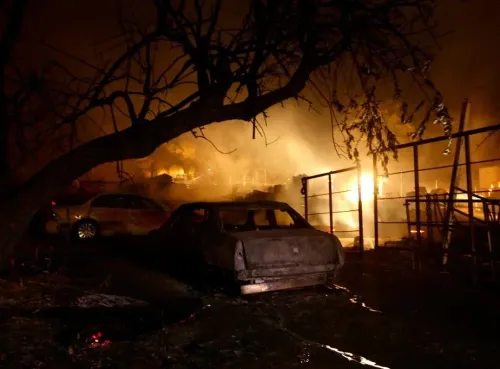
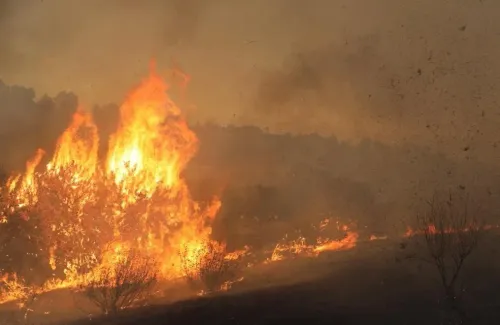
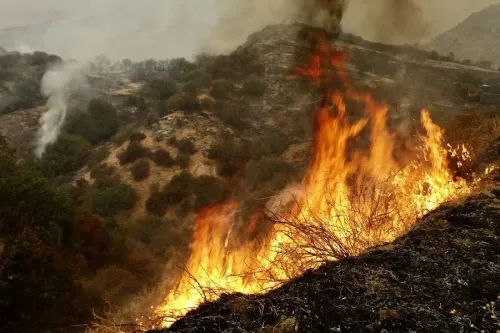
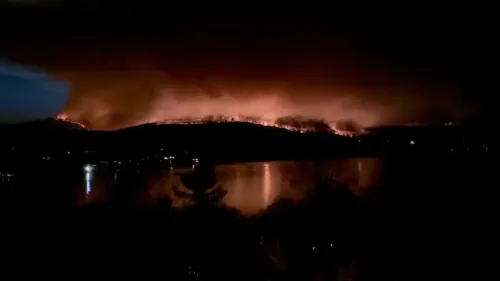
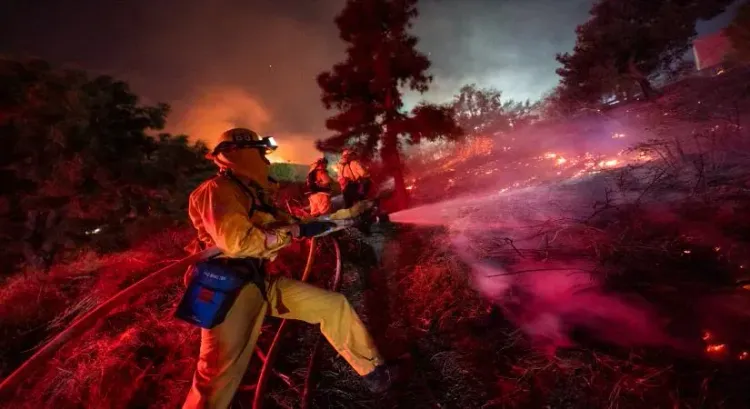
A fast-moving wildfire in Southern California has scorched nearly 2,700 acres (approximately 10.9 square kilometres) as of Saturday, 12 July, forcing evacuations across multiple communities with zero containment reported, according to the California Department of Forestry and Fire Protection (CAL FIRE). The blaze is burning amid a dangerous heat wave that pushed temperatures close to 100 degrees Fahrenheit (37.8 degrees Celsius) in the affected region.
How the Summit Fire Broke Out
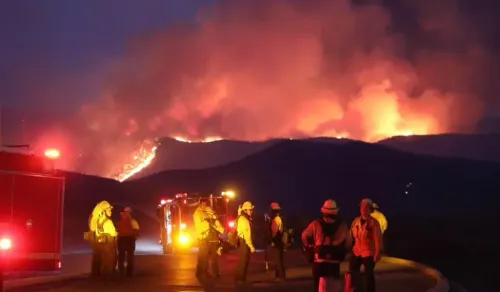
The fire, officially named the Summit Fire, was first reported at approximately 1 p.m. local time on Friday near Llano, a small community situated close to the Los Angeles and San Bernardino county line. By Saturday morning, crews had made no containment progress. Steep and rugged terrain has severely hampered ground access, though aerial support from helicopters remains active.
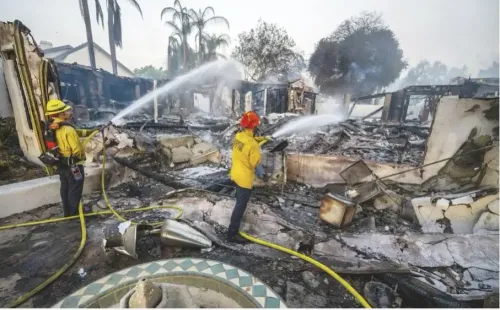
Evacuation orders and warnings have been issued for surrounding areas. Officials confirmed that firefighting efforts are being waged simultaneously from the air and the ground, with crews remaining actively engaged despite the difficult conditions.
Dangerous Heat Adding to the Challenge
A heat advisory remains in effect for much of Southern California through Tuesday morning, compounding the challenge for first responders. Temperatures in the Llano area reportedly touched nearly 100°F (37.8°C) on Friday — conditions that accelerate fire spread and exhaust firefighting personnel.
This comes amid a broader pattern of worsening fire conditions across the state. Earlier in June, several wildfires remained active in Riverside, Kern, and San Diego counties. Fire officials have warned that hotter and drier conditions are likely to sustain above-average fire activity in the months ahead.
California Drops 'Fire Season' for 'Fire Year'
The Summit Fire underscores a shift in how California fire authorities are framing wildfire risk. Officials have moved away from the term 'fire season,' arguing that the threat is no longer confined to late summer and autumn.
'It does back up the need for us to utilize the term peak ‘fire year’ rather than the antiquated ‘fire season’ that we used to use,' said David Acuna, a Battalion Chief at CAL FIRE.
Officials attribute the year-round vulnerability to a combination of prolonged drought, rising temperatures, and increasingly dry vegetation. Heavy plant growth from previous wet seasons has also become a significant fuel load as conditions dry out under persistent heat.
Statewide Wildfire Toll in 2025
According to CAL FIRE, 2,584 wildfires have burned across more than 79,690 acres statewide so far this year, destroying 25 structures. No fatalities have been confirmed as of the latest update.
What Comes Next
With zero containment and the heat advisory extending through Tuesday, the Summit Fire remains a live and expanding threat. Residents in and around the Los Angeles–San Bernardino county border area should monitor local emergency alerts. The trajectory of the blaze will depend heavily on wind conditions and the pace of aerial operations over the coming 48 hours.
Point of View
584 fires already recorded in 2025 and a heat advisory layered on top of drought-hardened vegetation, the conditions for a catastrophic fire event are structurally in place. The real question is whether evacuation capacity and aerial resources are scaling at the same pace as fire frequency — and the evidence so far suggests they are not.
NationPress
12 Jul 2026
Frequently Asked Questions
What is the Summit Fire in Southern California?
The Summit Fire is a fast-moving wildfire that broke out near Llano, California, close to the Los Angeles and San Bernardino county line, on Friday, 11 July 2025. By Saturday morning it had burned nearly 2,700 acres with zero containment, prompting evacuation orders and warnings for nearby communities.
Why is the Summit Fire so difficult to contain?
Steep and rugged terrain is limiting ground crew access, while temperatures near 100°F (37.8°C) and an active heat advisory are accelerating fire spread and straining resources. A combination of prolonged drought, rising temperatures, and dry vegetation has made the region highly combustible.
How many people have been evacuated due to the Summit Fire?
Specific evacuation numbers have not been confirmed in official statements. Evacuation orders and warnings have been issued for communities in the vicinity of the Los Angeles and San Bernardino county line, and residents are advised to monitor local emergency alerts.
What is CAL FIRE's statewide wildfire count for 2025?
According to CAL FIRE, 2,584 wildfires have burned more than 79,690 acres across California so far in 2025, destroying 25 structures. No fatalities have been confirmed as of the latest available data.
Why has California stopped using the term 'fire season'?
California fire officials argue that wildfire risk is no longer limited to late summer and autumn. CAL FIRE Battalion Chief David Acuna said the term 'peak fire year' better reflects current conditions, driven by year-round drought, rising temperatures, and dry vegetation that can ignite at any time.