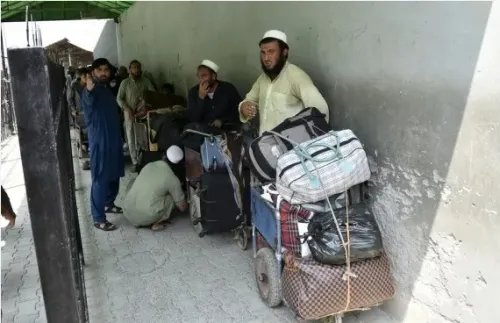
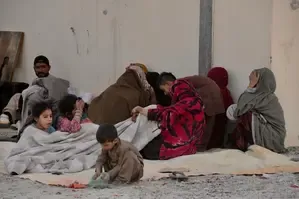
Pakistan's FIA arrests 34 Afghans near Gwadar on CPEC road
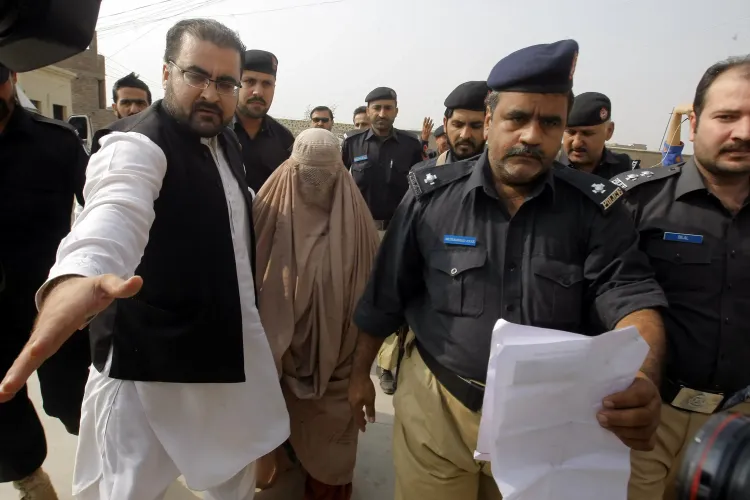
Synopsis
Thirty-four undocumented Afghans, including women and children, were arrested near Gwadar on Pakistan's CPEC road while allegedly en route to Iran — the latest incident in a sweeping crackdown that has seen over 3.4 million Afghan migrants deported since 2023. A new UN-submitted report finds that nearly all detainees faced abuse, and none received a risk assessment before deportation.
Key Takeaways
Pakistan's FIA Turbat wing arrested 34 undocumented Afghan nationals — men, women, and children — near the CPEC road in Balochistan on 13 May 2025 .
The group was allegedly travelling towards Gwadar to cross into Iran without valid documents.
More than 3.4 million Afghan migrants have been deported from Pakistan and Iran since 2023 , according to the AMSO .
96.4 per cent of Afghan detainees surveyed reported facing abuse during arrest or detention; 85.7 per cent said they paid money to avoid arrest.
The AMSO report was jointly prepared with the World Organisation Against Torture and submitted to the UN Committee Against Torture .
None of the deported individuals reportedly received an individual risk assessment before deportation, per the AMSO findings.
Pakistan's Federal Investigation Agency (FIA) has arrested 34 undocumented Afghan nationals — including men, women, and children — who were reportedly travelling through the CPEC road area towards Gwadar in Balochistan without valid documents, according to local media reports on Wednesday, 13 May. The detainees were allegedly attempting to cross into Iran via the Gwadar corridor.
How the Arrests Unfolded
The FIA's Turbat wing conducted a targeted raid following a tip-off, apprehending the group in the CPEC road area. A spokesman for the agency confirmed that a formal case has been lodged against the arrested individuals, and a broader investigation has been launched to identify the smuggling networks and perpetrators facilitating the illegal cross-border movement of foreign nationals.
The operation, officials stated, forms part of a sustained effort to curb illegal human smuggling and undocumented migration across Pakistan's western borders. Notably, the Gwadar-to-Iran route has emerged as a key corridor for undocumented movement, given its proximity to the Iran-Pakistan border.
Wider Crackdown on Afghan Migrants
Pakistan has intensified the deportation of undocumented Afghans since late 2023, citing security concerns and economic pressures. The arrests come against a backdrop of sweeping enforcement actions that rights groups say have disproportionately affected vulnerable Afghan families.
Last week, the Afghanistan Media Support Organisation (AMSO) reported that more than 3.4 million Afghan migrants have been deported from Pakistan and Iran combined since 2023, according to Afghanistan's Khaama Press news agency. The AMSO report, released on 8 May, was prepared jointly with the World Organisation Against Torture and presented to the United Nations Committee Against Torture.
Alarming Abuse Figures From Rights Survey
The AMSO report, based on a survey of 41 Afghan nationals with six in-depth interviews and documentation from organisations including the United Nations High Commissioner for Refugees (UNHCR), the International Organisation for Migration (IOM), Amnesty International, and the Human Rights Commission of Pakistan, flagged serious procedural and rights violations.
According to the findings, 68.3 per cent of surveyed Afghans said they had been arrested or imprisoned, while 96.4 per cent of detainees reported facing abuse during arrest or detention. A striking 85.7 per cent of respondents said they were forced to pay money to avoid arrest or secure release from detention. Additionally, 75.6 per cent reported threats, humiliation, and psychological abuse, and 72.4 per cent were held for more than 48 hours without judicial review.
The organisation also stated that none of the deported individuals received an individual risk assessment prior to deportation from Pakistan — a requirement under international refugee protection norms.
What Comes Next
With the FIA investigation ongoing and international rights bodies watching closely, pressure is mounting on Islamabad to reconcile its border enforcement posture with its obligations under international humanitarian law. The AMSO findings, now formally before a UN body, are likely to intensify scrutiny of Pakistan's deportation practices in the months ahead.
Point of View
With figures that are difficult to dismiss: nearly universal reports of abuse, mass extortion, and zero individual risk assessments. The tension between Islamabad's sovereign right to regulate borders and its international humanitarian obligations is no longer a diplomatic abstraction — it is a live UN matter. What is missing from mainstream coverage is the compounding vulnerability of those caught in transit: these are not just undocumented migrants, but people navigating a triple border zone — Afghanistan, Pakistan, Iran — where each crossing carries its own risk of detention, abuse, or forced return.
NationPress
22 Sept 2026
Frequently Asked Questions
Why were 34 Afghan nationals arrested by Pakistan's FIA near Gwadar?
The FIA's Turbat wing arrested 34 undocumented Afghan nationals on the CPEC road near Gwadar on 13 May 2025, after receiving a tip-off. The group, which included men, women, and children, was allegedly attempting to enter Iran through the Gwadar area without valid travel documents.
What is the scale of Afghan deportations from Pakistan?
More than 3.4 million Afghan migrants have been deported from Pakistan and Iran combined since 2023, according to the Afghanistan Media Support Organisation (AMSO). Pakistan intensified its deportation drive in late 2023, citing security concerns and economic pressures.
What did the AMSO report find about the treatment of Afghan detainees in Pakistan?
The AMSO report, released on 8 May and presented to the UN Committee Against Torture, found that 96.4 per cent of Afghan detainees reported facing abuse during arrest or detention, 85.7 per cent were forced to pay money to avoid arrest or secure release, and none of the deported individuals received an individual risk assessment before deportation.
Who prepared the AMSO report on Afghan migrants?
The report was prepared jointly by the Afghanistan Media Support Organisation (AMSO) and the World Organisation Against Torture. Its findings drew on surveys of 41 Afghan nationals, six in-depth interviews, and documentation from UNHCR, IOM, Amnesty International, and the Human Rights Commission of Pakistan.
What is the significance of the CPEC road in the context of Afghan migration?
The CPEC road corridor in Balochistan, passing through areas like Turbat towards Gwadar, has become a key route for undocumented migrants attempting to cross from Pakistan into Iran. Its strategic location along the China-Pakistan Economic Corridor also makes it a focus of FIA enforcement operations.