First Lady Launches Foster Youth Fund, Hosts AI Awards
Synopsis
The White House announced the First Lady launched 'Fostering the Future Accounts,' America's first investment programme for foster youth, and hosted the inaugural Presidential AI Challenge Awards Ceremony in a single week, pairing child-welfare finance reform with a federal push to recognise student AI innovation.
Key Takeaways
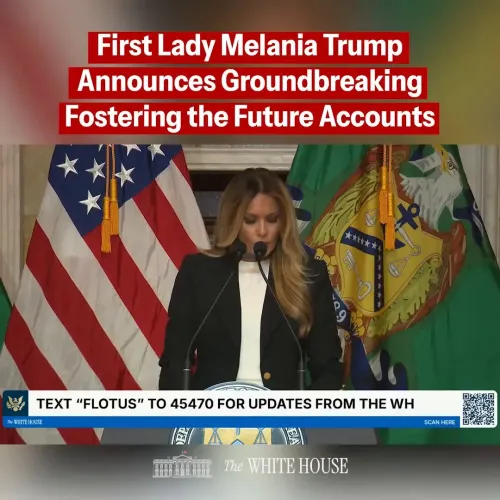
The First Lady launched Fostering the Future Accounts on the week of June 12, 2026 , described as America's first dedicated investment programme for foster youth.
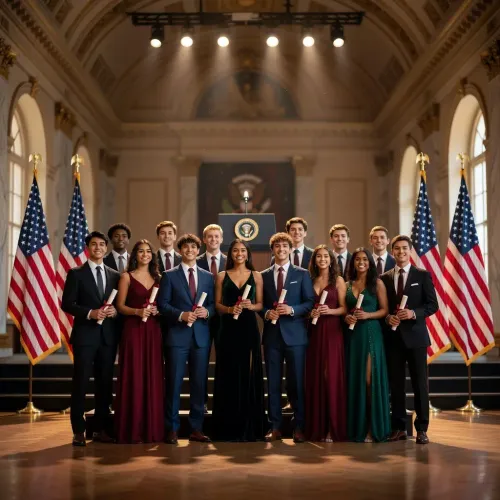
The inaugural Presidential AI Challenge Awards Ceremony recognised top K-12 student innovators applying AI to societal challenges.
Both initiatives were announced via White House communications and framed under a single youth-empowerment agenda.
The foster-youth accounts build on the Family First Prevention Services Act of 2018 , which restructured federal child-welfare funding toward long-term stability.
The AI Challenge aligns with a 2023 Executive Order directing federal agencies to expand AI education and workforce pathways.
Full implementation of the accounts programme will depend on Congressional appropriations or regulatory guidance yet to be issued.
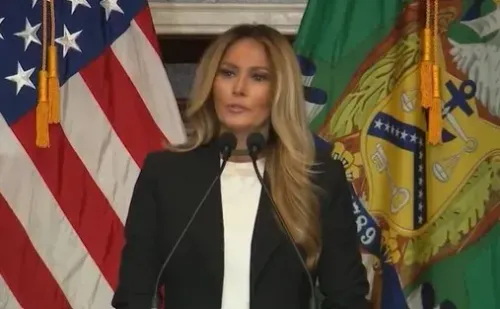
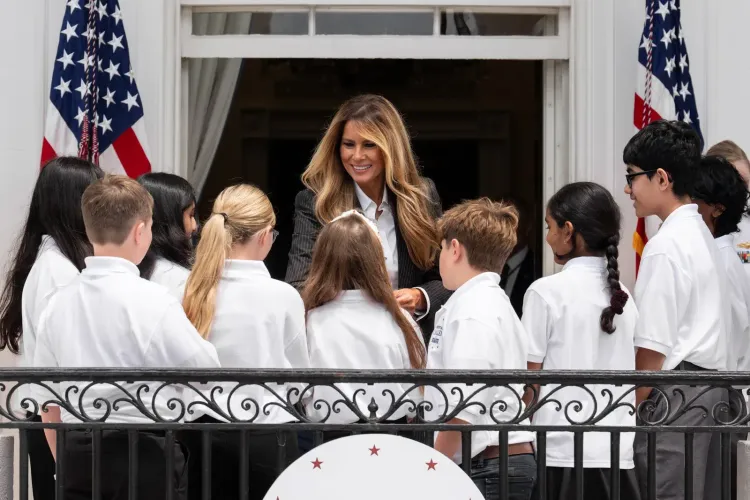
The White House announced on Friday, June 12, 2026, that the First Lady completed a week of youth-focused initiatives, including the launch of Fostering the Future Accounts — described as America's first dedicated investment programme for foster youth — and the hosting of the inaugural Presidential AI Challenge Awards Ceremony honouring the country's top young innovators.
Context
The White House post described the First Lady's week as 'remarkable,' citing two distinct events: the launch of a financial programme targeting young people in or exiting the foster care system, and a ceremony recognising K-12 students for projects applying artificial intelligence to societal challenges. Both events were framed as efforts to 'empower the next generation.'
The Fostering the Future Accounts programme is positioned as the first federal investment vehicle of its kind for foster youth — a population that has historically faced significant financial instability upon ageing out of the care system. The Presidential AI Challenge Awards Ceremony, described as its first edition, signals a formal White House commitment to recognising student-led AI innovation.
Policy Backdrop
The foster care investment initiative builds on a long arc of federal child-welfare reform. The Family First Prevention Services Act of 2018 restructured federal funding to prioritise prevention and long-term stability for foster youth, shifting the policy conversation from short-term placement to durable economic outcomes. A dedicated investment account mechanism would represent a significant extension of that logic.
On the technology side, a 2023 Executive Order on the Safe, Secure, and Trustworthy Development and Use of Artificial Intelligence directed federal agencies to expand AI education and workforce pathways. The Presidential AI Challenge fits squarely within that mandate, institutionalising recognition for student-led AI projects at the highest level of the executive branch.
Recent administrations have paired asset-building tools for children in care with parallel efforts to expose students to emerging technologies — a dual-track approach that typically operates through public-private partnerships rather than new standalone legislation.
Stakeholders and Impact
Foster youth are the primary beneficiaries of the new accounts programme. Young people who age out of the foster system — often at 18 — frequently do so without savings, credit history, or a financial safety net, making an investment account at that transition point potentially consequential for long-term economic stability.
The Presidential AI Challenge targets student innovators across the K-12 spectrum, with the awards ceremony serving as both recognition and a signal to schools, educators, and technology partners that federal attention is focused on early AI literacy. The dual announcements together indicate a White House strategy of linking child welfare and emerging-technology education under a single youth-empowerment umbrella.
What's Next
The operational details of the Fostering the Future Accounts — including funding sources, account mechanics, and eligibility criteria — will require either Congressional appropriations or regulatory guidance before the programme can be fully capitalised and administered. Advocates and lawmakers on both sides of the aisle have historically found foster-youth financial security to be relatively bipartisan ground, which may ease that path.
For the Presidential AI Challenge, attention will turn to whether future rounds expand judging criteria, bring in additional federal agency partners, or scale the number of participating students. As AI becomes a more central feature of domestic policy, the ceremony could grow into a recurring fixture of the White House's education calendar.
Point of View
Two themes that carry broad appeal across the political spectrum. Anchoring both under 'empowering the next generation' allows the White House to speak simultaneously to child-welfare advocates and the STEM-education constituency without requiring new legislation. The 'first-ever' framing for both programmes is significant: it stakes a legacy claim early, creating a benchmark that future administrations will have to respond to. Whether the accounts programme moves from announcement to funded reality will be the real test of whether this week's news represents durable policy or high-visibility symbolism.
NationPress
19 Sept 2026
Frequently Asked Questions
What are Fostering the Future Accounts?
Fostering the Future Accounts are described by the White House as America's first investment programme specifically designed to build financial assets for young people who are in or ageing out of the foster care system. Full details on account mechanics and funding are pending Congressional or regulatory action.
Who won the Presidential AI Challenge Awards?
The White House announcement did not name individual winners. The Presidential AI Challenge recognises K-12 students for projects that apply artificial intelligence to societal challenges; the June 2026 ceremony was the first of its kind.
What is the Presidential AI Challenge?
The Presidential AI Challenge is a White House-backed competition for K-12 students that recognises innovative use of artificial intelligence to address real-world problems. It aligns with a 2023 Executive Order directing federal agencies to expand AI education and workforce pathways.
How does the foster youth investment account work?
Operational details — including eligibility, contribution limits, and how accounts are funded — have not been publicly specified. Implementation will require either Congressional appropriations or formal regulatory guidance.
Why is the US government creating investment accounts for foster youth?
Foster youth who age out of the care system, typically at 18, often lack savings and financial stability. The Fostering the Future Accounts programme is intended to address that gap, building on the child-welfare reform trajectory established by the Family First Prevention Services Act of 2018.