Foreign banks bet big on India as China entry barriers mount: Report

Synopsis
Three blockbuster deals in 2025 — Sumitomo Mitsui buying into Yes Bank, Mitsubishi UFJ into Shriram Finance, and Emirates NBD taking control of RBL Bank — signal a decisive pivot by global banks toward India. With China's foreign banking share shrinking to just 1.2% and entry capital requirements nearly three times higher than India's, the world's largest banking market is losing the race for foreign capital to a fast-growing rival.
Key Takeaways
Sumitomo Mitsui Banking Corp. paid $1.6 billion for a 20% stake in Yes Bank in 2025 .
Mitsubishi UFJ Financial Group agreed to pay $4.3 billion for a 20% stake in Shriram Finance Ltd.
Emirates NBD completed a $2.75 billion acquisition of 60% of RBL Bank in June 2025 .
Foreign banks need only $53 million to set up wholly owned units in India , versus $149 million for locally incorporated units in China .
Foreign banks' share of China's $70.93 trillion banking market fell to 1.2% in 2024 , down from 1.5% in 2020 .
The number of foreign banking subsidiaries and branches in China has plateaued since 2018 , with some exiting retail operations.
Foreign banks are increasingly turning to India as a preferred expansion destination, leveraging acquisitions and partnerships to tap its $3.65 trillion banking market, even as China's high capital requirements and intensifying domestic competition continue to frustrate foreign players, according to a report by Asian Banking & Finance.
India Emerges as the Deal Destination
Saumitra Sehgan, a partner at global consultancy Roland Berger, told the publication that India's regulatory environment has made it markedly more accessible for committed foreign investors. 'India is becoming easier to plan for, especially for banks willing to commit local capital or buy into an Indian platform,' Sehgan said.
The shift has already produced a string of high-value transactions in 2025. Sumitomo Mitsui Banking Corp. acquired a 20 per cent stake in Yes Bank for $1.6 billion. Mitsubishi UFJ Financial Group, Inc. agreed to pay $4.3 billion for a 20 per cent stake in Shriram Finance Ltd., a nonbank lender. Emirates NBD completed a $2.75 billion acquisition of 60 per cent of RBL Bank, closing the deal in June. Together, these deals signal that global banks are treating India as a serious, long-term strategic market rather than a peripheral opportunity.
Why China Is Losing Ground
The contrast with China is stark. Despite gradual regulatory liberalisation since 2001, foreign banks' share of China's $70.93 trillion banking market declined to 1.2 per cent in 2024, down from 1.5 per cent in 2020, according to Laurent Doucet, also a partner at Roland Berger.
The structural barriers are significant. Foreign banks seeking to establish locally incorporated units in China must meet a minimum capital threshold of $149 million — nearly three times the $53 million required for wholly owned units in India. While China does permit foreign bank branches with lower minimum operating funds of $29.9 million (RMB 200 million), restrictions severely limit their retail banking activities.
Stagnation in China's Foreign Banking Presence
The number of locally incorporated subsidiaries and foreign branches operating in China has plateaued since 2018, the report notes. A handful of players have reportedly exited retail banking entirely, citing fierce competition from entrenched domestic state-owned banks and digital-first domestic challengers. This stagnation has persisted even as Beijing has nominally opened up the sector to foreign ownership.
What This Means for India's Banking Sector
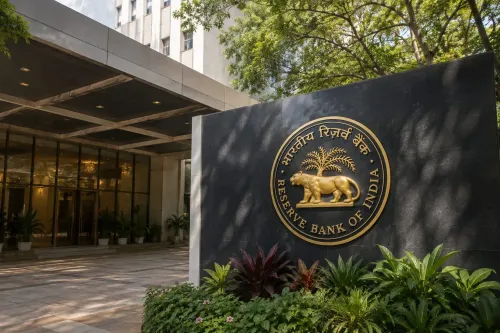
For India, the influx of foreign capital into its banking system carries both opportunity and oversight implications. Large-scale stake purchases in mid-tier lenders such as Yes Bank and RBL Bank inject fresh capital, but also raise questions for the Reserve Bank of India (RBI) around governance and foreign ownership concentration. Notably, all three major deals in 2025 were structured as minority or majority stakes — a model that keeps Indian management frameworks broadly intact while bringing in global balance-sheet strength.
This comes amid a broader global recalibration of emerging-market banking strategies, with foreign institutions reassessing China exposure and reallocating toward higher-growth, more accessible markets. India's demographic dividend, rising middle class, and digital banking infrastructure make it an increasingly compelling alternative.
Point of View
A reforming regulatory posture, and the availability of mid-tier lender stakes at scale have created a rare alignment of access and opportunity. What mainstream coverage underplays is the RBI's implicit role: allowing these deals signals regulatory confidence, but concentrated foreign stakes in stressed or recovering lenders like Yes Bank and RBL Bank demand vigilant governance oversight. China's predicament, meanwhile, is partly self-made — regulatory liberalisation without genuine competitive openness has left foreign banks squeezed between state giants and nimble fintech challengers, a lesson India would do well to absorb as it courts more global capital.
NationPress
19 Oct 2026
Frequently Asked Questions
Why are foreign banks choosing India over China for expansion?
India offers lower entry capital requirements — just $53 million for wholly owned units versus $149 million for locally incorporated subsidiaries in China — and a more accessible acquisition landscape. According to Roland Berger, India is increasingly seen as easier to plan for, especially for banks willing to commit local capital or acquire stakes in Indian platforms.
Which foreign banks made major investments in India in 2025?
Three large deals were completed in 2025: Sumitomo Mitsui Banking Corp. acquired a 20% stake in Yes Bank for $1.6 billion, Mitsubishi UFJ Financial Group agreed to buy a 20% stake in Shriram Finance Ltd. for $4.3 billion, and Emirates NBD completed a $2.75 billion acquisition of a 60% stake in RBL Bank in June.
How much of China's banking market do foreign banks control?
Foreign banks held just 1.2% of China's $70.93 trillion banking market in 2024, down from 1.5% in 2020, according to Roland Berger data cited in the Asian Banking & Finance report. The number of foreign subsidiaries and branches has plateaued since 2018, with some players exiting retail banking.
How does India's banking market size compare with China's?
India's banking market is valued at approximately $3.65 trillion, while China's stands at $70.93 trillion — making China's market roughly 19 times larger. However, the ease of entry and availability of acquisition targets makes India the more practical expansion route for most foreign banks at present.
What are the key barriers for foreign banks in China?
Foreign banks must commit at least $149 million to establish locally incorporated units in China, compared with $53 million in India. Even where lower-capital branch structures are permitted, retail banking activities face significant restrictions. Fierce competition from domestic state-owned banks has also led some foreign players to exit retail operations entirely.