4 killed in Pakistani drone strike on picnickers in Balochistan's Kech district
Synopsis
Four young men — three of them cousins — were killed in a Pakistani military drone strike in Balochistan's Kech district while reportedly on a picnic. Authorities claim they were militants; families say they were unarmed civilians. The Baloch Yakjehti Committee has called it a deliberate targeting of civilian life and is demanding a UN-led independent investigation.
Key Takeaways
Four men — Yasir , Zubair , Sameer , and Deedag — were killed in a Pakistani military drone strike in Balicha, Tump , Kech district, Balochistan on a Friday afternoon .
Two others from the group of six were injured in the strike.
Pakistani authorities described the four as suspected militants and claimed weapons were recovered; families and local residents dispute this, saying the victims were unarmed picnickers.
The Baloch Yakjehti Committee (BYC) condemned the strike as a deliberate attack on civilian life, invoking violations of international humanitarian law.
The BYC has called on the United Nations and international human rights bodies to demand an independent investigation.
The strike is reportedly part of a broader pattern of Pakistani aerial operations in Balochistan, with previous incidents documented in Panjgur and Mastung .
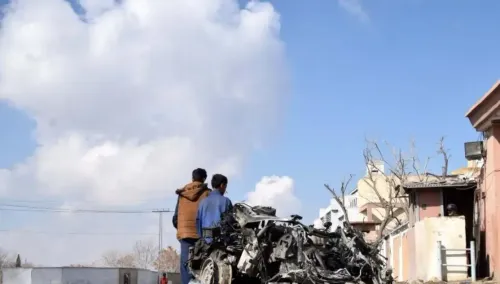
At least four young men were killed and two others injured on Friday afternoon after the Pakistani military carried out a drone strike on a group reportedly on a picnic in the Balicha region of Tump, in Balochistan's Kech district, according to local media reports. The incident has drawn sharp condemnation from human rights groups and renewed international attention on alleged civilian casualties from Pakistani aerial operations in the province.
What Happened in Balicha
According to The Balochistan Post, citing family sources, six residents of Balicha had travelled to the nearby mountains for a leisure outing when the strike occurred. The four deceased were identified as Yasir, Zubair, Sameer, and Deedag — three of the four reportedly cousins from the same family. The remaining two sustained injuries.
Pakistani authorities maintained that the four individuals were suspected militants, claiming that weapons and ammunition were recovered from the site. Families and local residents firmly rejected these allegations, asserting that the victims were unarmed civilians who had gone into the mountains for a picnic. They have called for an independent investigation into the strike.
Civilian or Combatant: Disputed Accounts
The conflicting narratives — state authorities citing militant activity, and families insisting on civilian innocence — reflect a pattern seen repeatedly in Balochistan, where the Pakistani military has faced persistent accusations of framing civilian casualties as counter-insurgency successes. Notably, the Balicha strike is described by local observers as the latest in a series of drone and aerial attacks across the province that have reportedly caused significant civilian deaths and property damage in areas including Tump, Panjgur, and Mastung.
This comes amid a long-running, low-intensity conflict in Balochistan, where separatist groups have clashed with Pakistani security forces for decades. Human rights organisations have repeatedly flagged extrajudicial killings and enforced disappearances in the region, claims that Islamabad has consistently denied.
BYC Condemns the Strike
The Baloch Yakjehti Committee (BYC) issued a sharp condemnation, stating: 'There is no framework of law, international humanitarian law, the laws of armed conflict, or basic human decency under which a civilian picnic becomes a legitimate military target.'
The group further alleged a pattern of deliberate targeting, saying: 'Four youths. One strike. One army that demanded to be told where the citizens were going, and then turned that knowledge into a kill list. This is not the fog of war; it is the clarity of intent.' The BYC also accused Pakistani forces of making 'Baloch life conditional on the state's mercy, and then withhold[ing] that mercy without consequence.'
Call for International Accountability
The BYC has formally called on international human rights bodies, the United Nations, and global civil society to demand an independent probe into the killings and to end what it described as prolonged silence over Pakistani airstrikes in Balochistan. Human rights advocates argue that the absence of independent access to the region makes accountability near-impossible, as neither international observers nor journalists are routinely permitted into conflict-affected areas of the province.
With families demanding answers and rights groups urging UN intervention, pressure for an independent investigation into the Balicha drone strike is unlikely to ease in the days ahead.
Point of View
The civilian-versus-militant classification becomes impossible to verify independently. Pakistani authorities' pattern of retroactively designating casualties as militants — while families present consistent counter-testimony — has been documented repeatedly, yet no independent international monitoring mechanism exists in the province. The BYC's invocation of genocide, however charged, reflects a deeper frustration: that the absence of consequences for each strike is itself a policy. Until Islamabad permits independent access to conflict zones in Balochistan, the truth about Balicha — like dozens of incidents before it — will remain contested, and accountability will remain out of reach.
NationPress
26 Sept 2026
Frequently Asked Questions
What happened in the Balicha drone strike in Balochistan?
Pakistani military forces carried out a drone strike on a group of six men in the Balicha region of Tump, Kech district, Balochistan, on a Friday afternoon, killing four and injuring two. The victims were identified as Yasir, Zubair, Sameer, and Deedag, with three of the four being cousins from the same family.
Did Pakistani authorities confirm the strike?
Pakistani authorities acknowledged the incident, describing the four killed as suspected militants and stating that weapons and ammunition were recovered from the scene. Families and local residents have rejected these claims, saying the men were unarmed civilians who had gone into the mountains for a picnic.
Who is the Baloch Yakjehti Committee and what did it say?
The Baloch Yakjehti Committee (BYC) is a Balochistan-based civil rights organisation that has been vocal on alleged human rights violations in the province. It condemned the Balicha strike as a deliberate attack on civilian life, calling it a violation of international humanitarian law, and demanded a UN-led independent investigation.
Is this the first such drone strike on civilians in Balochistan?
No. The Balicha strike is reportedly the latest in a series of Pakistani drone and aerial attacks across Balochistan that have, according to local media and rights groups, caused significant civilian casualties. Previous incidents have been reported in Panjgur, Mastung, and other areas of the province.
What action is being demanded in the wake of the Balicha killings?
Families of the victims have called for an independent investigation into the strike. The Baloch Yakjehti Committee has formally urged international human rights bodies, the United Nations, and global civil society to demand accountability and end what it described as prolonged silence over Pakistani airstrikes in Balochistan.