France GDP growth to lose 0.1 point in 2026 as heatwaves, drought hit crops
Synopsis
France's economy ministry has put a number on this summer's climate toll: a 0.1 percentage point shave off 2026 GDP growth, with corn output down 35 percent and costs potentially reaching €15 billion. INSEE has already revised Q2 2026 growth to zero — and the harvest season isn't over yet.
Key Takeaways
France's GDP growth in 2026 is expected to be cut by 0.1 percentage point due to heatwave and drought damage, according to the Ministry of Economy and Finance .
Corn output is forecast to fall by 35 percent in 2026 compared to 2025 .
INSEE revised France's Q2 2026 GDP growth to zero quarter-on-quarter, down from a preliminary 0.2 percent estimate.
Minister Monique Barbut estimated the total economic cost of this summer's heatwaves at between €10 billion and €15 billion .
The Middle East conflict has compounded agricultural losses by raising fertiliser costs and disrupting global supply chains.
Grape harvests across Languedoc, Burgundy , and Champagne are running one to two weeks earlier than usual due to accelerated ripening.
France's Gross Domestic Product (GDP) growth in 2026 is set to be trimmed by 0.1 percentage point due to lower agricultural output caused by severe heatwaves and prolonged drought, according to France's Ministry of Economy and Finance. The estimate was presented by the French Treasury during a National Assembly hearing on Wednesday, 2 September, as part of an information mission examining the economic cost of extreme heat events.
Scale of Agricultural Damage
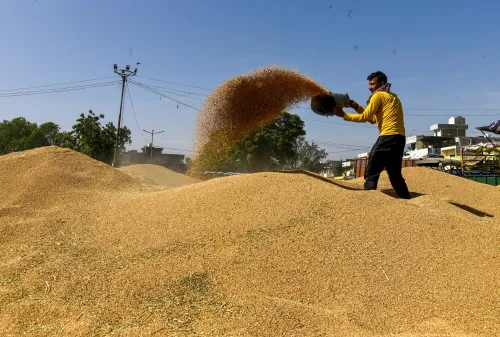
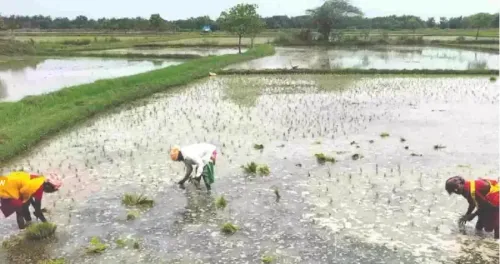
According to preliminary data cited by the ministry, the 2026 heatwaves and drought have 'considerably affected certain agricultural production,' with corn output expected to fall by 35 percent compared to 2025 levels. The damage to agriculture has been compounded by the ongoing Middle East conflict, which has pushed up gas prices, raised the cost of nitrogen fertilisers, and disrupted global fertiliser trade — adding pressure on an already-stressed farming sector.
GDP Revised Down to Zero Growth
Separately, France's National Institute of Statistics and Economic Studies (INSEE) revised the country's GDP growth to zero quarter-on-quarter in the second quarter of 2026, down from a preliminary estimate of 0.2 percent growth. INSEE attributed the revision to a further deterioration in agricultural production beyond what was visible at the end of July, underscoring how quickly climate shocks can alter macroeconomic forecasts.
Government's Cost Estimate
At a crisis meeting focused on drought held on 12 August, French Minister for Ecological Transition Monique Barbut said this summer's heatwaves could cost the French economy between 10 billion and 15 billion euros. The wide range reflects uncertainty over how far the damage will extend into downstream industries reliant on agricultural supply chains.
Wider European Impact
France is not alone. Heatwaves, prolonged drought, and widespread wildfires have gripped much of Europe this summer, withering crops, reducing harvests, and driving up operating costs for farmers and businesses across the continent. In France, grape growers from Languedoc in the south to Burgundy and Champagne in the north have begun harvesting one to two weeks earlier than last year, as repeated heat spikes accelerated the ripening cycle. In Italy, Sicilian cooperative Cantine Ermes started harvesting early white grapes in late July; its president, Rosario Di Maria, noted that overall yields are likely to fall short of a normal year.
Structural Challenge Ahead
As extreme weather events grow more frequent and intense, Europe's agricultural sector faces mounting structural strain — forcing farmers, businesses, and governments to confront both immediate financial losses and the longer-term challenges of adapting to a changing climate. Analysts warn that without coordinated policy responses, recurring climate shocks could become a persistent drag on European economic output well beyond 2026.
Point of View
But it arrives on top of a Q2 growth revision already dragged to zero — signalling that France's climate exposure is no longer a tail risk but a recurring line item in its economic forecast. The €10–15 billion cost estimate from Minister Barbut is striking for its breadth, yet it likely understates second-order effects: fertiliser price shocks, supply-chain disruptions, and the compounding pressure of the Middle East conflict on input costs. Europe's agricultural model was built for a climate that no longer exists in much of the continent. Without structural adaptation investment, these annual revisions will only get larger.
NationPress
18 Oct 2026
Frequently Asked Questions
How much will heatwaves and drought reduce France's GDP growth in 2026?
France's Ministry of Economy and Finance estimates that heatwaves and drought will shave 0.1 percentage point off France's GDP growth in 2026, primarily due to lower agricultural production. The estimate was presented to the National Assembly on 2 September 2026.
How badly has corn production been affected in France in 2026?
Corn output in France is expected to fall by 35 percent in 2026 compared to 2025 levels, according to preliminary data cited by the Ministry of Economy and Finance. The decline is attributed to the severe heatwaves and drought that have gripped the country this summer.
What is the total estimated economic cost of France's 2026 heatwaves?
French Minister for Ecological Transition Monique Barbut said at a crisis meeting on 12 August that this summer's heatwaves could cost the French economy between €10 billion and €15 billion. The range reflects ongoing uncertainty about the full downstream impact.
Why did INSEE revise France's Q2 2026 GDP growth to zero?
France's National Institute of Statistics and Economic Studies (INSEE) revised Q2 2026 GDP growth to zero quarter-on-quarter, down from a preliminary 0.2 percent estimate, citing a further deterioration in agricultural production beyond what was known at the end of July.
Is the heatwave impact on agriculture limited to France?
No — heatwaves, drought, and wildfires have affected much of Europe in 2026, disrupting harvests and driving up costs for farmers and businesses continent-wide. In France, grape harvests are running one to two weeks early, while Italian cooperative Cantine Ermes also reported likely below-normal yields.