G20 Trade Ministerial opens in Milwaukee; Piyush Goyal leads India talks
Synopsis
The G20 Trade Ministerial in Milwaukee opened with a tangible early deliverable — the 'Milwaukee Framework' for coordinated action against global steel overcapacity — as India's Piyush Goyal pursues bilateral trade deal talks with the US on the sidelines, backed by a fresh Modi-Trump phone call. The gathering doubles as a diplomatic battleground over the future of WTO rules, with the US push to revise the Most-Favoured-Nation principle directly challenging positions held by India and other developing economies.
Key Takeaways
The G20 Trade Ministerial opened in Milwaukee on 1 October 2026 , hosted by US Trade Representative Jamieson Greer .
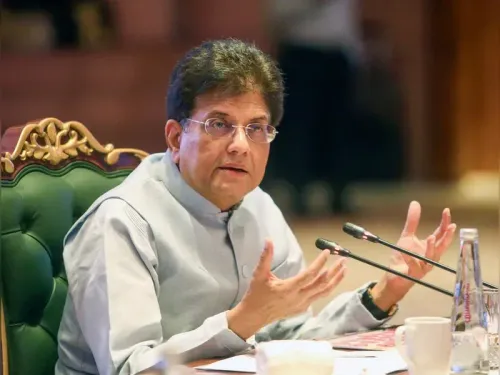
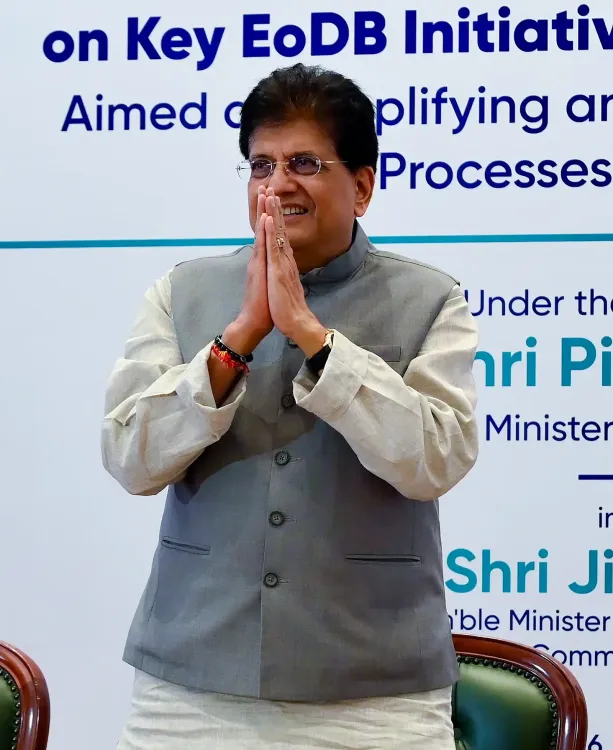
India's Union Commerce Minister Piyush Goyal is representing New Delhi and holding bilateral meetings on the sidelines.
Participating nations agreed on the 'Milwaukee Framework' — a new coordinated mechanism targeting global steel excess capacity, covering trade remedies, supply chain monitoring, and transhipment scrutiny.
Prime Minister Narendra Modi and President Donald Trump spoke by telephone on Wednesday , discussing trade, defence, energy, and emerging technologies.
India and the US are pursuing a Bilateral Trade Agreement (BTA) and an interim deal aligned with the Joint Statement of 7 February 2026 .
The US is pushing to revise the Most-Favoured-Nation (MFN) principle — a move India has tacitly resisted, calling for WTO-centric, development-friendly trade rules.
Union Commerce and Industry Minister Piyush Goyal arrived in Milwaukee on 1 October 2026 to represent India at the G20 Trade Ministerial, a two-day gathering of trade ministers from the world's major economies hosted by United States Trade Representative Jamieson Greer. The summit opened against a charged backdrop of tariff tensions, excess industrial capacity concerns, and deepening disagreements over the future architecture of global trade.
Milwaukee Framework on Steel Overcapacity
The first concrete outcome of the ministerial emerged from the Global Forum on Steel Excess Capacity, where participating nations agreed on a new coordinated action framework targeting surplus steel production. Greer announced the accord as the 'Milwaukee Framework', describing it as a mechanism for stronger collective measures covering trade remedies, supply chain monitoring, and tighter scrutiny of transhipment routes.
When asked whether the framework amounted to an agreement to raise tariffs on Chinese steel, Greer stopped short of a direct answer. 'Well, every country will do what they think is appropriate,' he said. 'We want to coordinate those measures. The United States has taken robust measures, and it probably makes sense for other countries to do that too.' He confirmed that individual governments would chart their own course.
Broader US Agenda for the Ministerial
Beyond steel, the United States has tabled a wide-ranging agenda for the two-day ministerial. Key items include eliminating forced labour from global supply chains, revising the Most-Favoured-Nation (MFN) principle — a foundational pillar of the World Trade Organization (WTO) — opposing the use of food trade as a geopolitical weapon, and addressing structural industrial overcapacity more broadly.
The proposed update to the MFN principle carries particular significance for developing economies. India has publicly stated it will champion 'a rules-based, open, inclusive, transparent, equitable and non-discriminatory multilateral trading system, with the WTO at its core, while ensuring adequate policy space for developing countries.' That position places New Delhi in a cautious stance on any dilution of MFN norms.
India-US Bilateral Trade Deal in Focus
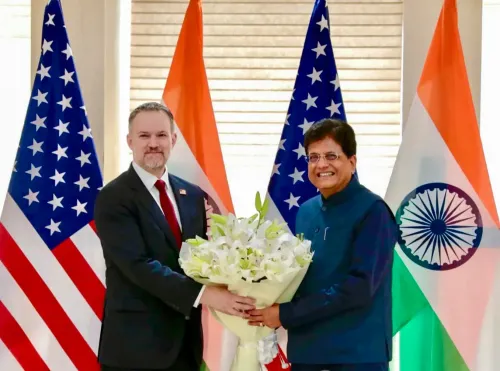
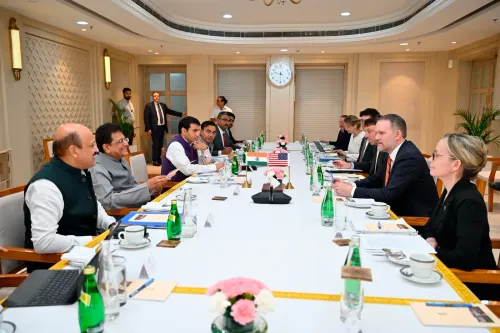
The ministerial has also become a critical waystation for India-US trade negotiations. The Commerce Ministry confirmed that Goyal would engage bilaterally with his US counterpart 'as part of ongoing efforts to advance a balanced and mutually beneficial India-US Bilateral Trade Agreement (BTA) and finalise an interim deal in line with the Joint Statement of 7 February 2026.'
The bilateral track received additional political momentum on Wednesday when Prime Minister Narendra Modi and President Donald Trump spoke by telephone, discussing cooperation spanning trade, defence, energy, and emerging technologies. The call, occurring simultaneously with the Milwaukee ministerial, underscored the diplomatic weight that both sides are attaching to the ongoing negotiations.
Goyal Courts American Manufacturers
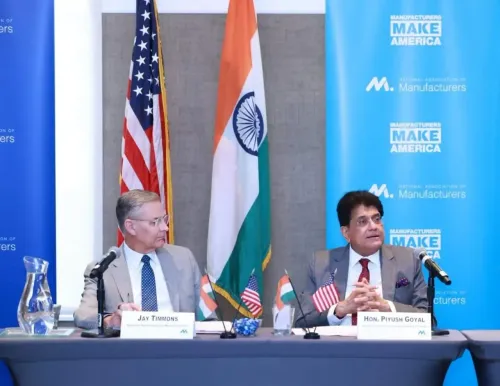
Ahead of the formal ministerial sessions, Goyal addressed a roundtable of CEOs and senior executives from American manufacturing and technology companies, organised by the National Association of Manufacturers. He invited US companies to deepen their footprint in India, collaborate with Indian small and medium enterprises, and pursue co-investments in advanced manufacturing and resilient supply chains.
Goyal described the India-US economic relationship as having evolved well beyond traditional trade to encompass investment, technology, innovation, and supply chain resilience. The G20 ministers also toured Rockwell Automation's Milwaukee facility on Wednesday — a deliberate showcase by the Trump administration of American industrial capacity. 'I could take them to great places like Sun Valley or other things like that, but we wanted them to see American factories,' Greer said ahead of the formal talks.
Other Delegations and What Comes Next
Canada's International Trade Minister Maninder Sidhu is attending the ministerial and is expected to hold separate meetings with both Greer and Goyal on Thursday, as Ottawa seeks to advance an economic partnership agreement with New Delhi. Russia is represented by Economic Development Minister Maxim Reshetnikov, and Japan is among the other major participating economies.
Ministerial sessions continue through Thursday, with Greer scheduled to hold a press conference in the afternoon before the final session wraps up. The Milwaukee meeting precedes a G20 Leaders' Summit that the United States will host later this year, making this week's discussions a key staging ground for the broader geopolitical trade agenda.
Point of View
But the real tension at this ministerial lies in Washington's push to renegotiate the Most-Favoured-Nation principle — a move that, if successful, could fundamentally tilt the WTO's non-discrimination architecture away from developing economies. India's carefully worded defence of WTO-centric rules is less about steel and more about preserving the policy space it needs to protect domestic industry. The simultaneity of the Modi-Trump phone call and Goyal's Milwaukee presence signals that New Delhi is threading a needle: engaging Washington bilaterally on a trade deal while guarding multilateral norms that benefit it at the G20 table. Whether India can hold both positions as the Leaders' Summit approaches will be the defining trade diplomacy question of the next quarter.
NationPress
1 Oct 2026
Frequently Asked Questions
What is the G20 Trade Ministerial in Milwaukee about?
The G20 Trade Ministerial is a two-day meeting of trade ministers from the world's major economies held in Milwaukee on 1-2 October 2026, hosted by US Trade Representative Jamieson Greer. Key agenda items include coordinated action against global steel overcapacity, revising the Most-Favoured-Nation principle, eliminating forced labour from supply chains, and bilateral trade negotiations on the sidelines.
What is the Milwaukee Framework on steel?
The Milwaukee Framework is a new multilateral accord agreed at the Global Forum on Steel Excess Capacity during the ministerial. It outlines coordinated measures — including trade remedies, supply chain monitoring, and greater scrutiny of transhipment — to counter surplus global steel production, much of which is attributed to overcapacity in China.
What is India's position at the Milwaukee G20 ministerial?
India, represented by Commerce Minister Piyush Goyal, has stated it supports 'a rules-based, open, inclusive, transparent, equitable and non-discriminatory multilateral trading system, with the WTO at its core, while ensuring adequate policy space for developing countries.' This positions India cautiously against any US-driven revision of the Most-Favoured-Nation principle.
What is the status of the India-US Bilateral Trade Agreement?
Goyal is holding bilateral talks with US Trade Representative Greer in Milwaukee as part of ongoing efforts to advance a Bilateral Trade Agreement (BTA) and finalise an interim trade deal aligned with the India-US Joint Statement of 7 February 2026. The negotiations gained additional political momentum when Prime Minister Modi and President Trump spoke by telephone on Wednesday.
What happens after the Milwaukee ministerial?
Ministerial sessions continue on Thursday, with Greer scheduled to hold a press conference before the final session. The Milwaukee meeting serves as a preparatory forum ahead of the G20 Leaders' Summit that the United States will host later this year, making its outcomes significant for the broader global trade agenda.