Is the G77 a Vital Force in Multilateralism?

Synopsis
Discover how the G77 stands as a vital force for global cooperation in a world filled with challenges. UN Chief Antonio Guterres emphasizes its essential role for the Global South and calls for reforms to enhance participation in international financial institutions.
Key Takeaways
The G77 is a vital force for multilateralism.
Unity and strength are essential for addressing global challenges.
Reforms are needed for developing countries' participation in financial institutions.
The digital divide must be narrowed to foster inclusion.
Leadership transitions impact the G77’s influence in the UN.
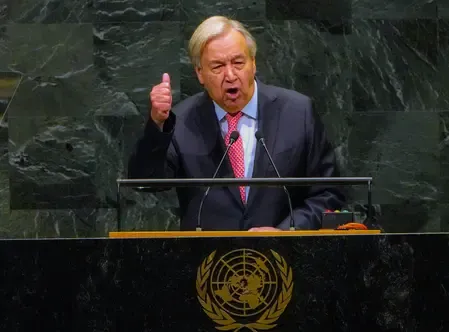
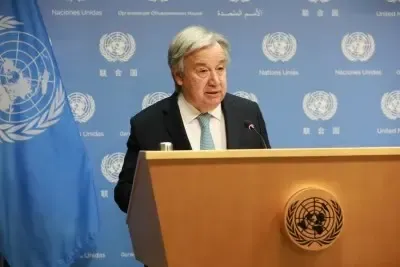
On January 15, in a statement from the United Nations, Secretary-General Antonio Guterres emphasized that the G77 is a crucial pillar of multilateralism and is essential in a world grappling with numerous crises and strained international cooperation. “This year begins amidst escalating conflicts, rising inequalities, increasing debt burdens, and a diminishing trust,” he remarked on Wednesday.
“This underscores the necessity for a renewed commitment to collaboration in our truly interconnected and multipolar world. Hence, the Group of 77 and China are indispensable,” he added.
“You have continuously demonstrated unity and resilience,” he noted during the ceremony marking the annual transition of the group's presidency.
The gavel of presidency was ceremoniously passed from Iraq’s Permanent Representative, Lukman Al-Faily, to Uruguay’s Foreign Minister Mario Lubetkin, symbolizing the leadership change within the Group of 77.
As a founding member of the G77, which originated in 1964 with 77 nations and now includes 134 members, India plays a pivotal role.
The G77 has become the voice of the Global South, offering a unified platform for developing nations to advocate for their interests and enhance South-South collaboration.
Lubetkin stated that Uruguay is assuming the presidency at a significant juncture for the UN and the rules-based international framework.
“We are committed to defending our group’s interests and enhancing its influence within the UN structure,” he declared.
He added that the rising global challenges necessitate increased collective cooperation to achieve shared objectives amid a changing international legal landscape.
Guterres outlined the responsibilities that the G77 must embrace as leaders, stating, “We require reforms that grant developing nations greater involvement and influence in international financial institutions.”
He highlighted the growing global digital divide, particularly exacerbated by advancements in artificial intelligence.
“It is imperative that the digital era serves as a catalyst for inclusion rather than a driver of inequality,” he asserted.
“We must also work to close the gap in computing power, data access, research, skills, and safety standards,” Guterres emphasized, noting that over 80 nations lack the fundamental capabilities to create, build, or implement AI systems.
Point of View
The emphasis on multilateralism is imperative for securing equitable representation and fostering international cooperation. The leadership transition marks a crucial moment for the G77 to assert its influence within the UN framework.
NationPress
24 Oct 2026
Frequently Asked Questions
What is the Group of 77?
The Group of 77 (G77) is a coalition of developing countries established in 1964 to promote their collective interests and enhance South-South cooperation.
Who is the current president of the G77?
As of the recent leadership transition, Uruguay’s Foreign Minister Mario Lubetkin is the current president of the G77.
Why is the G77 important for developing countries?
The G77 provides a unified platform for developing nations to advocate for their interests, ensuring they have a voice in global discussions and decision-making.
What challenges did Guterres highlight for 2023?
Guterres pointed out challenges such as escalating conflicts, growing inequalities, and the need for reforms in international financial institutions.
How does the G77 address the digital divide?
The G77 aims to ensure that the digital age promotes inclusion and reduces inequality, focusing on closing gaps in technology and resources among member countries.