Gandhi Jayanti at UN: Diplomats cite ahimsa's global relevance on Oct 2
Synopsis
On Gandhi Jayanti, the UN became a rare multilateral moment of consensus — diplomats from Morocco, South Africa, Uruguay, and Russia each found their own national story inside Gandhi's philosophy. India's delegation went furthest, using a wounded Flydubai pilot's mid-crisis courage as proof that ahimsa is not passive idealism but a living, actionable principle.
Key Takeaways
Diplomats from multiple nations spoke at the UN International Day of Non-Violence commemoration on 2 October 2026 .
India's Permanent Representative P.
Harish cited pilot Smit Machchhar 's conduct during a Flydubai Airlines hijacking attempt as a modern example of ahimsa , quoting PM Modi .
Morocco's Omar Hilale called Gandhi's legacy 'a common inheritance for all peoples.' South Africa's Mxolisi Sizo Nkosi noted Gandhi's Satyagraha — developed over 21 years in South Africa — directly shaped the ANC and the anti-apartheid movement.
Russia's Maria Zabolotskaya highlighted Gandhi's anti-colonial identity and his philosophical bond with Leo Tolstoy .
The UN General Assembly designated 2 October as the International Day of Non-Violence through a resolution co-sponsored by 141 countries in 2007 .
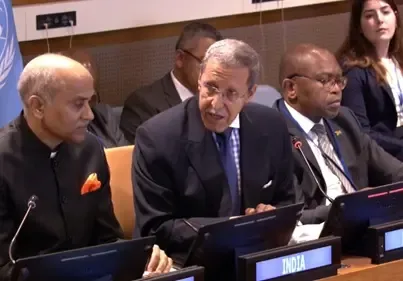
Diplomats from across the world gathered at the United Nations on 2 October 2026 to mark Gandhi Jayanti — observed globally as the International Day of Non-Violence — invoking Mahatma Gandhi's philosophy of ahimsa to address contemporary conflicts, colonial legacies, and the struggle for human rights. The commemoration drew representatives from Morocco, South Africa, Uruguay, Russia, and India, each drawing on Gandhi's principles through the lens of their own national histories.
India's Message: Ahimsa in Action
India's Permanent Representative P. Harish offered a striking contemporary illustration of Gandhian principles at work, citing the case of wounded pilot Smit Machchhar, who — despite suffering stab wounds during an apparent terror hijacking attempt on a Flydubai Airlines flight — opened the cockpit door to allow passengers to overpower the co-pilot who had attacked him, ensuring the flight reached safety with all passengers unharmed.
Harish recalled that Prime Minister Narendra Modi had described Machchhar as 'a true embodiment of the principle of ahimsa or non-violence', noting that the pilot 'not only endured but showed bravery and courage in ensuring that the flight reached a safe destination, and all the passengers under his charge were safe and sound.'
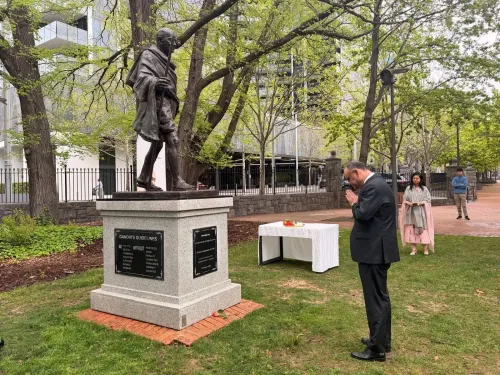
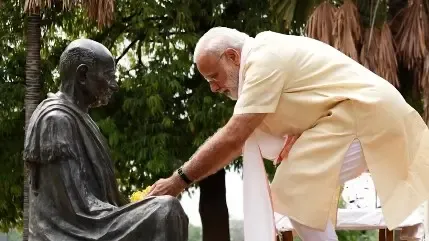
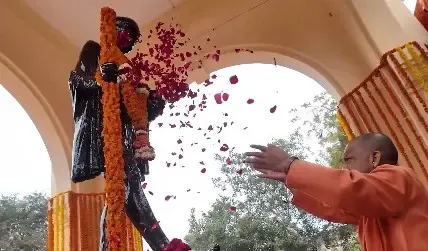
Before the commemoration event, Harish placed flowers at the statue of Gandhi in the UN complex.
Morocco, Uruguay, and South Africa Draw on Gandhi's Legacy
Morocco's Permanent Representative Omar Hilale framed Gandhi's legacy as a shared global inheritance. 'The international community, by celebrating the International Day of Non-Violence on his birthday, has chosen to make his legacy a common inheritance for all peoples,' he said. Hilale added that Morocco — where 'faiths and cultures meet and live together' — under King Mohammed VI has pursued a path of 'moderation, tolerance and peaceful dialogue.'
Uruguay's Permanent Representative Laura Dupuy Lasserre, who also chairs the G77 group of developing nations at the UN, reflected on Gandhi's resonance across Latin America, particularly in Argentina and Uruguay 'at times of dictatorship, with the humanitarian plight of grandmothers looking for their forcibly disappeared children and grandchildren.' She emphasised: 'Gandhi demonstrated that non-violence is not a sign of weakness or passivity, but an expression of courage.'
South Africa's Permanent Representative Mxolisi Sizo Nkosi offered perhaps the most historically grounded perspective, noting that Gandhi's philosophy of Satyagraha — forged during his 21 years in South Africa — directly shaped the country's liberation struggle against apartheid. He said the African National Congress (ANC) absorbed Gandhian non-violent principles early in its history, with early leaders drawing on Gandhi's 'successful mobilisation of the Indian community through strikes, mass marches and voluntary jail attendance as a blueprint for fighting racial legislation.' Nkosi also noted that Chief Albert Luthuli, the first ANC president to receive the Nobel Peace Prize, 'was a deeply committed adherent of Satyagraha.'
Russia Invokes Gandhi's Anti-Colonial Spirit and Tolstoy Connection
Russia's Deputy Permanent Representative Maria Zabolotskaya highlighted Gandhi's identity as an anti-colonial leader, saying: 'He was a leader of anti-colonialism, and this is important because our country always supported the anti-colonial struggle.' She also drew attention to Gandhi's intellectual bond with Russian writer and philosopher Leo Tolstoy, recalling that Gandhi had corresponded with Tolstoy and regarded him as a teacher and inspiration. Zabolotskaya cited Tolstoy's advice to Indian revolutionary leader Taraknath Das — 'Do not resist evil, but also do not yourselves participate in evil' — a letter Gandhi later sought permission to reprint in his South African publication.
Background: The International Day of Non-Violence
The UN General Assembly designated 2 October as the International Day of Non-Violence through a resolution sponsored by 141 countries in 2007, anchoring Gandhi's birth anniversary in the global calendar. This year's commemoration underscored how widely — and diversely — the Gandhian framework continues to be applied, from post-dictatorship South America to post-apartheid Africa and contemporary aviation crises. As geopolitical tensions remain elevated worldwide, the gathering signalled a renewed multilateral appetite to draw on non-violence not merely as historical doctrine but as an actionable framework for present-day challenges.
Point of View
South Africa, Uruguay, and Russia all find their own national narrative inside Gandhi's philosophy, it suggests the Gandhian framework retains unusual cross-ideological utility at a moment when multilateralism is under strain. Yet the India delegation's choice to anchor ahimsa in a real-time aviation emergency rather than historical abstraction is a deliberate soft-power signal: it positions Gandhian values not as museum-piece doctrine but as a modern Indian export brand. The harder question — whether any of this multilateral goodwill translates into concrete commitments to non-violent conflict resolution — went unanswered in the chamber.
NationPress
3 Oct 2026
Frequently Asked Questions
Why is 2 October observed as the International Day of Non-Violence at the UN?
The UN General Assembly designated 2 October — Mahatma Gandhi's birth anniversary — as the International Day of Non-Violence through a resolution co-sponsored by 141 countries in 2007. The day is observed globally to promote the message of non-violence, tolerance, and peaceful coexistence.
How did India's UN representative connect ahimsa to a recent event?
India's Permanent Representative P. Harish cited pilot Smit Machchhar, who despite being stabbed during an apparent hijacking attempt on a Flydubai Airlines flight, opened the cockpit door to let passengers subdue the attacker and brought the aircraft to safety. PM Modi had described Machchhar's actions as a true embodiment of the principle of ahimsa.
What was South Africa's perspective on Gandhi at the UN?
South Africa's Permanent Representative Mxolisi Sizo Nkosi said Gandhi's Satyagraha philosophy, developed during his 21 years in South Africa, shaped the ANC's early resistance strategies and influenced the broader anti-apartheid movement. He noted that Nobel Peace Prize laureate Chief Albert Luthuli was a committed adherent of Satyagraha.
What connection did Russia draw between Gandhi and Leo Tolstoy?
Russia's Deputy Permanent Representative Maria Zabolotskaya recalled that Gandhi corresponded with Russian writer Leo Tolstoy and regarded him as a teacher and inspiration. She cited Tolstoy's counsel to Indian revolutionary Taraknath Das — 'Do not resist evil, but also do not yourselves participate in evil' — a letter Gandhi later sought to reprint in his South African publication.
Which countries spoke at the UN Gandhi Jayanti commemoration in 2026?
Representatives from India, Morocco, Uruguay, South Africa, and Russia addressed the UN commemoration of the International Day of Non-Violence on 2 October 2026. Each drew on Gandhi's philosophy in the context of their own national histories and contemporary challenges.