Escalating Violence: Hazara Community Faces Targeted Attacks in Pakistan
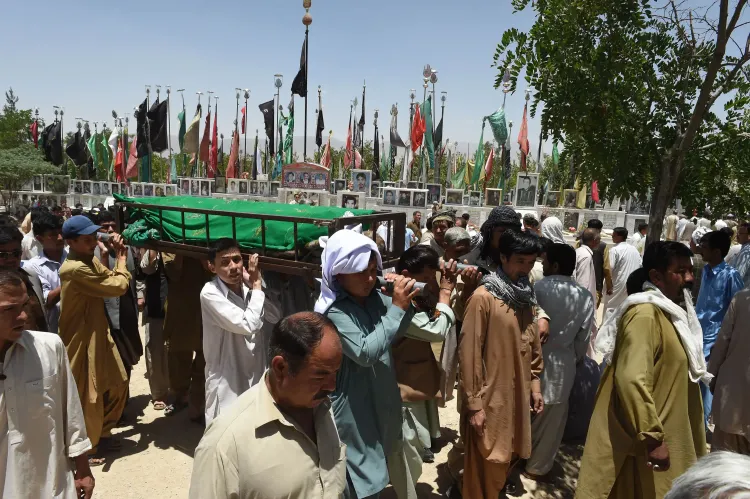
Synopsis
In a shocking incident in Quetta, two members of the Hazara community were shot dead, highlighting a disturbing trend of violence against minorities in Pakistan. This attack is part of a larger pattern of targeted killings that have plagued the region, raising urgent concerns about the safety of vulnerable groups.
Key Takeaways
Two members of the Hazara community were killed in Quetta.
Authorities indicate a possible targeted killing.
No group has claimed responsibility for the attack.
Violence against the Hazara community has a long history.
Community protests highlight their demand for justice.
Quetta, April 14 (NationPress) Tragically, two individuals from the Hazara community lost their lives and three others sustained injuries when unidentified attackers opened fire on them in Quetta, located in Balochistan province of Pakistan, according to local media.
Senior police official Muhammad Khair Sumalani reported that the victims were targeted on Sunday while returning to Hazara Town from the Hazarganji vegetable market, as detailed by Pakistan's leading daily, Dawn.
“Armed individuals on motorcycles opened fire at their vehicle, resulting in the immediate deaths of two and injuries to three more,” Sumalani was quoted as saying.
The police official indicated that this incident appeared to be a case of targeted killing, and law enforcement swiftly responded to the scene.
As of now, no group has taken responsibility for the attack. The police have commenced a search operation to apprehend the perpetrators.
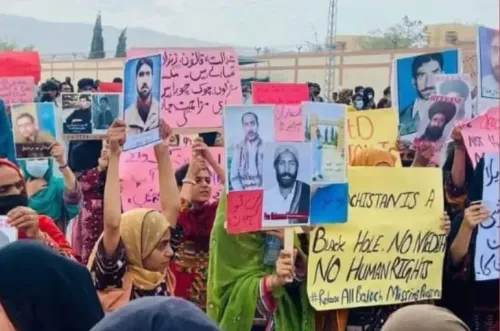
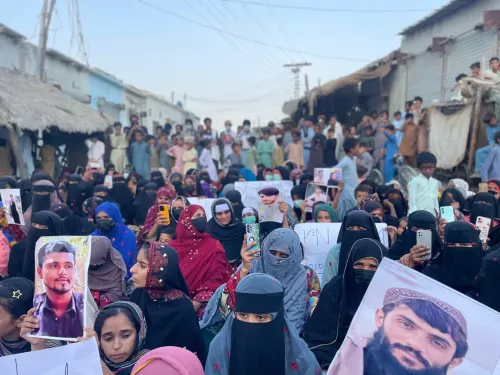
In response to the murders, members of the Hazara community blocked the Western Bypass in protest.
This is not an isolated incident; similar attacks have occurred in the Hazarganji area previously, where vegetable vendors were assaulted.
In a tragic event in 2019, a blast targeted the Hazara community at the Hazarganji market, claiming the lives of 20 individuals and injuring 48 others, according to Dawn.
A 2018 report from the National Commission for Human Rights (NCHR) revealed that from January 2012 to December 2017, 509 members of the Hazara community were killed and 627 injured in various acts of terrorism in Quetta.
Recent reports indicate a significant rise in Sunni radicalization across Pakistan, particularly under the leadership of Army Chief Asim Munir, which has led to increasing violence against religious minorities, including Ahmadis and Shias, with little recourse to justice.
“The two largest Muslim minorities in Pakistan, namely Shia (especially Hazara Shia) and Ahmadis, have faced an unprecedented increase in violence and lynchings in recent years. In November 2024, over 40 Shia pilgrims were killed in an ambush in Kurram District. Hardline extremist mobs have attacked Ahmadi prayer halls across Punjab and Sindh, resulting in fatalities,” mentioned a report from the Afghan Diaspora Network.
“Human rights advocates caution that this is not merely random crime but a concerted sectarian assault. Earlier this month, the Islamic State of Pakistan launched a suicide attack on a well-known Shia mosque in Islamabad, causing 32 deaths. The core group of IS-Pakistan originates from anti-Shia Sunni factions like the outlawed Sipaha-e-Sahaba (SSP) and Lashkar-i-Jhangvi (LeJ), among others,” it added.
Experts suggest that these radical Sunni groups are likely behind the recent attacks, with their activities becoming increasingly noticeable. Notably, a large gathering of the LeJ was reported near the Shia mosque attacked on February 6.
Amnesty International has emphasized that Pakistani authorities have failed to safeguard the Hazara Shia community from ongoing threats and violent acts.
Point of View
It is essential to highlight the grave implications of this recent act of violence against the Hazara community in Quetta. The repeated targeting of minorities raises crucial questions about security and the need for protective measures from authorities. This incident underscores the ongoing sectarian violence threatening social harmony in Pakistan.
NationPress
19 Sept 2026
Frequently Asked Questions
What happened to the Hazara community members in Quetta?
Two Hazara community members were shot dead and three others injured by unidentified assailants while returning from a vegetable market.
What do authorities believe about the nature of the attack?
Authorities suspect that the attack was a case of targeted killing aimed at the Hazara community.
Have any groups claimed responsibility for the attack?
As of now, no group has taken responsibility for the attack, and police are conducting a search for the assailants.
What has been the historical context of violence against the Hazara community?
The Hazara community has faced significant violence over the years, with numerous attacks reported, including a deadly blast in 2019 that killed 20 people.
What actions are being taken in response to this violence?
Community members have protested by blocking roads, demanding justice and protection from such acts of violence.