Hezbollah's Role in Conflict Exposes Iran's Proxy Threat to Israel
Synopsis
The Israeli military has raised alarms about Hezbollah's involvement in the conflict with Iran, emphasizing its potential threat to Israel. IDF officials reveal insights into their strategies and the ramifications of regional militant alliances.
Key Takeaways
Hezbollah's involvement emphasizes Iran's influence over regional militants.
Israeli military operations target Hezbollah to protect civilians.
Iranian officials pressured Hezbollah to join the conflict.
Israel has a forward defensive posture to safeguard its northern borders.
Hamas remains active, despite ceasefire agreements.
Tel Aviv, March 5 (NationPress) The Israeli Defense Forces (IDF) stated on Thursday that the participation of Hezbollah in the ongoing conflict involving Tehran and Tel Aviv has intensified Israel's apprehensions regarding Iran's proxy network, labeling it an “existential threat” to their nation.
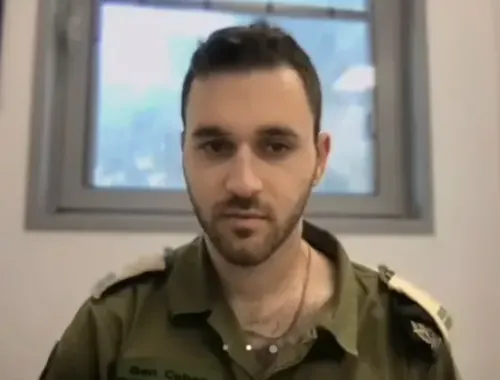
In a special interview with IANS, IDF International Spokesperson Lt. Ben Cohen emphasized that Hezbollah’s engagement in the conflict illustrates the depth of Iran’s sway over militant factions in the region.
“Just two days ago, Hezbollah’s involvement confirmed that the Iranian proxy network presents an existential threat to Israel, as it entered the fray at a critical juncture when Israel is actively defending itself against this threat posed by the Iranian terror regime,” Cohen noted.
He further mentioned that Iranian officials who managed to evade the initial stages of Israel's military operations applied significant pressure on Hezbollah to partake in the conflict, highlighting the group's alignment with Tehran's objectives.
“Senior Iranian officials, those who survived the first days of the operation, have pressured Hezbollah to join the conflict, revealing their commitment to safeguarding Iranian interests rather than those of the Lebanese populace. Israel recognizes the necessity of eliminating such threats at our borders, which is why we have commenced precision strikes on Hezbollah targets to protect our civilians,” he added.
Cohen clarified that Israel’s response strategy encompasses a dual approach, merging targeted military actions with defensive tactics to ensure the safety of civilians along the northern border.
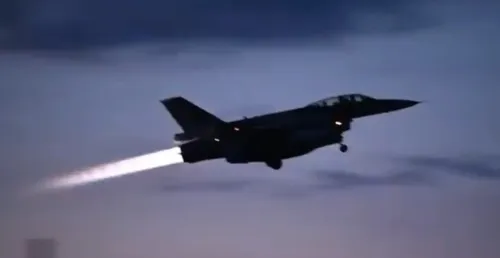
“Within this framework, our efforts are twofold: one involves aerial strikes on specific targets aimed at harming Israeli civilians, including weapon storage sites and command centers, while the other focuses on defending Israel's northern population,” he explained.
He also referred to the events of October 8 last year, when Israel had to evacuate tens of thousands of residents from areas adjacent to the Lebanese border due to escalating tensions with Hezbollah.
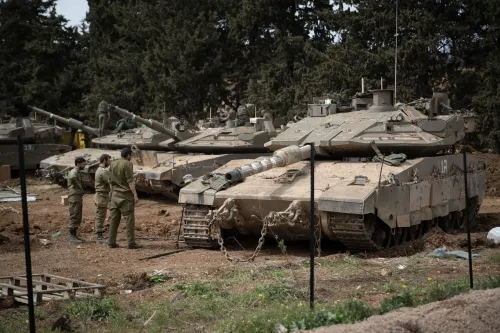
“On October 8, Israel evacuated tens of thousands of civilians from the northern border for their safety against Hezbollah. Rather than repeating that, we have adopted a forward defensive posture, not a ground invasion, of IDF forces in southern Lebanon, aimed at protecting Israeli civilians in the north,” Cohen told IANS.
When asked whether Hamas intends to take advantage of the direct conflict between Israel and Iran, the IDF spokesperson indicated that the militant organization has persisted with its hostile actions, despite a ceasefire agreement in recent months.
“Hamas has been targeting Israel consistently for an extended period, and even with a ceasefire agreement in place, they have repeatedly breached the terms. We have observed this pattern where they disregard the yellow line and attempt to engage IDF forces,” he stated.
He maintained that Israel has complied with the ceasefire conditions and has only responded to violations.
“The IDF has not breached the ceasefire agreement. We have only retaliated against Hamas when they violated it, and we remain vigilant on the southern front. If Hamas opts to alter its approach, we are prepared for that,” Cohen added.
He underscored that Israel is vigilant regarding the potential for other Iran-backed factions to join the conflict.
“We understand the importance of preparedness, just as we were ready for Hezbollah's involvement, and we will continue to be ready for any other Iranian proxies that might attempt to engage in the conflict,” he stated.
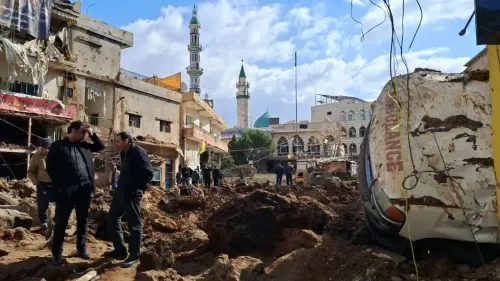
Meanwhile, earlier in the day, the Israeli military reported that Hezbollah command centers in Beirut were struck during a series of overnight airstrikes.
Among the targets was a command center linked to Hezbollah’s aerial forces, responsible for drone strikes against Israel, according to the IDF.
“The targeted command centers were intended for use by Hezbollah to facilitate and carry out multiple terrorist operations against IDF personnel and Israeli citizens,” the military asserted.
Prior to the strikes, the IDF issued evacuation alerts for Lebanese civilians in the surrounding areas.
Point of View
The situation underscores the complex dynamics of regional conflicts where proxy groups play significant roles. Israel's proactive measures illustrate a commitment to national security amid escalating threats.
NationPress
20 Sept 2026
Frequently Asked Questions
What is Hezbollah's involvement in the current conflict?
Hezbollah's involvement in the ongoing conflict has been characterized as a significant alignment with Iran’s interests, increasing Israel's security concerns.
How has Israel responded to Hezbollah's actions?
Israel has implemented a dual strategy of targeted military strikes against Hezbollah and defensive measures to protect civilians along its northern border.
What pressure did Iranian officials exert on Hezbollah?
Iranian officials reportedly pressured Hezbollah to engage in the conflict, illustrating their influence over the group and prioritizing Iranian interests.
What happened on October 8 last year?
On October 8, Israel evacuated tens of thousands of civilians from areas near the Lebanese border due to rising tensions with Hezbollah.
Is Hamas involved in the current conflict?
Hamas has continued its hostile activities against Israel, even amid a ceasefire agreement, indicating a persistent threat.