IDF Claims to Have Killed Hezbollah Chief's Nephew in Beirut Strike
Synopsis
In a significant military operation, the IDF reports the death of Ali Yusuf Harshi, a key figure in Hezbollah, amid escalating tensions in the region. This comes alongside broader strikes targeting Hezbollah's military infrastructure, raising questions about the ongoing conflict's implications.
Key Takeaways
Ali Yusuf Harshi , a significant figure in Hezbollah, was killed by the IDF.
The IDF targeted over 100 military locations as part of its operations.
This strike follows a two-week ceasefire agreement between the U.S. and Iran .
The IDF vows to continue its efforts to ensure security for northern Israel.
Military actions are escalating amidst ongoing regional tensions.
Jerusalem, April 9 (NationPress) — The Israel Defence Forces (IDF) announced on Thursday the elimination of Ali Yusuf Harshi, who served as the personal secretary to Hezbollah Secretary-General Naim Qassem, in Beirut. Harshi was also the nephew of the Hezbollah leader, who oversees the Iranian-backed Lebanese organization.
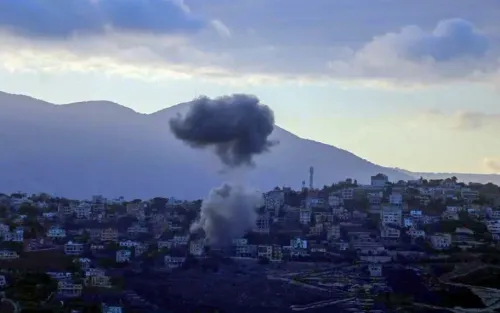
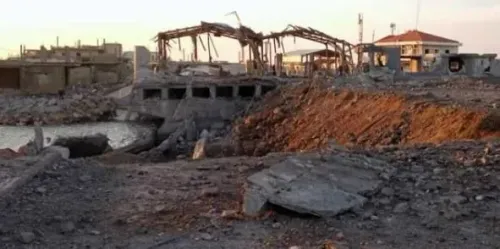
In a message posted on X, the IDF reported that it targeted two significant crossings utilized by Hezbollah for the transportation of arms south of the Litani River, in addition to 10 storage facilities for weapons, command centers, and launchers located in southern Lebanon.
The IDF's announcement stated, "ELIMINATED: Ali Yusuf Harshi, the personal secretary to Hezbollah Secretary-General Naim Qassem in Beirut. A close associate and personal advisor, Harshi played a significant role in managing and securing Qassem’s office. The IDF also struck two key crossings used by Hezbollah to transport weapons south of the Litani River, along with 10 weapons storage sites, launchers, and command centers in southern Lebanon," as shared on X.
This development follows the recent announcement of a two-week ceasefire agreement between the U.S. and Iran.
Previously, the IDF claimed to have neutralized a Hamas operative disguised as a journalist. They asserted that Muhammad Samir Muhammad Washah was actively involved in orchestrating attacks against IDF troops, posing a threat to security forces in the region.
The IDF's post on X read, "ELIMINATED: Muhammad Samir Muhammad Washah, a Hamas terrorist masquerading as an Al Jazeera journalist. Washah was a key figure in Hamas’ weapons production operations and participated in the development and transfer of munitions from Gaza. He was directly involved in planning attacks against IDF forces and represented a substantial threat in the area."
On Wednesday, IDF Chief of the General Staff LTG Eyal Zamir, who is directing the extensive strikes against Hezbollah, stated that Israel would persist in its offensive against the group and seize every operational opportunity, as conveyed via IDF’s message on X.
He further declared, "We will not compromise the safety of residents in northern Israel. We will continue to strike with resolve."
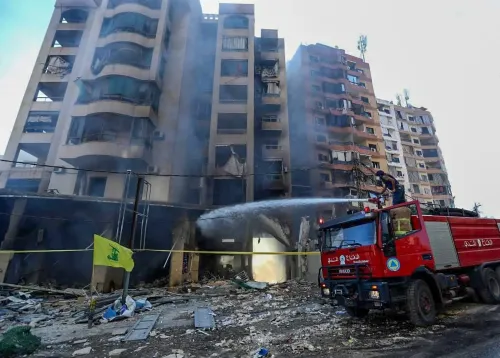
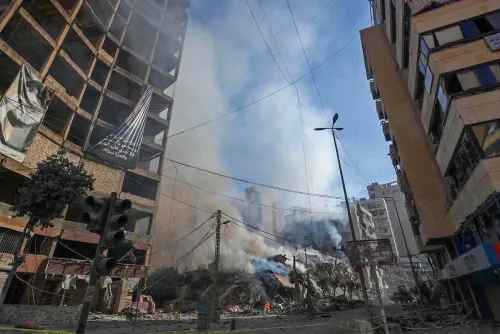
The IDF also mentioned on Wednesday that it executed the largest synchronized strike in Lebanon since the initiation of Operation Roaring Lion. They reported hitting over 100 Hezbollah military headquarters, command-and-control centers, and operational arrays in Beirut, Beqaa, and southern Lebanon.
In an impressive display of military capability, the IDF stated, "In just 10 minutes, we executed the largest coordinated strike across Lebanon since the commencement of Operation Roaring Lion. The operation targeted more than 100 Hezbollah military facilities, including intelligence command centers and major headquarters involved in planning terror attacks, as well as key infrastructures for firepower and naval arrays responsible for missile launches, along with assets linked to the Radwan Force and Hezbollah's aerial unit—its elite forces," as shared on X.
Point of View
The IDF's actions reflect a strategic approach to countering perceived threats from Hezbollah, a group that has long been recognized as a significant player in regional conflicts. While military operations aim to ensure security for Israel, the broader implications for peace and stability in Lebanon and the surrounding areas are crucial considerations.
NationPress
16 Oct 2026
Frequently Asked Questions
What prompted the IDF's strike in Beirut?
The IDF stated that the strike was part of ongoing operations against Hezbollah's military infrastructure and was aimed at eliminating key figures within the organization.
Who was Ali Yusuf Harshi?
Ali Yusuf Harshi was the personal secretary to Hezbollah Secretary-General Naim Qassem and also his nephew, playing a significant role in managing Hezbollah’s operations.
What is Operation Roaring Lion?
Operation Roaring Lion refers to the IDF's military campaign targeting Hezbollah's infrastructure and personnel in Lebanon.
What was the outcome of the recent ceasefire agreement?
The recent ceasefire agreement between the U.S. and Iran was intended to reduce hostilities in the region, but subsequent military actions indicate ongoing tensions.
How does this affect Israel's security?
The IDF maintains that such operations are essential for ensuring the security of northern Israel and countering threats from Hezbollah.