Hindi retains non-official UN status with India's voluntary support
Synopsis
Hindi is not an official UN language — and India is not pushing it to become one. Instead, through a voluntary funding arrangement with the UNDGC and a freshly adopted UN General Assembly multilingualism resolution, New Delhi has carved out a durable non-official status that keeps Hindi present in UN communications. The MOU, first signed in 2018 and renewed last year for five more years, underpins the whole arrangement.
Key Takeaways
Hindi retains its non-official language status at the United Nations , confirmed at Hindi Divas on 9 October 2026 .
India voluntarily funds the Hindi at UN project run by the UN Department of Global Communications (UNDGC) .
A UN General Assembly multilingualism resolution , co-sponsored by Andorra , was adopted last month, recognising the diplomatic importance of non-official languages.
An MOU signed in 2018 between India and the UNDGC to transmit UN news in Hindi was renewed last year for five more years .
Hindi is described as the third largest spoken language in the world by India's UN representative.
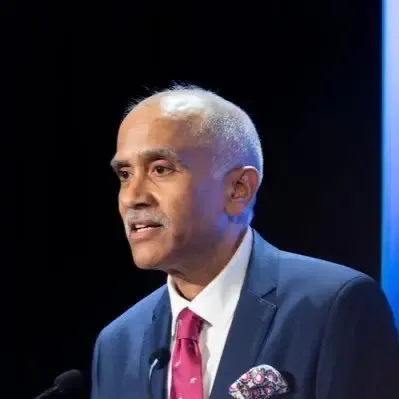
India's Permanent Representative to the United Nations, P Harish, confirmed on Thursday, 9 October 2026, that Hindi continues to hold a non-official language status at the United Nations, sustained through India's voluntary financial backing of the UN Department of Global Communications (UNDGC). The confirmation came at the observance of Hindi Divas at the UN headquarters in New York.
'In the recently adopted multilingualism resolution, Hindi has continued to retain a non-official language status on account of DGC's transmission of news and social media in this language,' Harish said at the event.
The Multilingualism Resolution and What It Means for Hindi
A multilingualism resolution, co-sponsored by Andorra and adopted last month by the UN General Assembly, formally recognises the cultural, political, and diplomatic importance of non-official languages in the UN's work. It reaffirms that any representative may address the body in a non-official language. Hindi's inclusion in this framework is a direct outcome of the Hindi at UN project, which makes UN news and information available to Hindi-speaking audiences worldwide.
'India has voluntarily supported the Hindi at UN project, which makes UN news and information available to Hindi-speaking audiences worldwide,' Harish said. He also cited Home Minister Amit Shah's assertion that 'language is most meaningful when it connects rather than divides the people and their culture.'
The MOU Behind the Initiative
Bharatiya Janata Party (BJP) MP C P Joshi noted that the UNDGC and India signed a memorandum of understanding (MOU) in 2018 to transmit United Nations news in Hindi, funded through voluntary contributions from New Delhi. The MOU was renewed for a further five years last year, cementing the arrangement's long-term continuity.
Joshi described Hindi as 'a vital part of this rich linguistic family' within India's multilingual and multicultural civilisation, and said the language 'ranks among the most widely spoken and understood languages in the world.'
India's Broader Multilingual Push at the UN
'India has consistently supported multilingualism at the United Nations and has co-sponsored resolutions on this subject,' Harish stated. He described Hindi as 'the third largest spoken language in the world,' adding that the language's global reach is amplified by the Indian diaspora, literature, cinema, and digital platforms.
Joan Forner Rovira, Andorra's Permanent Representative, said language is 'one of our most important tools of diplomacy' within the UN system, and framed the multilingualism resolution as consistent with Article 1 of the UN Charter's call for international cooperation and respect for human rights. Home Minister Amit Shah also reportedly encouraged learning one additional Indian language, linking it to the spirit of 'Ek Bharat Shreshtha Bharat' (One India, Great India).
What This Signals for Hindi's Global Standing
This is not a grant of official UN language status — that distinction belongs to just six languages — but the resolution and the active UNDGC partnership represent meaningful diplomatic recognition of Hindi's global footprint. Notably, India's voluntary funding model means the arrangement's durability is tied to continued bilateral commitment rather than a structural UN mandate, a distinction that could become relevant in future budget cycles. With the MOU now extended through the late 2020s, Hindi's presence in UN communications appears secure for the near term.
Point of View
Co-sponsor multilingualism resolutions, and secure formal recognition without triggering the politically fraught debate over revising the UN's six-language official list. The risk in this model is its dependency on continued voluntary funding — a structural vulnerability that formal status would eliminate. Meanwhile, framing Hindi as the 'third largest spoken language' is a diplomatic talking point that papers over a more complex sociolinguistic reality at home, where the language's reach is uneven across states. The real significance of Thursday's event is less linguistic and more geopolitical: India is steadily building cultural infrastructure at multilateral institutions, and Hindi is one of its most visible instruments.
NationPress
9 Oct 2026
Frequently Asked Questions
What is Hindi's current status at the United Nations?
Hindi holds a non-official language status at the UN, meaning it is not one of the six official UN languages but is used by the UN Department of Global Communications to transmit news and social media content. This status is sustained through India's voluntary funding of the Hindi at UN project.
What did the UN General Assembly multilingualism resolution say about Hindi?
The resolution, co-sponsored by Andorra and adopted last month, recognises the cultural, political, and diplomatic importance of non-official languages and reaffirms that any UN representative may address the body in a non-official language. Hindi benefits from this recognition through its inclusion in UNDGC communications.
What is the MOU between India and the UNDGC?
India and the UN Department of Global Communications signed a memorandum of understanding in 2018 to transmit UN news in Hindi, funded through voluntary contributions from New Delhi. The MOU was renewed last year for five more years, extending the arrangement through the late 2020s.
Who spoke at Hindi Divas at the UN on 9 October 2026?
India's Permanent Representative P Harish, BJP MP C P Joshi, and Andorra's Permanent Representative Joan Forner Rovira addressed the event. Home Minister Amit Shah's remarks were also cited, encouraging Indians to learn an additional Indian language in the spirit of 'Ek Bharat Shreshtha Bharat.'
Why does India support Hindi at the UN if it is not an official language?
India backs the Hindi at UN project to make UN information accessible to Hindi-speaking audiences globally and to reinforce the language's international cultural and diplomatic presence. Officials describe Hindi as the third largest spoken language in the world, with reach extended through the Indian diaspora, cinema, literature, and digital platforms.