Should India Take Action Against Violence in Bangladesh?
Synopsis
The Global Hindu Diaspora is urging urgent action from Prime Minister Narendra Modi regarding escalating violence against Hindus in Bangladesh, citing numerous killings and mob attacks. This appeal highlights a troubling trend that has persisted for years, demanding international attention and intervention to protect vulnerable communities.
Key Takeaways
Urgent action is needed to address violence against Hindus in Bangladesh.
Over 2,442 documented attacks on minorities have occurred.
The situation has been exacerbated by disinformation campaigns .
The Global Hindu Diaspora is organizing a nationwide protest in the U.S.
The Citizenship Amendment Act is deemed inadequate under current conditions.
Washington, Jan 11 (NationPress) Groups from the Hindu diaspora have called upon Prime Minister Narendra Modi and his team to take swift measures regarding what they characterize as rising violence against Hindus in Bangladesh, highlighting incidents of killings, mob attacks, and purported governmental inaction.
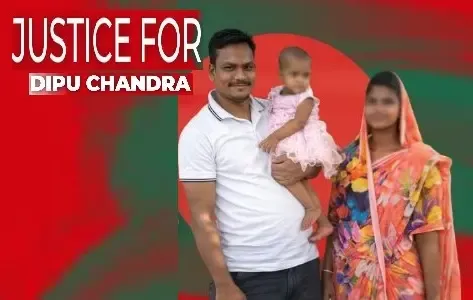
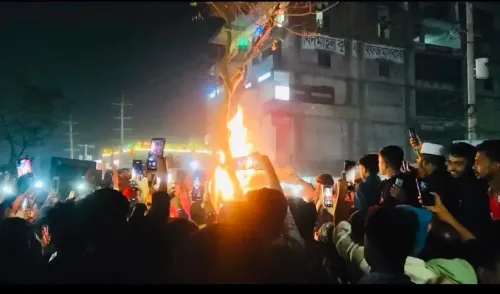
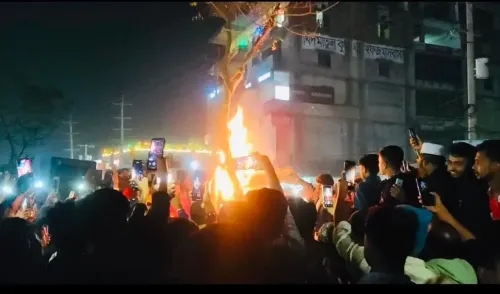
In a letter directed at PM Modi, the Global Hindu Diaspora expressed their appeal with “deep sorrow and urgency.” The call to action came after the group described the brutal lynching and burning of Dipu Chandra Das, a young Hindu from Bangladesh, alongside a series of similar assaults.
“Since August 2025, violence against Hindus has sharply intensified,” the correspondence stated. It further noted that “the scale of terror unleashed since mid-December 2025 has been relentless.” The group remarked that lynchings stemming from what they labeled as false blasphemy accusations were not unprecedented, recalling the murder of Utsav Mondal the previous year.
The letter asserted that Hindus in Bangladesh have been “repeatedly forsaken by history.” It referenced the Liaquat-Nehru Pact of 1950, which was intended to safeguard minority rights, yet has proven ineffective in practice. Additionally, it pointed out the aftermath of the 1971 Liberation War, during which numerous Hindu refugees who fled to India were subsequently repatriated to Bangladesh.
The Global Hindu Diaspora characterized the prevailing circumstances as a “massacre of Hindus.” They claimed that since August 2024, local media coverage of human rights violations has “virtually vanished.” This silence, they argued, has been exacerbated by disinformation campaigns targeting Hindus and other minority communities.
Referring to the case of Chinmoy Krishna Das, a senior monk from ISKCON, the letter detailed that he has been imprisoned since November 25, 2024, on “fabricated charges” and has consistently been denied bail. It accused the Yunus administration of neglecting to recognize the communal aspects of the violence, warning that such inaction sends “a dangerous signal that mobs may operate without fear of repercussions.”
Over 2,442 attacks against minorities, primarily Hindus, were recorded from August 2024 to June 2025, including numerous fatalities. The group noted that 82 individuals were murdered between August and November 2024 alone, alongside reports of rapes, temple desecrations, and mob burnings.
Quoting statistics from the Bangladesh Hindu, Buddhist, Christian Unity Council, the letter revealed that the situation has deteriorated further in recent weeks, with 11 Hindus killed in the last 35 days amid a pattern of lynchings, shootings, and mob violence.
The Global Hindu Diaspora urged India to vocally denounce these attacks. They called for establishing a humanitarian corridor, refugee camps, and UN-monitored safe zones. They also implored New Delhi to bring this issue before the United Nations and exert diplomatic and economic pressure on extremist factions.
The letter remarked that the Citizenship Amendment Act was “a step forward but remains inadequate under current circumstances.” It contended that many Bangladeshi Hindus cannot safely reach India without protected corridors.
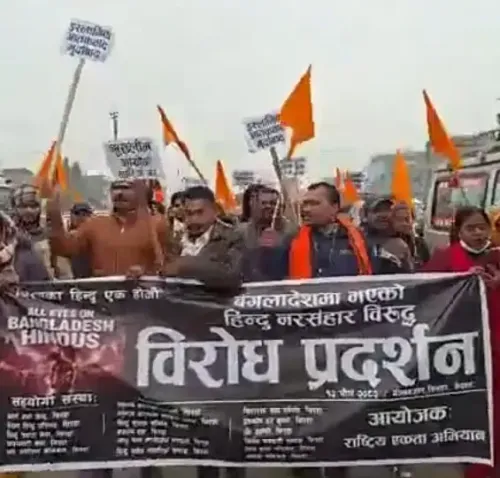
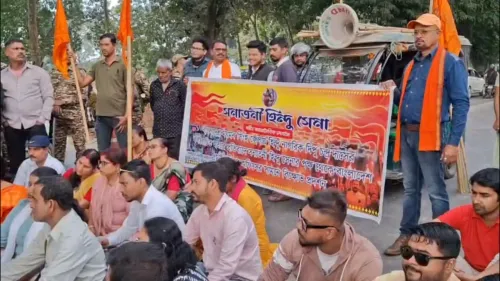
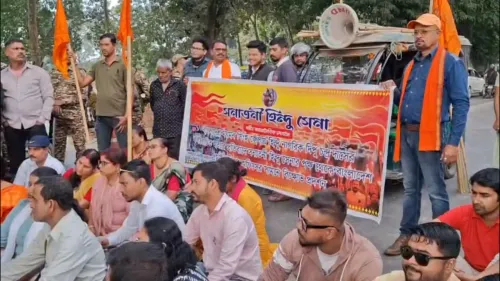
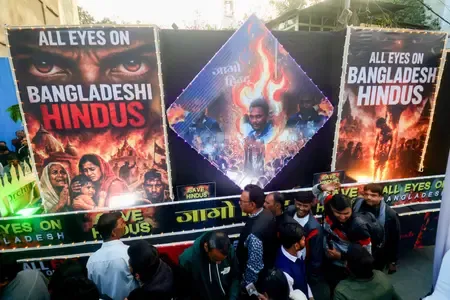
Additionally, the Global Hindu Diaspora announced plans for a nationwide silent protest across the United States. This demonstration is scheduled for Saturday, January 31, in major U.S. cities, aiming to raise awareness and convey that the violence “cannot be overlooked.”
Point of View
It is crucial to recognize the gravity of the situation. The ongoing violence against Hindus in Bangladesh is not just a regional concern but a humanitarian crisis that requires a united response. The Global Hindu Diaspora's call for action should resonate across borders, urging global leaders to prioritize the safety of all minorities.
NationPress
23 Oct 2026
Frequently Asked Questions
What actions has the Global Hindu Diaspora requested from India?
They have urged India to publicly condemn the violence, establish a humanitarian corridor, set up refugee camps, and create UN-monitored safe zones.
How many attacks on minorities have been reported in Bangladesh?
Over 2,442 attacks on minorities, predominantly Hindus, were reported between August 2024 and June 2025.
What is the significance of the Liaquat-Nehru Pact?
The Liaquat-Nehru Pact of 1950 was intended to protect minority rights in Bangladesh but has largely failed in its implementation.
Why are the recent events concerning?
The escalation of violence against Hindus, including killings and mob attacks, highlights a severe humanitarian crisis that requires urgent international attention.
What is the Citizenship Amendment Act?
The Citizenship Amendment Act is a law intended to provide a pathway to citizenship for certain religious minorities from neighboring countries, but it has been criticized as insufficient given the current situation.