Hindu Shahi-era fort near Islamabad crumbles under neglect, encroachment
Synopsis
A Hindu Shahi-era fort that once guarded routes into the Indian subcontinent is quietly dying just 40 km from Islamabad. With 20-30% already damaged, livestock roaming the ruins, and 25 families living inside, Pakistan's own archaeology department warns that delayed restoration could erase one of the Potohar region's most significant surviving heritage sites.
Key Takeaways
A centuries-old fort tracing back to the Hindu Shahi period , located 40 km from Islamabad , is deteriorating despite protection under Pakistan's Antiquities Act of 1975 .
Pakistan's Deputy Director of Archaeology Abdul Ghafoor Lone estimates 20-30% of the structure has been damaged.
The fort was later expanded by the Gakhar tribe between the 10th and 15th centuries .
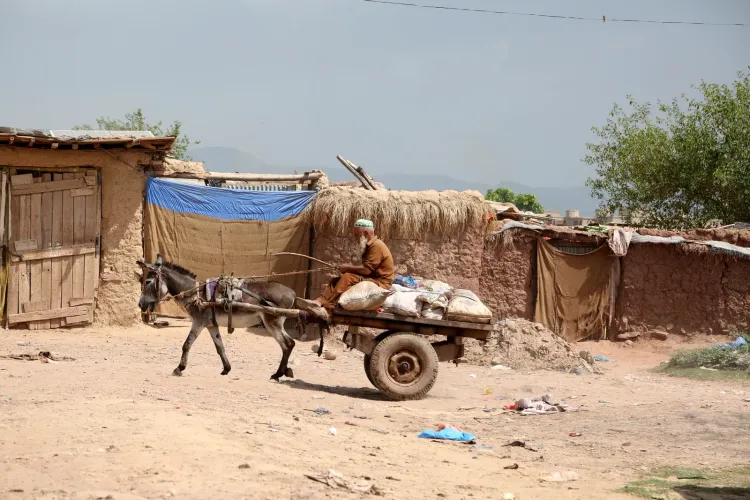
Around 25 families , including Gakhar descendants, still live within the fort's vicinity without schools, hospitals, or proper roads.
It took nearly a year just to clear vegetation from the fortification walls during 2023 survey work.
A centuries-old fortress in Pakistan's Potohar region, believed to date back to the Hindu Shahi period, is steadily deteriorating under the weight of neglect, encroachment, and environmental damage — despite legal protection under the country's Antiquities Act of 1975, according to a report published by Saudi Arabia-based daily Arab News. Located nearly 40 kilometres from Islamabad, the fort once guarded key routes into the Indian subcontinent and is considered one of the region's most significant surviving heritage sites.
A stronghold lost to time
The ruins rise above a rugged plateau encircled by the Soan River and the hills of the Potohar region. Historians trace the fort's origins to the Hindu Shahi era, with later expansion carried out by the Gakhar tribe between the 10th and 15th centuries. For generations, it served as a strategic checkpoint on routes leading into the subcontinent.
Visible signs of decay
According to the report, overgrown vegetation has swallowed parts of the fortification walls and gates, while livestock wander through the crumbling ruins. The site is also marred by plastic waste, and some residents have established small farms near the outer walls, adding to the structural strain.
“Wild climate effects continue to weaken the structure. It took nearly a year just to clear plant growth from the fortification walls during the survey work in 2023,” Pakistan's Deputy Director of the Department of Archaeology Abdul Ghafoor Lone was quoted as saying.
Ghafoor, who has closely documented the site, estimated that 20 to 30 percent of the structure has already been damaged. While he described the fort as resilient enough to last centuries, he cautioned that persistent delays in conservation work could hasten its decline.
A living settlement inside the ruins
Around 25 families continue to live within the fort's vicinity, including members of the Gakhar community who trace their lineage to the historic tribe associated with the site. For many, the fort is not merely a monument but a marker of family identity.
“This is our identity and recognition,” said Subhan Kiyani, a 27-year-old resident whose family has lived in the area for generations. Standing among the damaged walls, Kiyani described the isolation of life inside the settlement: “There is no school here, no hospital, and no proper roads,” he said, pointing toward the Soan River, which residents cross without a permanent bridge.
Warnings of irreversible loss
A Pakistani official warned that further delays could prove catastrophic for the heritage site. “If restoration continues to be delayed, we may lose one of the region's most important surviving heritage sites,” the official said in the report.
The fort's plight mirrors a broader pattern across South Asia, where pre-Islamic and Hindu-era heritage sites in Pakistan — from temples in Sindh to Buddhist stupas in Khyber Pakhtunkhwa — have faced documented neglect and encroachment over decades. Conservationists argue that without urgent intervention and community-linked restoration, the Potohar fort could join a growing list of lost landmarks.
Point of View
But pre-Islamic heritage, especially Hindu Shahi-era structures, has consistently slipped down the state's conservation priority list. The contradiction is sharp: officials concede 20-30% damage and a year spent merely cutting weeds, yet restoration remains stalled. Heritage that predates the modern nation-state is being lost in real time, and the residents inside the walls — without schools, hospitals or a bridge — are paying the everyday cost of that neglect.
NationPress
26 Sept 2026
Frequently Asked Questions
Where is the Hindu Shahi-era fort located in Pakistan?
The fort is situated nearly 40 kilometres from Islamabad, on a rugged plateau in the Potohar region, encircled by the Soan River and surrounding hills. It is regarded by historians as one of the region's most significant surviving heritage sites.
How old is the fort and who built it?
The fort is believed to date back to the Hindu Shahi period, with later expansion carried out by the Gakhar tribe between the 10th and 15th centuries. It historically served as a strategic stronghold guarding key routes into the Indian subcontinent.
How much of the structure has been damaged?
According to Pakistan's Deputy Director of the Department of Archaeology, Abdul Ghafoor Lone, nearly 20 to 30 percent of the structure has been damaged due to neglect, encroachment, and environmental factors. Officials warn that further delays in conservation could accelerate the decline.
Why is the fort deteriorating despite legal protection?
Although the fort is protected under Pakistan's Antiquities Act of 1975, conservation work has been delayed for years. Overgrown vegetation, livestock movement, plastic waste, encroachments, and small farms near the outer walls have all contributed to its decay.
Who lives inside the fort today?
Around 25 families continue to reside within the fort's vicinity, including members of the Gakhar community who trace their lineage to the historic tribe associated with the site. Residents report a lack of schools, hospitals, proper roads, and a permanent bridge over the Soan River.