Amit Shah visits Sanchu Border, recalls 1965 war victory
Synopsis
Union Home Minister Amit Shah visited Sanchu Border on 26 May 2026, honouring Indian soldiers who drove out Pakistani forces there during the 1965 war. Standing on what he called 'sacred land,' Shah's visit underscores the BJP government's emphasis on military heritage and sustained high-level attention to India's western frontier.
Key Takeaways
Union Home Minister Amit Shah visited Sanchu Border on 26 May 2026 , calling it a matter of pride.
Shah paid tribute to Indian soldiers who repelled Pakistan at Sanchu during the 1965 Indo-Pakistani War .
The Border Security Force was raised on 1 December 1965 directly in the aftermath of the 1965 war to guard India's borders.
As Union Home Minister , Shah holds oversight of the BSF and other central armed police forces deployed on India's frontiers.
The visit aligns with a broader pattern of senior ministers travelling to forward border areas to highlight India's military history along the western frontier.
A video shared alongside the post is expected to amplify awareness of the Sanchu sector's historical role among a wider public audience.
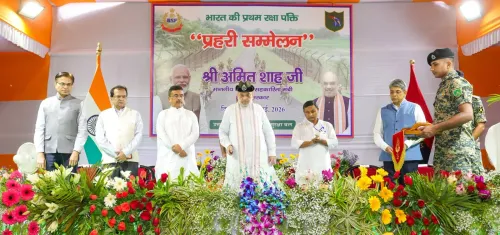
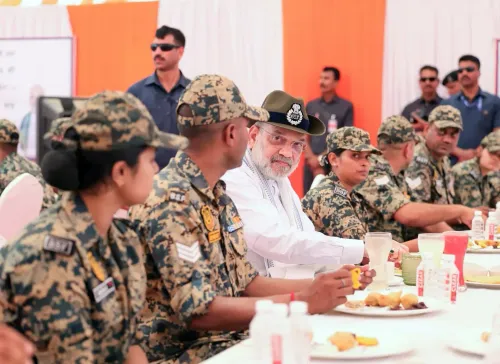
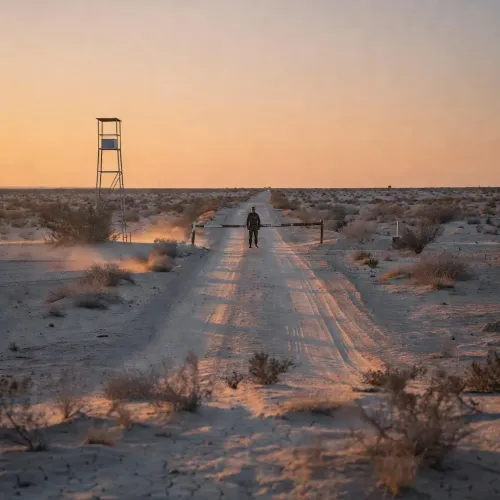
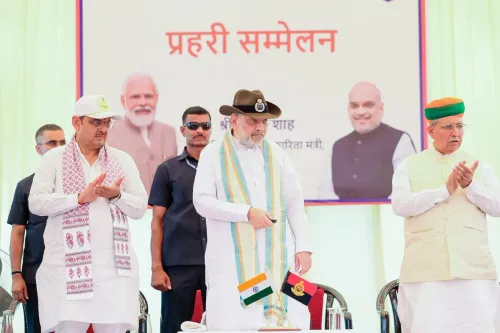
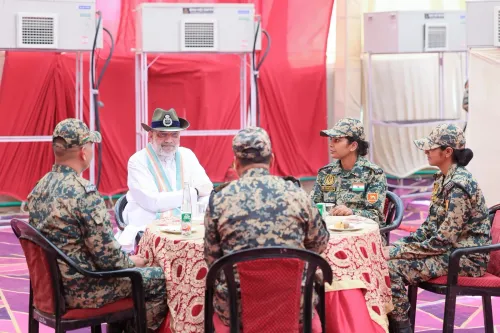
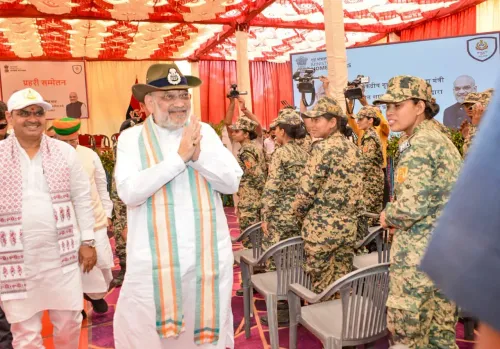
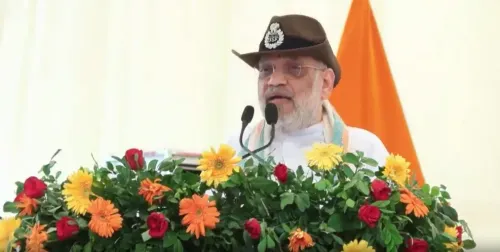
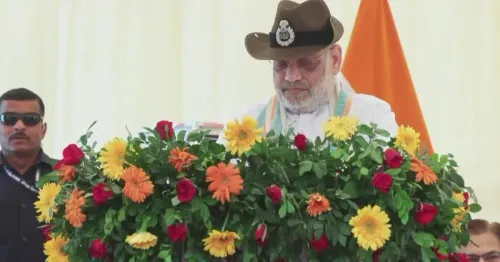
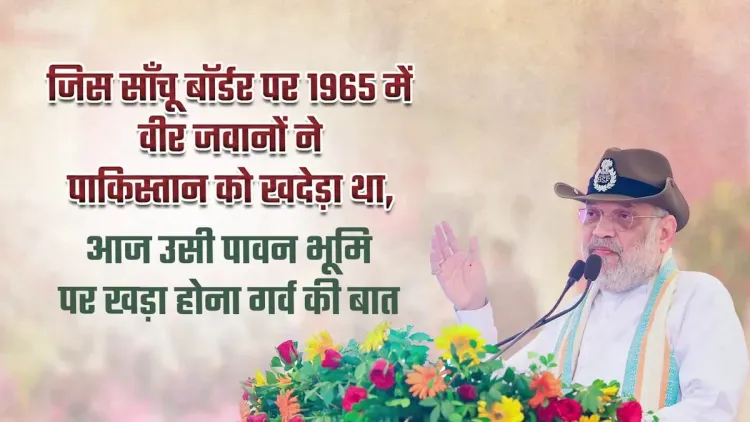
Union Home Minister Amit Shah on Tuesday, 26 May 2026 visited the Sanchu Border, the frontier where Indian soldiers repelled Pakistani forces during the 1965 Indo-Pakistani War, expressing pride at standing on what he called hallowed ground. Shah shared the moment on X, underscoring the historical and emotional significance of the site for India's defence legacy.
In his post, Shah wrote: 'जिस साँचू बॉर्डर पर 1965 में वीर जवानों ने पाकिस्तान को खदेड़ा था, आज उसी पावन भूमि पर खड़ा होना गर्व की बात है।' — translated: 'It is a matter of pride to stand today on the same sacred land of Sanchu Border where brave soldiers drove out Pakistan in 1965.'
Context
The 1965 Indo-Pakistani War was the second major armed conflict between India and Pakistan, fought across sectors in Kashmir, Punjab and Rajasthan. Indian forces successfully repulsed Pakistani advances at several points along the frontier, and the Sanchu sector is remembered as one of the sites of that resistance. The war ended with the Tashkent Declaration of January 1966 and remains a defining chapter in India's military history.
In the immediate aftermath of the 1965 war, the Border Security Force (BSF) was raised on 1 December 1965 specifically to consolidate the guarding of India's international borders and reduce the burden on the Army during peacetime vigil.
Policy Backdrop
Senior ministers in the current government have made a visible practice of visiting forward border areas along the western frontier to recall the sacrifices of 1965 and 1971. These visits are part of a broader effort by the BJP-led administration to highlight India's military heritage and reinforce morale among border-guarding forces. They run parallel to ongoing investments in border infrastructure, fencing and surveillance upgrades along the India-Pakistan frontier.
As Union Home Minister, Shah holds administrative oversight of the BSF, the CRPF and other central armed police forces that man India's borders and internal security grid, making his presence at a forward post symbolically and institutionally significant.
Stakeholders and Impact
For the BSF and other personnel stationed at border outposts, a visit by the Home Minister carries direct morale value. Border communities in the region, who have lived with the memory and the physical legacy of the 1965 conflict, also find such acknowledgements meaningful. Veterans' organisations and defence analysts have long called for greater public recognition of the battles fought at lesser-known frontier sectors beyond the more celebrated theatres of war.
The post, accompanied by a video, is likely to reach a wide audience on social media, amplifying awareness of the Sanchu sector's role in the 1965 war among younger Indians who may be unfamiliar with the specifics of that campaign.
What's Next
Visits of this nature by the Home Minister to border outposts often precede or accompany policy announcements on border fencing, force modernisation or infrastructure development along the western frontier. Observers will watch for any follow-up statements from Shah or the Ministry of Home Affairs on upgrades to the Sanchu sector or broader Rajasthan and Ladakh border zones. The visit also sets a precedent for continued high-level attention to forward border areas as India sustains its posture along the Pakistan frontier.
Point of View
Particularly victories against Pakistan. By personally standing at a 1965 battle site, the Home Minister reinforces his ministry's custodianship of border security in both institutional and symbolic terms. The visit also signals continued high-level political investment in the western frontier at a time when India is expanding border infrastructure. Taken together, such gestures serve both a domestic audience — veterans, nationalists, border communities — and a broader narrative of an assertive, historically conscious security state.
NationPress
10 Oct 2026
Frequently Asked Questions
Why did Amit Shah visit Sanchu Border?
Amit Shah visited Sanchu Border to pay tribute to Indian soldiers who repelled Pakistani forces there during the 1965 Indo-Pakistani War , describing the site as sacred ground.
What happened at Sanchu Border in 1965?
During the 1965 Indo-Pakistani War , Indian soldiers fought to drive out Pakistani forces at the Sanchu sector, which is remembered as one of the frontier points where India successfully defended its territory.
What is the Border Security Force and when was it formed?
The Border Security Force (BSF) is India's primary border-guarding organisation, raised on 1 December 1965 in the direct aftermath of the 1965 war to protect India's international borders.
Who oversees the BSF in India?
The Border Security Force comes under the administrative control of the Ministry of Home Affairs , headed by Union Home Minister Amit Shah .
What is the significance of the 1965 war for India's border security?
The 1965 Indo-Pakistani War directly led to the creation of the BSF and shaped India's approach to peacetime border guarding, making it a foundational event in the country's border security architecture.