Jensen Huang scandal clouds South Korea's AI ties with Nvidia
Synopsis
Jensen Huang's entanglement in a Chinese intelligence scandal has introduced rare turbulence into one of Asia's most consequential AI partnerships. South Korea has staked its AI ambitions — from HBM chips to autonomous driving — on Nvidia, and with 260,000 GPUs pledged and billions in deals signed, any U.S. regulatory action against Nvidia could ripple across Samsung, SK hynix, SK Telecom, and beyond.
Key Takeaways
A scandal linking Nvidia CEO Jensen Huang to a woman suspected of ties with Chinese intelligence has prompted a U.S. congressional investigation .
Madison Huang , Nvidia executive and Jensen's daughter, cancelled attendance at Nvidia AI Day in Seoul on 11 November 2026 , citing family reasons.
South Korea's science ministry said 260,000 GPU shipments pledged to South Korea are still expected to proceed on schedule.
Samsung Electronics and SK hynix face potential risk if the probe triggers tighter U.S. scrutiny of semiconductor supply chains linked to China.
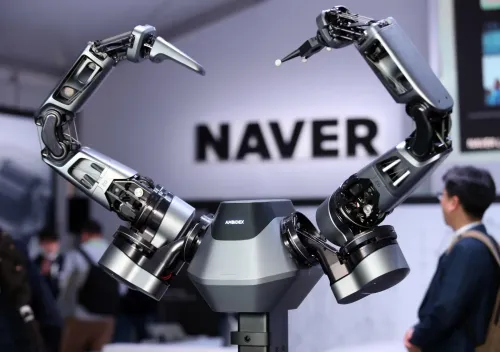
Nvidia completed a US$1 billion investment in Naver Corp. last week, acquiring a 4.13% stake as part of a joint AI venture.
Deals announced at Nvidia AI Day include SK Telecom –Rebellions GPU-NPU integration and Kakao Mobility 's Level 4 autonomous driving collaboration with Nvidia.
Nvidia CEO Jensen Huang's deepening partnerships with South Korea's top technology conglomerates are facing fresh uncertainty after a scandal linking Huang to a woman suspected of ties with Chinese intelligence triggered a U.S. congressional investigation and raised questions over regulatory risk, leadership continuity, and the country's AI supply chain. So far, there is no confirmed disruption to chip shipments or ongoing projects, but the controversy has already forced at least one high-profile cancellation in Seoul.
How Deep the Ties Run
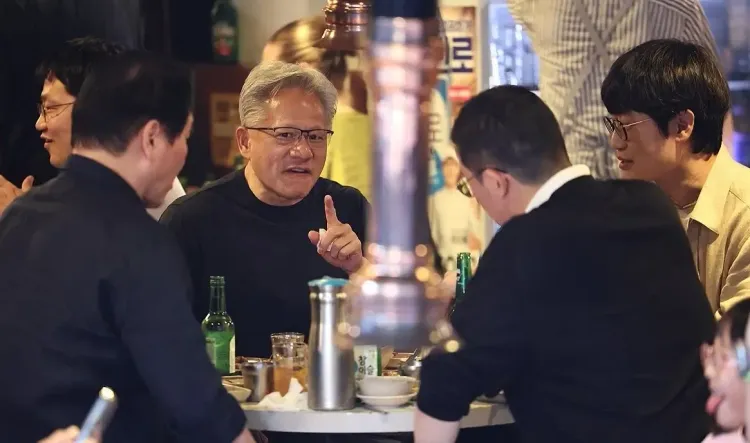
When Huang visited South Korea in June 2026, his dinner with the heads of the country's biggest conglomerates over soju and grilled pork belly was more than symbolism. He met Samsung Electronics Chairman Lee Jae-yong, SK Group Chairman Chey Tae-won, and Hyundai Motor Group Executive Chair Euisun Chung on several occasions this year, forging partnerships spanning semiconductors, robotics, and autonomous driving.
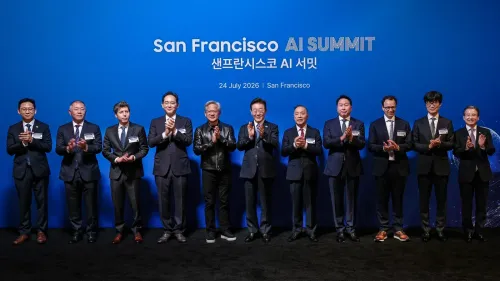
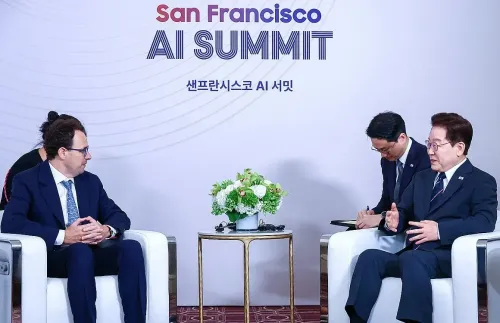
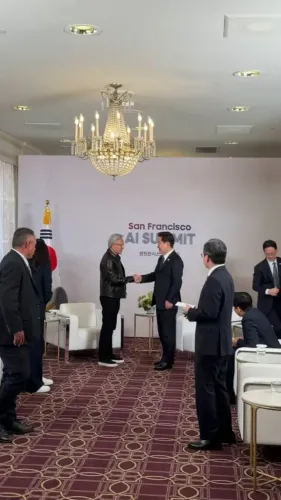
In July, Huang also held talks with South Korean President Lee Jae Myung on the sidelines of the San Francisco AI Summit, along with the three conglomerate chiefs, to map out paths for deeper AI cooperation. Nvidia subsequently completed a US$1 billion investment in internet portal operator Naver Corp., acquiring a 4.13 percent stake to accelerate a joint AI venture announced in June.
The Scandal and Its Immediate Fallout
The controversy centres on Huang's reported association with a woman alleged to have links to Chinese intelligence, prompting a U.S. congressional inquiry. The fallout was quickly felt in Seoul: Madison Huang, Huang's daughter and a senior Nvidia executive, abruptly cancelled her planned attendance at Nvidia AI Day on Monday, 11 November, citing family reasons. She had been scheduled to meet Korean technology executives and government officials.
When asked whether the congressional investigation could affect the delivery of 260,000 graphics processing units (GPUs) pledged to South Korea, Nvidia officials declined to comment.
Seoul's Official Position
Ryu Je-myung, South Korea's second vice minister of Science and ICT, told a parliamentary budget committee session on Monday that GPU shipments were expected to proceed as scheduled. 'We will have to wait and see how the controversy affects Nvidia, but we expect the contracted shipments to proceed without disruption,' Ryu said.
Senior Ministry of Science and ICT official Lee Do-kyu, speaking at the Nvidia event, struck a forward-looking tone: 'The competitiveness of the AI industry can be further enhanced when diverse capabilities are interconnected and integrated, beyond advances in individual technologies. We hope South Korean companies will identify opportunities for technological and business cooperation with Nvidia and ultimately expand into global markets together.'
What Is at Stake for Korean Chipmakers
For Samsung Electronics and SK hynix, the world's leading suppliers of high bandwidth memory (HBM) chips used in Nvidia's AI accelerators, the primary concern is whether the U.S. investigation could invite heightened regulatory scrutiny over semiconductor supply chains with Chinese exposure. Although existing supply agreements appear unaffected, any shifts in Nvidia's product roadmap or new export controls could complicate production and investment planning for both firms.
The stakes extend well beyond chips. At Nvidia AI Day, mobile carrier SK Telecom and AI chip startup Rebellions announced plans to integrate Nvidia's GPUs with Rebellions' neural processing units (NPUs) in SK Telecom's AI data centres. Separately, ride-hailing platform Kakao Mobility unveiled a collaboration with Nvidia on Level 4 autonomous driving technology, initially targeting Kia Corp.'s purpose-built vehicles.
Broader Risk to South Korea's AI Ambitions
Industry observers note that the actual fallout will hinge on whether the U.S. investigation leads to regulatory action, leadership changes at Nvidia, or a strategic pivot in its business model. This comes amid growing concern that South Korea's AI ecosystem has become structurally reliant on a single foreign supplier for advanced computing hardware, AI chip supply, and strategic alliances. Notably, the country's push to build advanced computing infrastructure is tightly interwoven with Nvidia's expansion plans in the region.
Despite the uncertainty, Seoul officials have continued to frame the Nvidia partnership as essential to helping domestic companies scale globally — suggesting the government is unlikely to distance itself from Nvidia unless there is concrete regulatory compulsion.
Point of View
HBM demand signals, and strategic capital, and much of the country's AI infrastructure ambition loses its scaffolding. The congressional probe matters less as an immediate supply disruption — Seoul officials are right that contracted shipments will likely proceed — and more as a stress test of that dependence. If U.S. regulators move against Nvidia on China-linked grounds, Korean chipmakers sit at an uncomfortable intersection: they supply Nvidia's AI accelerators, they have their own Chinese customer exposures, and they cannot easily pivot to an alternative buyer of HBM at scale. Seoul's diplomatic messaging — 'expect no disruption, wait and see' — is calibrated to avoid panic, but it papers over a structural vulnerability that this scandal has suddenly made visible.
NationPress
11 Nov 2026
Frequently Asked Questions
What is the Jensen Huang scandal involving South Korea?
A controversy has emerged over Nvidia CEO Jensen Huang's reported association with a woman suspected of links to Chinese intelligence, prompting a U.S. congressional investigation. The scandal has raised questions about potential regulatory scrutiny over Nvidia's leadership and its semiconductor partnerships with South Korean firms.
Will Nvidia still deliver 260,000 GPUs pledged to South Korea?
South Korea's second vice minister of Science and ICT, Ryu Je-myung, said on 11 November 2026 that contracted GPU shipments are expected to proceed on schedule. Nvidia officials, however, declined to comment directly on whether the U.S. congressional inquiry could affect delivery timelines.
Which South Korean companies are most exposed to the Nvidia uncertainty?
Samsung Electronics and SK hynix are most directly at risk, as major suppliers of high bandwidth memory chips used in Nvidia's AI accelerators. Beyond chips, SK Telecom, Kakao Mobility, and Naver — which received a US$1 billion Nvidia investment — also have significant business ties to Nvidia.
Why did Madison Huang cancel her Seoul appearance?
Madison Huang, Jensen Huang's daughter and a senior Nvidia executive, abruptly cancelled her planned attendance at Nvidia AI Day in Seoul on 11 November 2026, citing family reasons. She had been scheduled to meet Korean technology executives and government officials.
How significant is Nvidia's presence in South Korea's AI ecosystem?
Nvidia has become a central pillar of South Korea's AI ambitions, with partnerships spanning semiconductors, autonomous driving, telecommunications, and cloud AI. Its recent US$1 billion stake in Naver, GPU integration deals with SK Telecom and Rebellions, and a Kakao Mobility autonomous driving collaboration illustrate how deeply embedded the company is across the Korean tech landscape.