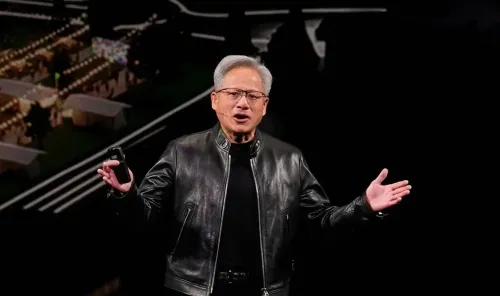
Nvidia CEO Jensen Huang Wraps South Korea Visit

Synopsis
Nvidia's official X account confirmed on June 9, 2026, that CEO Jensen Huang has wrapped a visit to South Korea, a nation central to the company's AI hardware supply chain through HBM suppliers Samsung Electronics and SK Hynix. The trip underscores Nvidia's push to secure next-generation memory supply amid surging global AI infrastructure demand.
Key Takeaways
Jensen Huang concluded his South Korea visit as of June 9, 2026 , confirmed via Nvidia's official X account.
South Korea is home to SK Hynix and Samsung Electronics , Nvidia's primary suppliers of high-bandwidth memory used in AI GPUs.
South Korea's K-Semiconductor Strategy (2021) committed over 500 trillion won to expand chip capacity, deepening its role in the global supply chain.
The US CHIPS and Science Act of 2022 allocated $52 billion to semiconductor production and encourages allied supply-chain cooperation.
US export controls on AI chips to China have elevated South Korea 's importance as a trusted manufacturing partner for American firms.
Follow-on investment or supply agreements from Korean chipmakers are expected to be announced in the second half of 2026 .
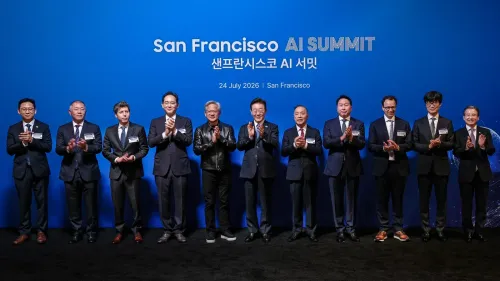
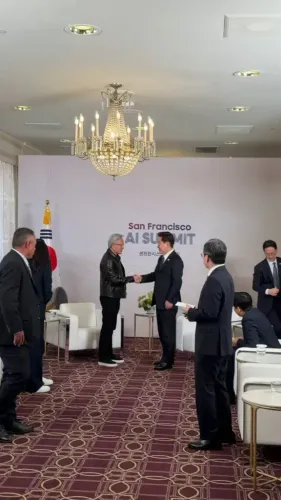
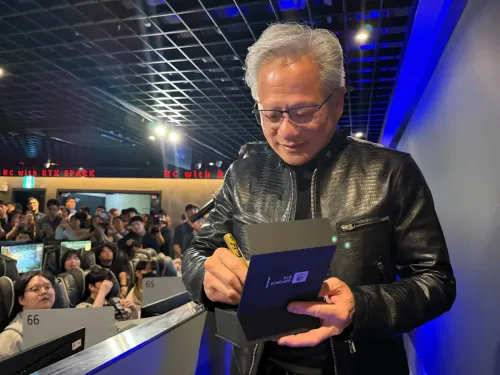
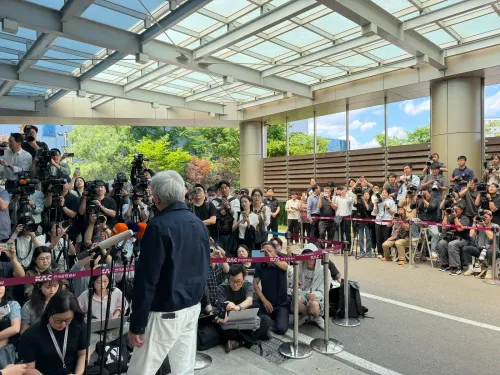
Chip giant Nvidia confirmed on Tuesday, June 9, 2026, that chief executive Jensen Huang has concluded a visit to South Korea, summarising the week-long trip in a video thread posted to the company's official X account.
The post, shared from Nvidia's corporate account, reads: 'Jensen's Korea visit is a wrap. Here's the week.' — accompanied by a video thread recapping the engagements. The brief but deliberate announcement signals the strategic weight Nvidia places on its relationship with South Korea, home to the world's dominant producers of high-bandwidth memory chips that power the company's AI accelerators.
Context
South Korea hosts two of the most critical suppliers in Nvidia's AI hardware supply chain: Samsung Electronics and SK Hynix. SK Hynix is the primary supplier of HBM3 and HBM3E memory — the high-bandwidth memory stacked directly onto Nvidia's flagship GPUs — while Samsung Electronics provides both HBM modules and foundry services for advanced AI accelerators. A visit by Huang to Seoul carries direct commercial significance for the next generation of Nvidia's GPU roadmap.
Nvidia's dominance in accelerated computing has made securing a stable, high-volume supply of HBM one of the company's foremost operational priorities as global demand for AI infrastructure continues to surge.
Policy Backdrop
South Korea launched its K-Semiconductor Strategy in 2021, committing over 500 trillion won to expand both memory and logic chip capacity over the following decade. That industrial policy has deepened the country's role as an indispensable node in the global semiconductor supply chain.
Separately, the US CHIPS and Science Act of 2022 allocated $52 billion to onshore American semiconductor production while explicitly encouraging supply-chain cooperation with trusted allied nations. US export controls on advanced AI chips to China, progressively tightened from 2022 onward, have further elevated South Korea's standing as a compliant, geopolitically reliable manufacturing partner for American technology firms including Nvidia.
Stakeholders and Impact
For Samsung Electronics and SK Hynix, a high-profile visit from Huang reinforces their centrality to the AI infrastructure buildout that is reshaping global capital expenditure. Both firms have invested heavily in expanding HBM production lines, and sustained demand from Nvidia underpins the business case for those investments.
Broader stakeholders include South Korean semiconductor workers, component suppliers, and the Korean government, which has positioned the chip sector as a pillar of national economic security. For the global AI industry, the health of the Nvidia–Korea supply relationship directly affects the pace at which next-generation data-centre hardware reaches hyperscalers and enterprise customers worldwide.
What's Next
Analysts and industry observers will watch closely for follow-on announcements from Samsung Electronics or SK Hynix regarding expanded HBM supply agreements or new capacity commitments tied to Nvidia's forthcoming GPU generations in the second half of 2026. Any formal partnership or investment disclosure would mark a concrete outcome of the Seoul engagements.
The visit also fits a wider pattern of Nvidia cementing its position within the Indo-Pacific technology ecosystem at a time when US policy actively encourages American chip firms to deepen ties with allied semiconductor nations. How those relationships translate into binding commercial agreements will shape the competitive landscape of AI hardware well into the next decade.
Point of View
Not merely transactional. The timing sits squarely within a broader US-led effort to build resilient, allied semiconductor ecosystems in the Indo-Pacific as a hedge against China-linked supply-chain risk. For South Korea, hosting the world's most valuable chip company's chief executive reinforces Seoul's leverage in ongoing negotiations over HBM pricing and capacity allocation. The real test will come when supply agreements are disclosed: the terms will reveal how much of Nvidia's AI-infrastructure ambition is underwritten by Korean memory capacity.
NationPress
26 Oct 2026
Frequently Asked Questions
Why did Jensen Huang visit South Korea in June 2026?
Jensen Huang visited South Korea to engage with the country's leading semiconductor firms, particularly SK Hynix and Samsung Electronics, which supply the high-bandwidth memory critical to Nvidia's AI GPU products.
What is HBM and why does Nvidia need it from South Korea?
HBM, or high-bandwidth memory, is a specialised chip stacked onto Nvidia's GPUs to enable the fast data transfer speeds required for AI workloads. South Korea's SK Hynix is Nvidia's primary HBM3 and HBM3E supplier, making South Korea central to Nvidia's hardware roadmap.
What is South Korea's K-Semiconductor Strategy?
South Korea's K-Semiconductor Strategy, launched in 2021, is a national industrial plan committing over 500 trillion won to expand the country's memory and logic chip production capacity over the following decade.
How do US export controls on China affect Nvidia's South Korea ties?
US export controls on advanced AI chips to China, tightened from 2022 onward, have made South Korea a more strategically important partner for Nvidia by positioning Korean manufacturers as compliant, geopolitically reliable suppliers outside restricted zones.
Will Nvidia announce new deals with Samsung or SK Hynix after the Korea visit?
No formal agreements have been confirmed from the June 2026 visit. Industry observers expect potential supply or investment announcements from Samsung Electronics or SK Hynix in the second half of 2026 as a follow-on to the engagements.