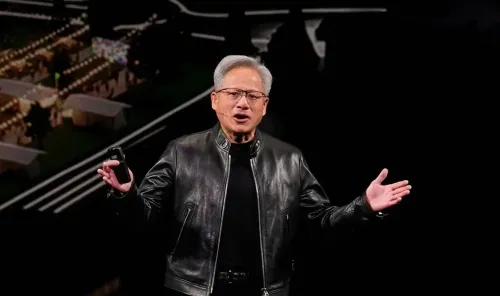
Nvidia Marks Jensen Huang's Korea Visit as AI Partnership Push
Synopsis
Nvidia has recapped chief executive Jensen Huang's visit to South Korea, framing stops from Gimpo Airport to an AI Ecosystem Reception as a commitment to co-building the AI ecosystem with Korean partners. The trip reinforces deepening US-Korea semiconductor ties shaped by the CHIPS Act and Nvidia's existing HBM supply agreements with SK Hynix.
Key Takeaways
Nvidia publicly framed Jensen Huang 's June 2026 South Korea trip as ecosystem-building, not routine business meetings.
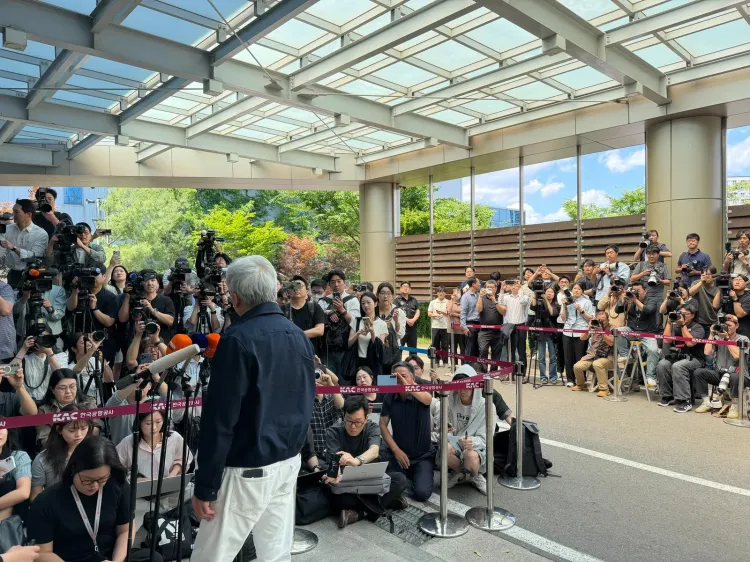
Huang arrived at Gimpo International Airport and attended an AI Ecosystem Reception in Seoul .
SK Hynix and Samsung Electronics — both key suppliers of HBM3/HBM3E memory for Nvidia GPUs — are the primary Korean stakeholders in this partnership.
The visit aligns with the 2022 US CHIPS and Science Act and bilateral Korea-US technology dialogues encouraging supply-chain cooperation outside China.
A Korea-US semiconductor and AI working-group meeting is expected in late 2026 , which could formalise government-level support for these corporate ties.
Tighter Nvidia-Korea integration has downstream implications for AI chip availability and pricing in other Asian markets, including India .
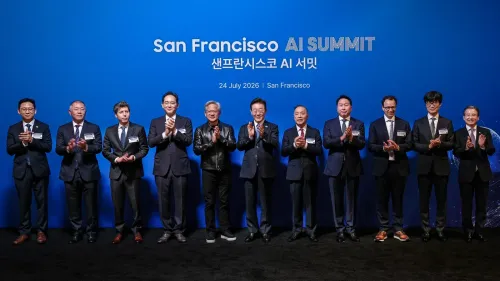
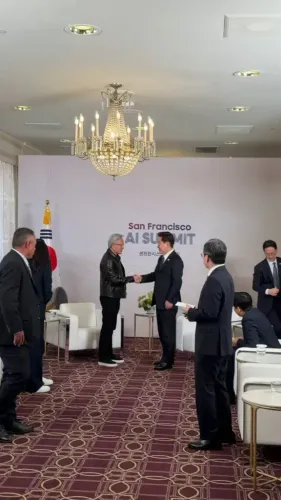
Chip giant Nvidia Corporation on Tuesday, 9 June 2026 posted a recap of chief executive Jensen Huang's visit to South Korea, describing the trip — from his arrival at Gimpo International Airport to an AI Ecosystem Reception — as a milestone in 'building together with Korea.'
Context
Nvidia's post framed the Korea visit not merely as a series of business meetings but as a signal of deepening strategic ties. The corporate account wrote: 'From Jensen's arrival at Gimpo to the AI Ecosystem Reception, this week was about more than meetings, it was about building together with Korea.' The language underscores a shift from transactional supply relationships toward long-term ecosystem co-development.
Gimpo International Airport serves as a high-profile gateway to Seoul and is frequently used for executive-level arrivals. Huang's choice of entry point, and the public nature of the reception, signals that this was a carefully choreographed engagement rather than a routine procurement visit.
Policy Backdrop
The visit sits within a broader geopolitical architecture shaped by the 2022 US CHIPS and Science Act, which incentivised allied nations to deepen semiconductor supply-chain cooperation outside China. Subsequent Korea-US technology dialogues have reinforced this alignment, creating a policy runway for corporate partnerships of exactly this kind.
Nvidia and SK Hynix formalised a supply agreement in 2023 covering advanced HBM3 high-bandwidth memory used in Nvidia's Hopper and Blackwell GPU architectures. SK Hynix, alongside Samsung Electronics, is among the world's primary producers of the high-bandwidth memory that powers Nvidia's most advanced AI accelerators, making South Korea a structurally indispensable partner in the global AI infrastructure build-out.
Stakeholders and Impact
The most immediate stakeholders are SK Hynix and Samsung Electronics, whose HBM roadmaps are tightly coupled to Nvidia's next-generation GPU releases. Any commitments made during the AI Ecosystem Reception could influence capacity planning and capital expenditure decisions worth billions of dollars across the Korean semiconductor industry.
For India, the Korea-Nvidia alignment carries indirect but significant implications. Indian firms and government bodies seeking to procure AI infrastructure — including data-centre operators and public-sector AI programmes — depend on the same Nvidia GPU supply chains that run through Korean memory fabs. Tighter US-Korea-Nvidia integration could affect pricing, allocation timelines, and the availability of advanced chips in Asian markets beyond Korea itself.
Broader AI infrastructure firms, cloud providers, and sovereign AI programmes globally are watching these bilateral corporate-government engagements as bellwethers for where next-generation chip capacity will be concentrated and on what terms it will be accessible.
What's Next
A Korea-US semiconductor and AI working-group meeting is scheduled for late 2026, which could formalise government-level backing for the kind of ecosystem partnerships Nvidia's post alludes to. Follow-on investment announcements — whether Nvidia commits to co-development programmes or Korean chipmakers announce expanded HBM capacity dedicated to Nvidia designs — will be the clearest indicators of how substantive the June visit was.
As US export controls on advanced semiconductors continue to reshape global supply chains, the depth of the Nvidia-Korea relationship will serve as a template for how AI chip designers and memory producers build geopolitically resilient, long-cycle partnerships in an era of intensifying technology competition.
Point of View
A posture that carries weight in the current geopolitical climate. The trip reinforces a pattern in which US AI chip designers use high-visibility executive travel to signal commitment to allied-nation partners, partly to reassure them amid the volatility of US export-control policy. For South Korea, hosting Huang publicly and staging a reception elevates a corporate relationship to near-diplomatic status, giving both governments political cover to deepen semiconductor cooperation. The broader arc points toward a bifurcating global AI supply chain where access to advanced GPU infrastructure increasingly tracks geopolitical alignment rather than pure market logic.
NationPress
23 Oct 2026
Frequently Asked Questions
Why did Jensen Huang visit South Korea in June 2026?
Nvidia described the visit as a push to deepen its AI ecosystem partnership with South Korea, encompassing meetings and an AI Ecosystem Reception in Seoul. The trip builds on existing supply agreements with Korean memory chipmakers SK Hynix and Samsung Electronics.
What is the connection between Nvidia and SK Hynix?
SK Hynix has supplied advanced HBM3 and HBM3E high-bandwidth memory to Nvidia since at least 2022, with a formal supply agreement covering Nvidia's Hopper and Blackwell GPU architectures formalised in 2023.
What is the AI Ecosystem Reception that Nvidia mentioned?
Nvidia referenced an AI Ecosystem Reception as part of Jensen Huang's South Korea itinerary in June 2026. The specific agenda and outcomes of the reception have not been independently confirmed.
How does the US CHIPS Act affect Nvidia's Korea partnerships?
The 2022 US CHIPS and Science Act incentivised allied nations including South Korea to build semiconductor supply chains outside China, creating a policy framework that supports deeper Nvidia-Korea corporate cooperation on AI chip infrastructure.
What does Nvidia's Korea visit mean for India's AI ambitions?
Indian data-centre operators and public AI programmes rely on the same Nvidia GPU supply chains that run through Korean memory fabs. Tighter Nvidia-Korea integration could influence chip allocation timelines and pricing for buyers across Asia, including India.